February 7, 2026
This Dietician's Date Caramel Protein Oats Are the
Overnight oats provide sustained energy during fasting hours when prepared correctly
Read Article →
Who are you when no one is watching?
When the doors are closed, the lights are off, and it's just you and your thoughts—who shows up?
The version of yourself you present to the world? Or someone else entirely?
Ramadan doesn't let you hide.
It doesn't care about your Instagram bio, your job title, or how many people think you're a "good Muslim."
Ramadan strips away the facade and reveals the truth. It shows you exactly who you are—your strengths, your weaknesses, your discipline, your laziness, your sincerity, your hypocrisy.
And once you see who you really are, you get the chance to become who you were always meant to be.
This actually happens for many!
You fasted for 30 days. You prayed Taraweeh. You read some Quran. Maybe you even stayed up for a few nights.
But a week after Eid, you were back to your old habits.
Missing Fajr. Scrolling mindlessly. Yelling at your family. Wasting time. Falling into the same sins.
Why?
Because you treated Ramadan like a ritual instead of a transformation.
You focused on the ACTIONS—fasting, praying, reading—but you ignored the PURPOSE behind them. You thought the point was to complete the checklist. But the point was never the checklist.
The point was to let those actions CHANGE YOUR HEART.
Allah says in the Quran:
يَا أَيُّهَا الَّذِينَ آمَنُوا كُتِبَ عَلَيْكُمُ الصِّيَامُ كَمَا كُتِبَ عَلَى الَّذِينَ مِن قَبْلِكُمْ لَعَلَّكُمْ تَتَّقُونَ
"O you who have believed, fasting has been prescribed for you as it was prescribed for those before you, so that you may attain Taqwa (God-consciousness)." (Al-Baqarah 2:183)
Notice: Allah didn't say, "So that you lose weight." He didn't say, "So that you feel hungry." He said, "So that you may attain Taqwa."
Taqwa means being constantly aware of Allah.
Living like He's watching you—because He is. Making choices based on what pleases Him, not what pleases your ego.
That's the goal.
That's the transformation Ramadan is designed to create.
But if you approach Ramadan with the wrong mindset—just going through the motions, just checking boxes—you'll miss it entirely.
At the very first, Ramadan expose this:
Do you actually love Allah, or do you just love the IDEA of being close to Him?
Because loving the idea is easy.
Everyone loves the idea of being close to their Creator. Of having a strong connection with Him. Of being the kind of person who prays on time, reads the Quran daily, and makes sincere dua.
But love in action is very different.
It’s waking up for Fajr when your bed is warm. It’s reading the Quran when Netflix is calling. It’s making dua when you’re exhausted. It’s controlling your tongue when someone provokes you. It’s giving sadaqah when money is tight.
Ramadan forces you to prove your love through sacrifice.
The Prophet ﷺ said:
الصِّيَامُ جُنَّةٌ
"Fasting is a shield." (Sahih al-Bukhari)
A shield from what? From sin. From your nafs (ego). From the distractions that pull you away from Allah.
But the question is: Are you USING that shield? Or are you fasting from food while feasting on gossip, backbiting, Netflix, Instagram, and YouTube?
Because if you're still doing all the same haram and time-wasting activities during Ramadan, you're not really fasting.
You're just hungry.
The Prophet ﷺ said:
مَنْ لَمْ يَدَعْ قَوْلَ الزُّورِ وَالْعَمَلَ بِهِ، فَلَيْسَ لِلَّهِ حَاجَةٌ فِي أَنْ يَدَعَ طَعَامَهُ وَشَرَابَهُ
"Whoever does not give up false speech and acting upon it, Allah has no need for him to give up his food and drink." (Sahih al-Bukhari)
Read that again.
Allah doesn't NEED your hunger. He wants your TRANSFORMATION.
So the question Ramadan asks you is: Will you let Me change you, or will you just pretend for 30 days?
And the answer to that question will determine everything.
The Prophet ﷺ described Ramadan in three distinct phases, and understanding these phases is critical to maximizing the month.
This is when Allah opens His doors and pours His mercy upon you.
The gates of Paradise are opened. The gates of Hell are closed. The devils are chained. The environment shifts in your favor.
This is your opportunity to receive. To let Allah’s mercy wash over you. To open your heart and say, “Ya Allah, I need You. I can’t do this without You. Please help me.”
If you want to understand how to navigate the opening phase of Ramadan and set a strong foundation for the entire month, know this: the first 10 days of Ramadan are meant to build momentum—not only through fasting, but through intentional acts of worship that draw you closer to Allah’s endless mercy.
The first ten gave you mercy. Now it's time to actively SEEK forgiveness.
This is when you bring all your sins—the big ones, the small ones, the ones you remember, the ones you've forgotten—and you lay them at Allah's feet and say, "Forgive me."
Not casually. But with tears, with sincerity, with a broken heart that knows it desperately needs His pardon.
The middle phase is where the real inner work happens.
You’ve received mercy—now it’s time to confront your sins and seek cleansing. The second 10 days of Ramadan focus entirely on this inner purification, teaching you how to seek forgiveness in a way that transforms your heart, not just your record.
The first ten gave you mercy. The second ten gave you forgiveness.
Now, the final ten are about SALVATION.
This is when Allah writes the names of those who will be FREED from Jahannam. This is when Laylatul Qadr is hidden—the night worth more than 83 years of worship.
And the intensity of the last 10 days of Ramadan cannot be overstated.
This is where Laylatul Qadr is hidden, where destinies are written, and where you either finish strong or fall short.
These nights demand everything you have—and they give back infinitely more.
Ramadan is a 30-day training ground for self-control.
And it quickly reveals whether you’re in charge of your actions—or a slave to your desires.
Think about it:
If the answer is no, Ramadan is exposing a deeper issue: you’re not in control—your nafs is.
And if you can’t control yourself during Ramadan—when Shaytan is chained—what happens when he’s released after Eid?
The Prophet ﷺ said:
الصِّيَامُ جُنَّةٌ فَلَا يَرْفُثْ وَلَا يَجْهَلْ
"Fasting is a shield, so let there be no obscenity or ignorance." (Sahih al-Bukhari)
If you can control your stomach, you can control your tongue. If you can control your tongue, you can control your temper. If you can control your temper, you can control your life.
Each day of Ramadan is an opportunity to practice this discipline.
Whether it's Ramadan Day 1, where you're fighting through the initial shock to your system, or Day 15, where the mid-month fatigue tempts you to coast—every single day is a test of whether you'll show up or give up.
Here’s a simple test: what do you think about most during the day?
Is it food? Work? Money? Social media? That person you’re interested in? Your next vacation?
Or is it Allah?
Ramadan forces you to confront what you truly prioritize versus what you claim to prioritize.
You say Allah is the most important part of your life. But when you’re fasting—tired, hungry, and distracted—what fills your mind? Where do you turn for comfort?
Do you make dua? Do you read the Quran? Do you engage in dhikr?
Or do you scroll Instagram? Watch YouTube? Gossip with friends?
Whatever you turn to when you’re uncomfortable—that is what you truly worship.
Allah says:
أَرَأَيْتَ مَنِ اتَّخَذَ إِلَٰهَهُ هَوَاهُ
"Have you seen the one who takes his own desire as his god?" (Al-Furqan 25:43)
Ouch.
Ramadan exposes whether Allah is truly your priority—or whether you've just made Him one item on a long list of things you care about.
BTW, the brutal truth is most people discover during Ramadan that Allah ISN'T their top priority.
Their comfort is. Their reputation is. Their desires are.
The good news: Ramadan gives you 30 days to CHANGE that.
By Day 10, you should be noticing a shift in your priorities. By Day 20, the world's pull should be weakening. And by Day 29, if you've been intentional, Allah should be the loudest voice in your life.
Let's talk about riya (showing off).
Because this is the silent killer of good deeds.
You post your Iftar. You mention your late-night Tahajjud. You drop hints about finishing the Quran. You make sure people KNOW you're fasting.
So Are you doing it for Allah, or are you doing it for validation?
Because the difference between those two intentions is the difference between reward and waste.
The Prophet ﷺ said:
إِنَّمَا الْأَعْمَالُ بِالنِّيَّاتِ، وَإِنَّمَا لِكُلِّ امْرِئٍ مَا نَوَى
"Actions are judged by intentions, and every person will get what they intended." (Sahih al-Bukhari)
You could pray a thousand rak'ahs, but if even 1% of it is for people to see, it's contaminated. Worthless. Or worse—sinful.
Ramadan exposes whether your worship is FOR Allah or for your ego.
And the test is simple: Would you still do it if no one knew?
Would you still pray Tahajjud if no one saw your Instagram story? Would you still give Sadaqah if no one could thank you? Would you still read Quran if no one could compliment your recitation?
If the answer is no, then you're not worshiping Allah. You're worshiping people's opinions.
And that's a problem Ramadan is designed to fix—if you let it.
On Day 14, there's a specific focus on purifying your intentions and confronting the subtle ways showing off creeps into your worship.
Most people start Ramadan strong and end weak.
Day 1? Full of energy. Praying on time. Reading Quran. Making dua.
Day 15? Starting to slip. Tired. Distracted. "I'll try harder tomorrow."
Day 25? Barely holding on. Just trying to survive until Eid.
The Prophet ﷺ said:
أَحَبُّ الْأَعْمَالِ إِلَى اللهِ أَدْوَمُهَا وَإِنْ قَلَّ
"The most beloved deeds to Allah are those that are consistent, even if they are small." (Sahih al-Bukhari)
Ramadan isn't a sprint. It's a marathon. And the goal isn't to burn out in the first week—it's to finish STRONGER than you started.
That's why the last ten nights are the MOST important. Not the first ten. Not the middle ten. The LAST ten.
Because that's when Laylatul Qadr is hidden. That's when Allah is writing the names of those who will be freed from the Fire.
So the question is: Will you coast to the finish line? Or will you sprint through it?
Every day from Day 21 onward is a chance to prove your endurance. To show that you're not just participating—you're competing.
Competing against your own weaknesses, your own excuses, your own tendency to quit when things get hard.
Here's the ultimate test of whether Ramadan transformed you:
Are you better AFTER Ramadan than you were BEFORE?
Not during. AFTER.
Because anyone can be "good" when Shaytan is chained, when everyone's fasting, when the masjids are full.
But what happens on Day 1 of Shawwal? When Shaytan is released? When the spiritual high wears off? When life goes back to "normal"?
Do you go back to missing Fajr? Do you go back to wasting hours on social media? Do you go back to the same sins you promised you'd quit?
Or do you MAINTAIN the habits you built?
The scholars say: The sign that your Ramadan was accepted is that you become BETTER after it ends.
Not the same. Not worse. BETTER.
So here's how to know if Ramadan actually changed you:
30 Days After Ramadan:
If YES—Alhamdulillah, your Ramadan was accepted.
If NO—then it was just 30 days of being hungry.
To ensure you don't fall into that trap, you need to start preparing long before Ramadan begins.
Our previous guide on how to prepare your heart for Ramadan 2026 offers a strategic roadmap for building the inner foundation that makes transformation possible—and sustainable.
Check out that must.
Ramadan is overwhelming if you don't have a plan. That's why each day needs intention, focus, and specific spiritual goals.
Whether you're navigating Day 2 and learning to let go of complaints, or pushing through Day 23—one of the strongest nights for Laylatul Qadr—every single day has a purpose.
You'll face Day 7, the moment when the initial excitement fades and you have to decide if you'll maintain momentum or coast. You'll encounter Day 12, where patience is tested and your true character is revealed. You'll reach Day 18, where preparation for the final nights begins and you can no longer delay taking action.
By Day 24, you'll be in the final stretch—exhausted but determined, knowing that the finish line is near but the hardest nights are still ahead.
And then comes Day 27, the night the entire Ummah has been waiting for—the most famous candidate for Laylatul Qadr, the night that could change your destiny forever.
You'll close with Day 30, the final fast, the final prayer, the final dua—and the question: Did you give this Ramadan everything you had, or did you hold back?
Each day is a building block.
Each day reveals something about you. And each day is an opportunity to become better than you were yesterday.
Let's be real. Ramadan isn't easy. And there are specific days that will test you in ways you don't expect.
Day 3: The first Jummah of Ramadan—when you realize this is real, this is happening, and you can't coast anymore.
Day 5: The day when your body is still adjusting, and every hour feels long.
Day 8: When the reality of seeking forgiveness becomes urgent, not optional.
Day 11: The first day of the second phase—when mercy shifts to forgiveness, and the inner work intensifies.
Day 16: The mid-Ramadan slump, where motivation fades and only discipline keeps you going.
Day 19: Two days before the final ten, when preparation becomes critical.
Day 22: The second night of the final ten, when exhaustion tempts you to quit.
Day 25: Another powerful odd night—your second-to-last major chance at Laylatul Qadr.
Day 26: The preparation day before the 27th, where strategic rest and spiritual readiness determine your performance.
Day 28: The day most people give up, thinking they've already done enough.
Every single one of these days will test you differently. And every single one has a specific lesson, dua, and task designed to push you forward.
You don't have to navigate them alone. That's what the day-by-day guides are for.
Beyond the daily structure, there are specific spiritual practices that amplify your Ramadan experience exponentially.
Day 4: The intention audit—where you learn to purify every act of worship from the poison of showing off.
Day 6: The secret Sadaqah mission—giving in a way that no one knows, building a private relationship with Allah's generosity.
Day 9: The day of silence—controlling your tongue and discovering the power of restraint.
Day 13: The 100 Alhamdulillah challenge—when gratitude becomes your default state and transforms how you see everything.
Day 17: The consistency tracker—measuring your progress and ensuring you don't fall off halfway through.
These aren't just "nice ideas." These are PROVEN practices rooted in the Sunnah that create lasting change.
Here's the truth: Ramadan is going to reveal who you really are whether you like it or not.
It's going to expose your weaknesses, your inconsistencies, your hidden sins, your misplaced priorities, your lack of discipline.
But here's the beautiful part: Ramadan doesn't just reveal. It also TRANSFORMS.
If you're willing to let it.
If you're willing to confront the uncomfortable truths about yourself. If you're willing to make sincere Tawbah. If you're willing to forgive. If you're willing to sacrifice. If you're willing to CHANGE.
Then Ramadan will be the best thing that ever happened to you.
But if you go through it on autopilot—just fasting because everyone else is fasting, just praying because it's "what you're supposed to do," just checking boxes without engaging your heart—then you'll waste the greatest opportunity of the year.
And that would be a tragedy.
So here's my challenge to you:
Don't just participate in Ramadan. LET IT TRANSFORM YOU.
Start preparing now. Build the habits. Cleanse your heart. Set your goals. Make sincere dua.
And when Ramadan 2026 arrives, don't hold back. Don't coast. Don't settle for mediocrity.
Give it EVERYTHING.
Because Ramadan is a month that reveals who you really are.
The question is: Are you ready to face that truth—and become better because of it?
May Allah allow us to reach Ramadan 2026.
May He make it the best Ramadan of our lives. May He accept our fasting, our prayers, our Quran, and our duas. May He transform us into the people He wants us to be.
And may He write our names among those who are freed from the Fire. Ameen.


Overnight oats provide sustained energy during fasting hours when prepared correctly
Read Article →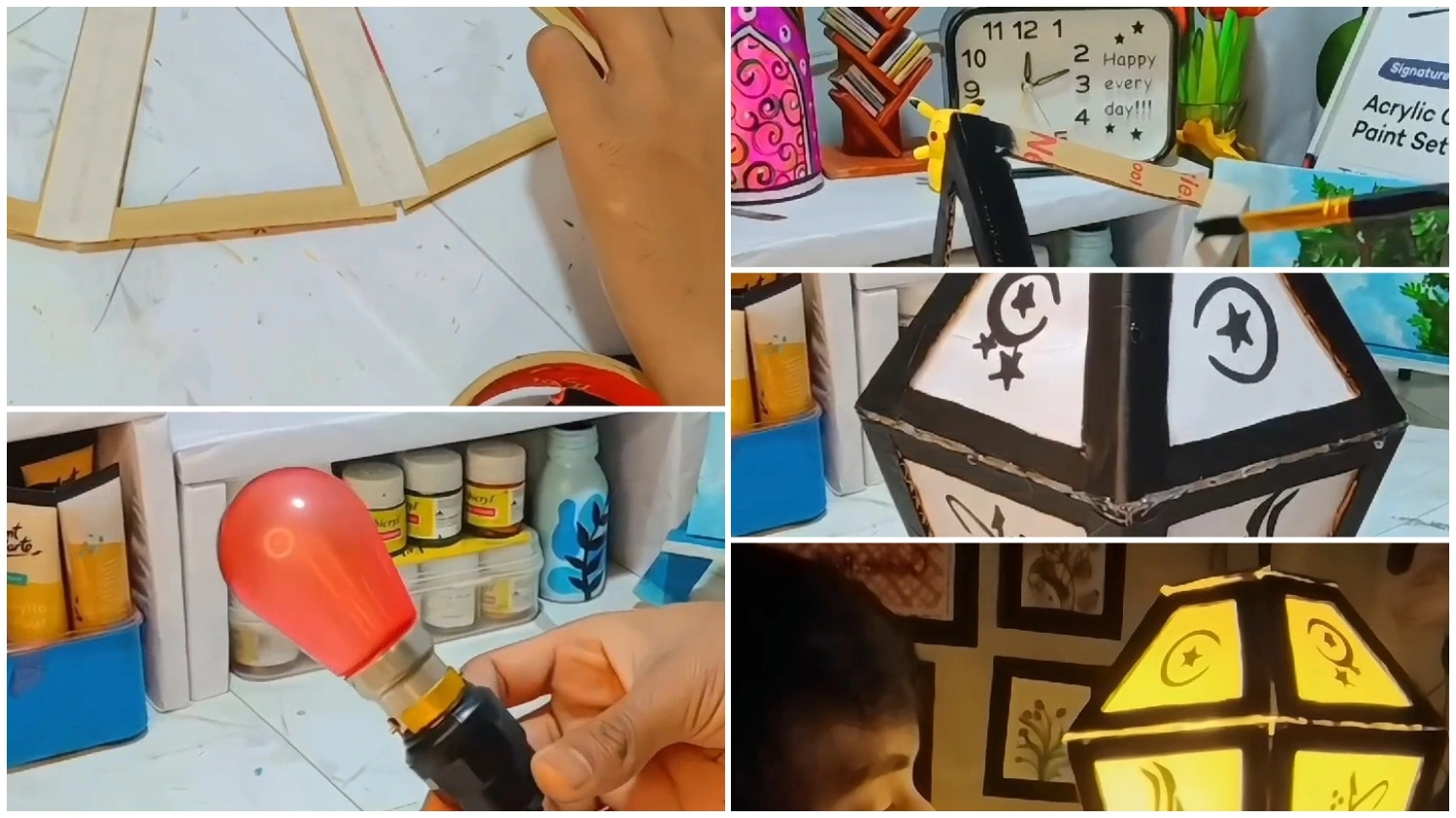
Cardboard is great for quick projects, and, if you do plan it carefully, the results can be truly impressive.
Read Article →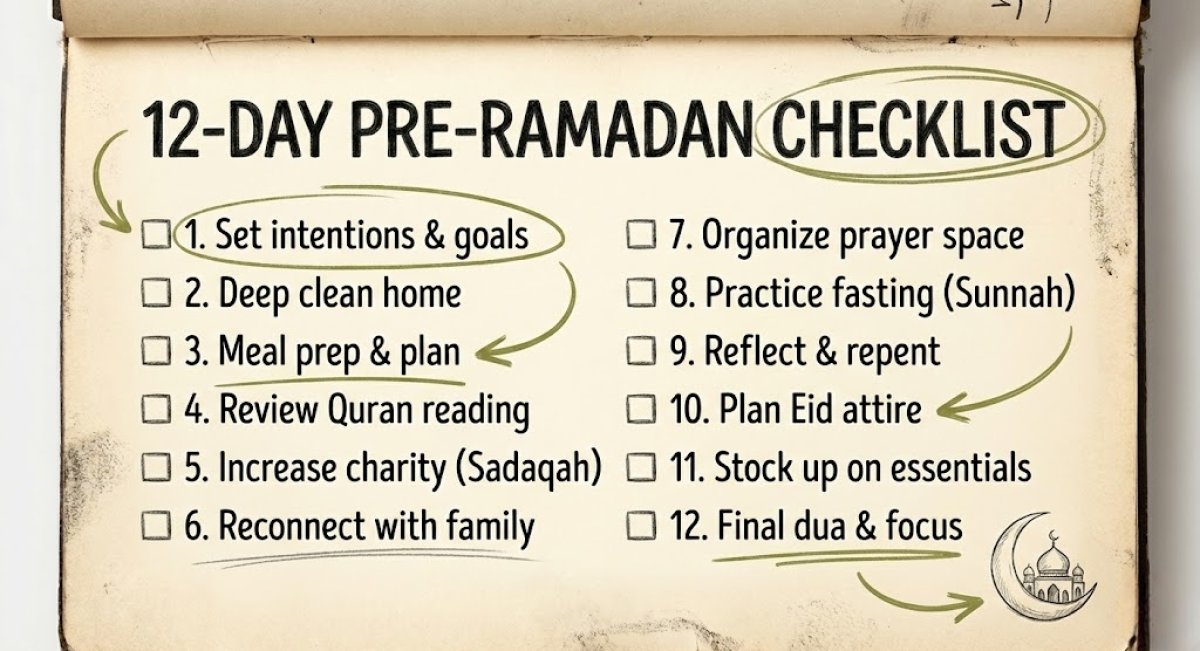
In exactly 13 days, the blessed month of Ramadan will begin on February 18, insha'Allah.
Read Article →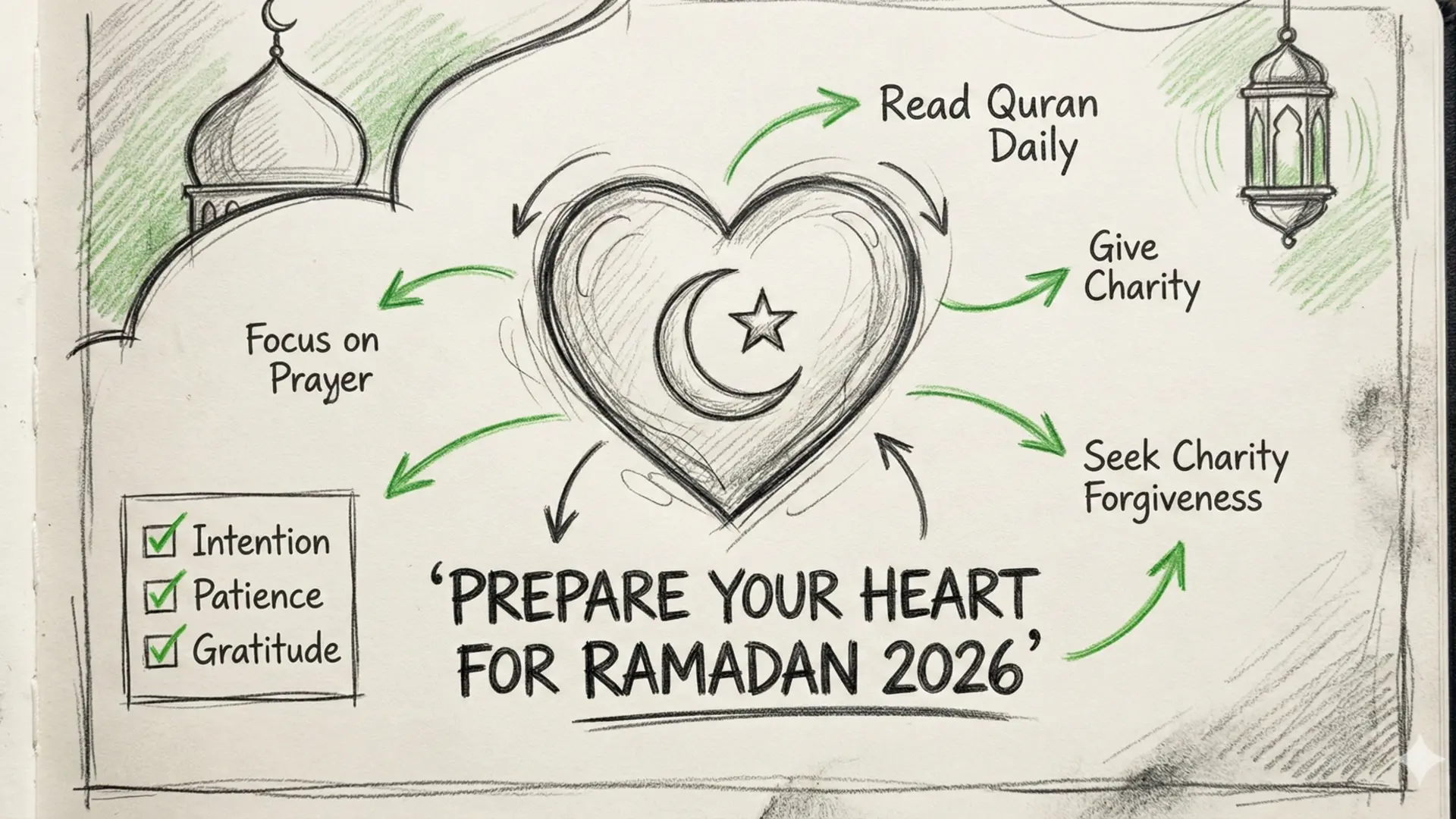
Ramadan is coming. And if you think preparation is just about stocking dates, planning Iftar menus, and setting reminders for Suhoor—you're missing the point.
Read Article →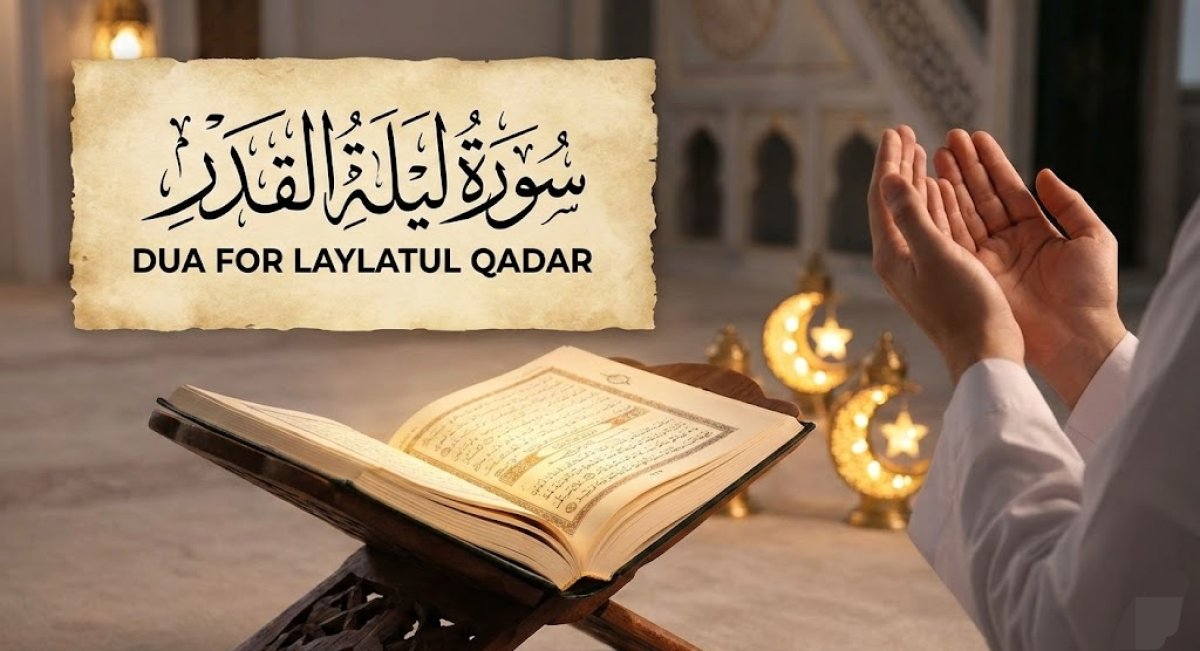
Dua for Laylatul Qadar: O Allah, You are the Oft-Pardoning, Most Generous, You love to pardon, so pardon me. (Tirmidhi, Ibn Majah)
Read Article →
The last ten days are not just “more reward.” They are the peak of the entire month.
Read Article →
For Ramadan day 29: Ya Allah, I've given this Ramadan everything I have. Please, PLEASE accept it from me.
Read Article →
Dua for Ramadan Day 28: All praise is to Allah who gave us life after causing us to die, and to Him is the resurrection.
Read Article →
Ya Allah, if this is Laylatul Qadr, ERASE every sin I've ever committed. Give me a completely clean slate. Let me start fresh.
Read Article →
On Ramadan Day 26: O Allah, allow us to reach Laylatul Qadr, accept from us, pardon us, and have mercy on us.
Read Article →
On Ramadan day 25, make dua for your parents—that Allah forgives them, has mercy on them, and grants them the highest levels of Jannah.
Read Article →
Dua for Ramadan day 24: Make dua for your biggest need—the one thing you want most in this world and the next.
Read Article →
Dua for Ramadan day 23: O Allah, allow me to reach Laylatul Qadr and make it better for me than a thousand months.
Read Article →
On day 22, make dua based on what you read. If you read about Jannah, ask for it. If you read about Jahannam, seek refuge from it.
Read Article →
On ramadan day 21, make dua for your parents (living or deceased), your family, and everyone who has a right over you.
Read Article →
Here is the second ten days of Ramadan with the most powerful duas and hadith that will help you extract every drop of Allah's forgiveness.
Read Article →
On Ramadan day 20, pray for the strength, stamina, and focus to worship throughout the entire last ten nights without giving up.
Read Article →
On Ramadan day 19, ask Allah to make the Quran a source of guidance, healing, and light for you in this life and the next.
Read Article →
On Ramadan Day 18, make dua for the ability to end Ramadan stronger than you started—spiritually, mentally, and in every way.
Read Article →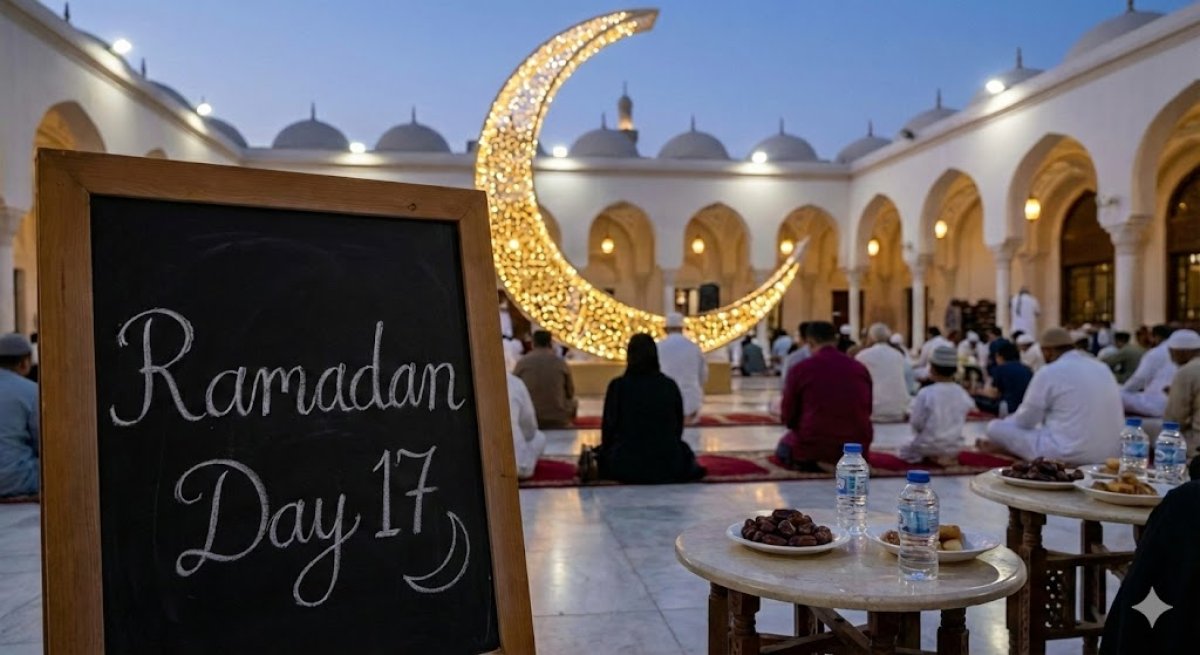
On Ramadan Day 17, make dua for the entire Ummah—for those fasting, those struggling, those oppressed, and those who have lost their way.
Read Article →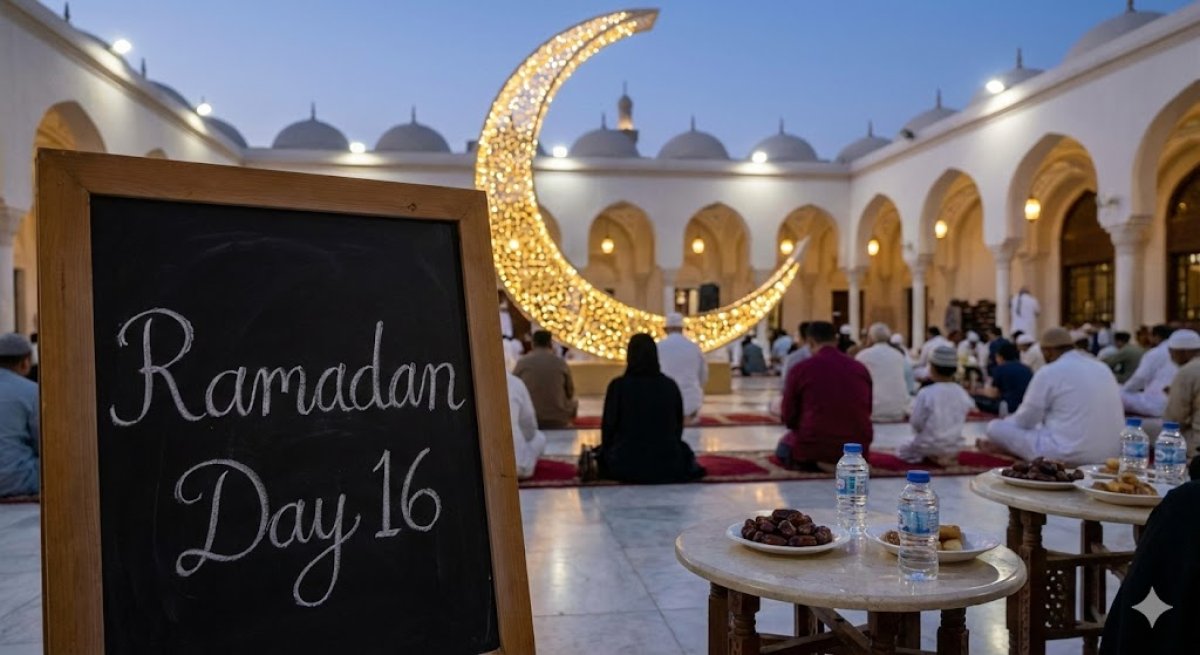
In day 16 of Ramadan, make dua for every person who has been a positive influence in your life—thank Allah for them and ask Him to reward them.
Read Article →
Daily duas, reminder, prayer times, what you have to do and whats not in ramadan day 15
Read Article →
O Allah, on this ramadan day 14, do not hold me accountable for my stumbles, forgive me for my mistakes and errors
Read Article →
Daily duas, reminder, what you have to do and whats not in ramadan day 13
Read Article →
Daily duas, reminder, what you have to do and whats not in ramadan day 12
Read Article →
Here is a list of the dua you should be reading throughout the first 10 days of ramadan karim.
Read Article →
Daily duas, reminder, what you have to do and whats not in ramadan day 11
Read Article →
Daily duas, reminder, what you have to do and whats not in ramadan day 10
Read Article →
Daily duas, reminder, what you have to do and whats not in ramadan day 9
Read Article →
Daily duas, reminder, what you have to do and whats not in ramadan day 8
Read Article →
Daily duas, reminder, what you have to do and whats not in ramadan day 7
Read Article →
Here is the list of 30 hadith for ramadan karim for all type of things covering from ramadan day 1 to day 30
Read Article →
Daily duas, reminder, what you have to do and whats not in ramadan day 6
Read Article →
Daily duas, reminder, what you have to do and whats not in ramadan day 5
Read Article →
Get the daily duas, reminder, what you have to do and whats not in ramadan day 4
Read Article →
Get the daily duas, reminder, what you have to do and whats not in ramadan day 3
Read Article →
Your Day 2 Dua List: Ask Allah to make the Quran easy for you to understand and apply.
Read Article →
There are a lot of task you have to do in the first day of Ramadan Karim.
Read Article →
A beautiful Ramadan table isn't about how much money you spent at a home decor store.
Read Article →