January 19, 2026
Morning Adhkar for Pregnancy
Morning duas for couples trying to conceive, based on Quran and authentic Sunnah. Learn the most powerful adhkar to recite after Fajr.
Read Article →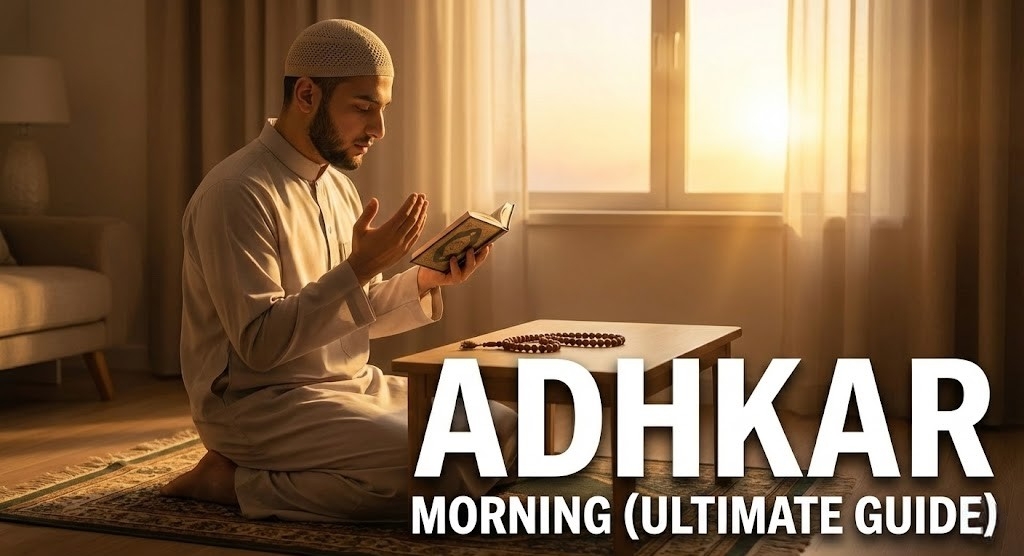
Most people wake up and immediately reach for their phone.
The day starts with notifications, messages, news — and before the mind has fully arrived, it is already full of noise.
Whatever peace Fajr might have brought is gone within minutes.
There is another way to begin the morning. Not more productive, not more optimized — just more grounded.
The Prophet ﷺ taught a set of remembrances for the morning, specific phrases and supplications that a Muslim is meant to say after Fajr before the day takes over.
These are called Adhkar al-Sabah — the morning remembrances.
They are not long, nor complicated.
And they have been recited by Muslims across every continent, in every century, since the time of the Companions.
This guide covers all of them — what to say, in what order, with Arabic text, transliteration, translation, and an explanation of why each one matters.
Below is the full collection of morning remembrances drawn from Hisnul Muslim and the authentic Sunnah.
Each dhikr includes the Arabic text, transliteration, translation, hadith source, and a brief explanation.
اللَّهُ لَا إِلَٰهَ إِلَّا هُوَ الْحَيُّ الْقَيُّومُ ۚ لَا تَأْخُذُهُ سِنَةٌ وَلَا نَوْمٌ ۚ لَّهُ مَا فِي السَّمَاوَاتِ وَمَا فِي الْأَرْضِ ۗ مَن ذَا الَّذِي يَشْفَعُ عِندَهُ إِلَّا بِإِذْنِهِ ۚ يَعْلَمُ مَا بَيْنَ أَيْدِيهِمْ وَمَا خَلْفَهُمْ ۖ وَلَا يُحِيطُونَ بِشَيْءٍ مِّنْ عِلْمِهِ إِلَّا بِمَا شَاءَ ۚ وَسِعَ كُرْسِيُّهُ السَّمَاوَاتِ وَالْأَرْضَ ۖ وَلَا يَئُودُهُ حِفْظُهُمَا ۚ وَهُوَ الْعَلِيُّ الْعَظِيمُ.
"Allah! There is no god but He, the Living, the Self-subsisting, Eternal. No slumber can seize Him nor sleep. His are all things in the heavens and on earth. Who is there can intercede in His presence except as He permitteth? He knoweth what (appeareth to His creatures as) before or after or behind them. Nor shall they compass aught of His knowledge except as He willeth. His Throne doth extend over the heavens and the earth, and He feeleth no fatigue in guarding and preserving them for He is the Most High, the Supreme (in glory)."
Coming Soon....
قُلْ هُوَ اللَّهُ أَحَدٌ . اللَّهُ الصَّمَدُ . لَمْ يَلِدْ وَلَمْ يُولَدْ . وَلَمْ يَكُن لَّهُ كُفُوًا أَحَدٌ.
قُلْ أَعُوذُ بِرَبِّ الْفَلَقِ . مِن شَرِّ مَا خَلَقَ . وَمِن شَرِّ غَاسِقٍ إِذَا وَقَبَ . وَمِن شَرِّ النَّفَّاثَاتِ فِي الْعُقَدِ . وَمِن شَرِّ حَاسِدٍ إِذَا حَسَدَ.
قُلْ أَعُوذُ بِرَبِّ النَّاسِ . مَلِكِ النَّاسِ . إِلَٰهِ النَّاسِ . مِن شَرِّ الْوَسْوَاسِ الْخَنَّاسِ . الَّذِي يُوَسْوِسُ فِي صُدُورِ النَّاسِ . مِنَ الْجِنَّةِ وَالنَّاسِ.
1st Qul:
Say, "He is Allah, [who is] One, Allah, the Eternal Refuge. He neither begets nor is born, Nor is there to Him any equivalent."
2nd Qul:
Say, "I seek refuge in the Lord of daybreak, from the evil of whatever He created, and from the evil of darkness when it settles, and from the evil of the blowers in knots, and from the evil of an envier when he envies."
3rd Qul:
Say, "I seek refuge in the Lord of mankind, the Sovereign of mankind, the God of mankind, from the evil of the retreating whisperer—who whispers [evil] into the breasts of mankind—from among the jinn and mankind."
Recite each of these three times. They are sufficient to protect you from all evil.
اللَّهُمَّ أَنْتَ رَبِّي لَا إِلَهَ إِلَّا أَنْتَ، خَلَقْتَنِي وَأَنَا عَبْدُكَ، وَأَنَا عَلَى عَهْدِكَ وَوَعْدِكَ مَا اسْتَطَعْتُ، أَعُوذُ بِكَ مِنْ شَرِّ مَا صَنَعْتُ، أَبُوءُ لَكَ بِنِعْمَتِكَ عَلَيَّ، وَأَبُوءُ لَكَ بِذَنْبِي فَاغْفِرْ لِي فَإِنَّهُ لَا يَغْفِرُ الذُّنُوبَ إِلَّا أَنْتَ.
"O Allah, You are my Lord, none has the right to be worshipped except You, You created me and I am Your servant, and I abide by Your covenant and promise as best I can. I take refuge in You from the evil which I have committed. I acknowledge Your favor upon me and I acknowledge my sin, so forgive me, for verily none can forgive sins except You."
The Prophet (ﷺ) said that whoever recites this in the morning with sincerity and dies that day will enter Paradise.
بِسْمِ اللَّهِ الَّذِي لَا يَضُرُّ مَعَ اسْمِهِ شَيْءٌ فِي الْأَرْضِ وَلَا فِي السَّمَاءِ وَهُوَ السَّمِيعُ الْعَلِيمُ.
In the Name of Allah, who with His Name nothing can cause harm in the earth nor in the heavens, and He is the All-Hearing, the All-Knowing.
Recite three times. Nothing will harm the person who says this.
رَضِيتُ بِاللَّهِ رَبَّاً، وَبِالْإِسْلَامِ دِيناً، وَبِمُحَمَّدٍ صَلَّى اللَّهُ عَلَيْهِ وَسَلَّمَ نَبِيّاً.
I am pleased with Allah as my Lord, with Islam as my religion, and with Muhammad (ﷺ) as my Prophet.
Recite three times. Allah has promised to make the one who says this pleased on the Day of Resurrection.
اللَّهُمَّ إِنِّي أَسْأَلُكَ الْعَفْوَ وَالْعَافِيَةَ فِي الدُّنْيَا وَالْآخِرَةِ، اللَّهُمَّ إِنِّي أَسْأَلُكَ الْعَفْوَ وَالْعَافِيَةَ: فِي دِينِي وَدُنْيَايَ وَأَهْلِي، وَمَالِي
O Allah, I ask You for forgiveness and well-being in this world and the Hereafter. O Allah, I ask You for forgiveness and well-being in my religion and my worldly affairs, and my family and my wealth.
This prayer asks for protection in your faith, your worldly life, and your physical safety.
أَصْبَحْنَا وَأَصْبَحَ الْمُلْكُ لِلَّهِ، وَالْحَمْدُ لِلَّهِ، لَا إِلَهَ إِلَّا اللَّهُ وَحْدَهُ لَا شَرِيكَ لَهُ، لَهُ الْمُلْكُ وَلَهُ الْحَمْدُ وَهُوَ عَلَى كُلِّ شَيْءٍ قَدِيرٌ
We have reached the morning and at this very time unto Allah belongs all sovereignty, and all praise is for Allah. None has the right to be worshipped except Allah, alone, without partner, to Him belongs all sovereignty and praise and He is over all things omnipotent.
Recite this to acknowledge that everything belongs to Allah as the day begins.
يَا حَيُّ يَا قَيُّومُ بِرَحْمَتِكَ أَسْتَغِيثُ أَصْلِحْ لِي شَأْنِي كُلَّهُ وَلَا تَكِلْنِي إِلَى نَفْسِي طَرْفَةَ عَيْنٍ
O Ever Living One, O Self-Sustaining One, in Your mercy I seek relief. Set all my affairs right and do not leave me to myself even for the blink of an eye.
A powerful Dua for guidance and to ensure we do not rely on ourselves for even a second.
سُبْحَانَ اللَّهِ وَبِحَمْدِهِ
Glory is to Allah and praise is to Him.
Recite 100 times. This wipes away sins even if they are like the foam of the sea.
اللَّهُمَّ أَجِرْنِي مِنَ النَّارِ
O Allah, protect me from the Fire.
Recite seven times. If a person dies that day, they will be granted protection from the Hellfire.
The word أذكار (Adhkar) is the plural of Dhikr — remembrance of Allah.
Morning Adhkar refers to the specific set of supplications and phrases narrated from the Prophet ﷺ that are recommended to be said after Fajr prayer, ideally before leaving the prayer place or before the business of the day begins.
They are rooted in authentic hadith, most of them collected in Hisnul Muslim (Fortress of the Muslim) — the well-known compilation by Sheikh Sa'id ibn Ali ibn Wahf al-Qahtani, drawn entirely from the Quran and Sunnah.
These are not invented formulas.
Every phrase has a source. Every benefit mentioned comes from a narration.
And the overall practice — beginning the day with the remembrance of Allah — is commanded explicitly in the Quran:
وَاذْكُر رَّبَّكَ فِي نَفْسِكَ تَضَرُّعًا وَخِيفَةً وَدُونَ الْجَهْرِ مِنَ الْقَوْلِ بِالْغُدُوِّ وَالْآصَالِ وَلَا تَكُن مِّنَ الْغَافِلِينَ
"And remember your Lord within yourself in humility and in fear, and without loudness, in the mornings and in the evenings, and do not be among the heedless." (Al-A'raf, 7:205)
Morning Adhkar begin at the time of Fajr — after the Fajr prayer — and continue until the sun has fully risen, which is approximately fifteen to twenty minutes after sunrise.
This is the window that the scholars define as the time of sabah (morning) for the purpose of these remembrances.
The Prophet ﷺ himself would often remain in his prayer place after Fajr until the sun rose.
That quiet stretch — between Fajr and the start of the day's activity — is the most fitting time for Adhkar.
The world is still. The mind is clear. The remembrances land differently at that hour.
If a person misses the morning window — due to work, travel, or forgetting — they may still recite the Adhkar later in the day, though the full reward described in the narrations is associated with the proper morning time.
There is no single rigid order required by fiqh, but scholars and practitioners have generally arranged the morning Adhkar in a flowing sequence.
Here is a practical order most people follow:
After Fajr prayer, while still in the prayer place or settled quietly:
The full practice, at a measured pace, takes between fifteen and twenty-five minutes.
If that feels long, start with half and build gradually.
Better to do less consistently than to do all of it for a week and none of it for a month.
This is worth addressing directly, because most people have started the Adhkar at some point and stopped.
The honest reason is usually not laziness.
It is disconnection.
People recite the words without knowing what they mean, and over time the practice feels hollow.
The solution is not willpower — it is understanding. When you know that Hasbiyallah carries a promise from the Prophet ﷺ that Allah will be sufficient for your affairs, you say it differently.
When you know that Sayyid al-Istighfar carries the possibility of dying as one of the people of Paradise, you do not want to skip it.
This guide was written for exactly that reason.
Read it once. Then keep it nearby when you recite.
Another common barrier is the morning being genuinely rushed — children, work, obligations.
The scholars have spoken about this.
Consistency with less is better than perfection occasionally.
If you can only do five minutes before leaving the house, do those five minutes.
Begin with Sayyid al-Istighfar, Ayat al-Kursi, the three Quls, and the Salawat.
That alone covers you.
People who maintain the morning Adhkar consistently — not as an experiment for a month but as a years-long practice — describe something that is difficult to quantify but consistently reported: the day feels different.
Not easier, necessarily.
But more settled.
There is a kind of internal orientation that the Adhkar produce, a sense of having placed the day in the right hands before picking it up yourself.
This is not a mystical claim.
It is what happens when a person begins each day by acknowledging their dependence on Allah, declaring their trust in Him, asking for protection from specific harms, and repeatedly returning their attention to His greatness.
The mind and heart go where they are taken. The morning Adhkar take them somewhere good.
The Prophet ﷺ described this world as a place of travel, and the believer as a traveler.
Every traveler knows that how you start the journey determines a great deal about how it goes.
The morning Adhkar are the departure — the moment you set off in the right direction, with the right provisions, under the protection of the One who knows the road.
The scholars are unanimous on this: a dhikr said with a heedless heart is less than one said with presence.
This does not mean your Adhkar are worthless if your mind wanders — that happens to everyone, and continuing despite the wandering is itself an act of sincerity.
But where possible, try to be present for at least some of what you say.
Pick one dhikr per week and learn its meaning deeply.
Say it slowly that week. Let it settle.
The following week, do the same with another. Over time, the entire practice becomes something you inhabit rather than something you perform.
That is when the morning truly changes.

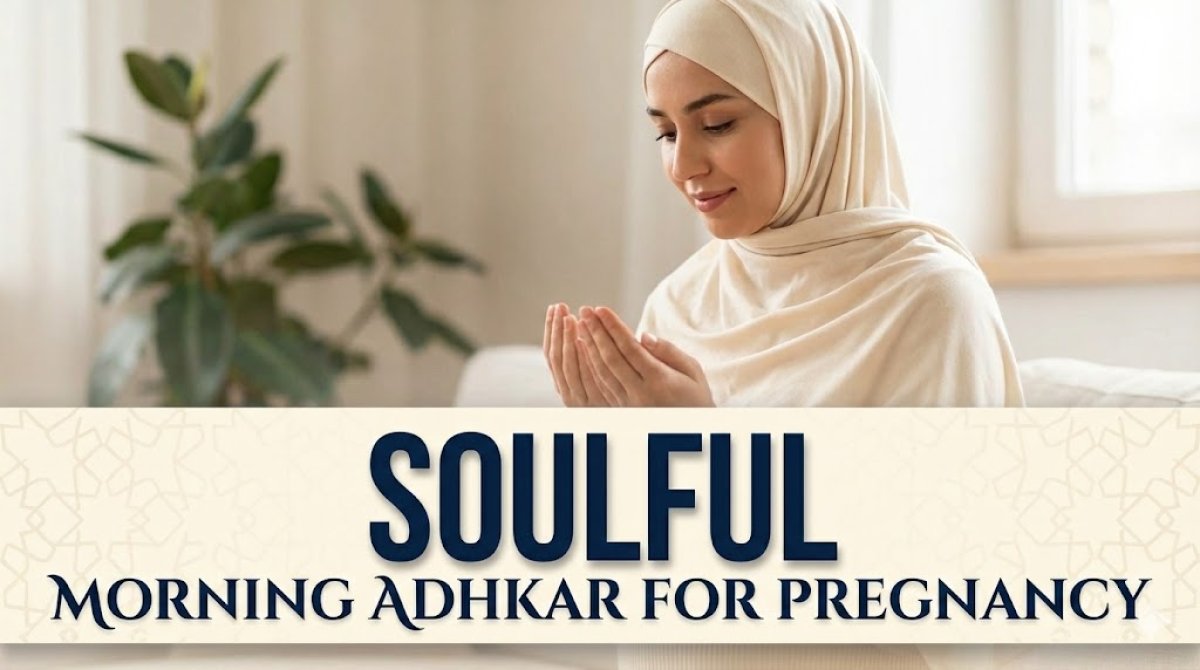
Morning duas for couples trying to conceive, based on Quran and authentic Sunnah. Learn the most powerful adhkar to recite after Fajr.
Read Article →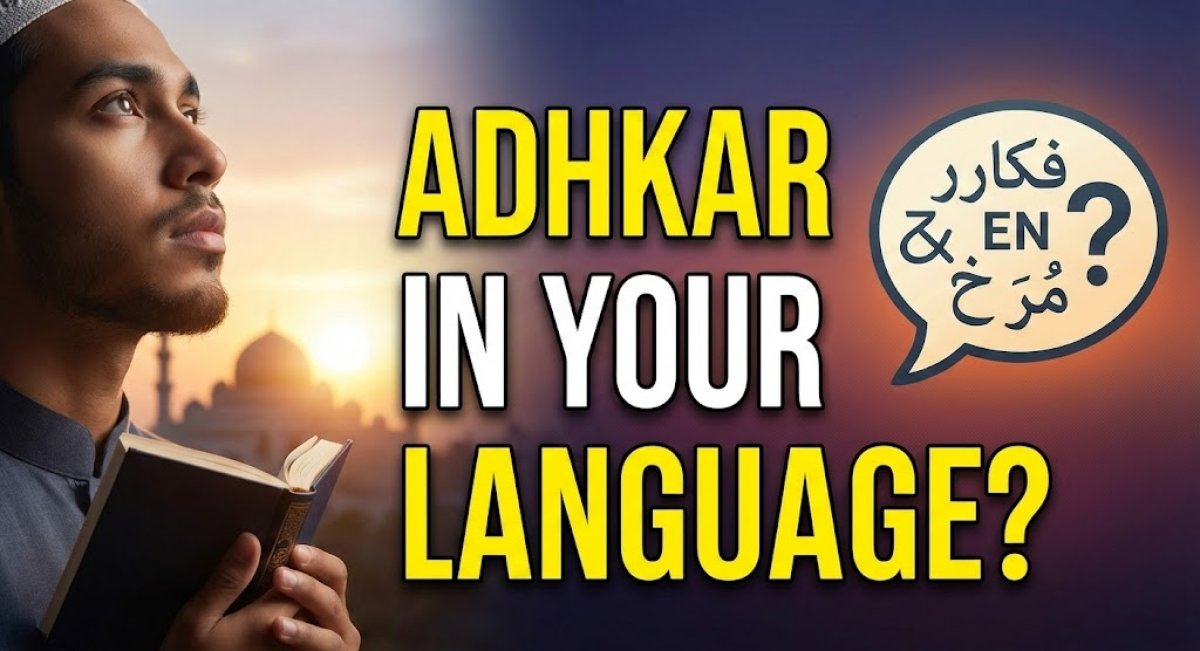
If a morning dhikr is from the Qur’an (like Ayat al-Kursi), it must be recited in Arabic. A translation is not Qur’an, it is only the meaning.
Read Article →
Start your day with Morning Adhkar for Protection From the Evil Eye—a powerful collection of authentic supplications to seek Allah’s protection, peace, and blessings
Read Article →
The Prophet ﷺ said whoever recites it in the morning will not be harmed that day (Abu Dawud – Hasan).
Read Article →
The Sunnah already includes some adhkar with numbers and even some without! So adding numbers is legislating worship, which is not our role.
Read Article →
Yes, women can read morning adhkar during menstruation. Menstruation does NOT prevent dhikr or du‘a, Only Qur’anic recitation has specific scholarly discussion
Read Article →
Yes, you can read morning adhkar without wudu. Wudu is NOT a condition for morning adhkar.
Read Article →
Morning adhkar are Specific remembrances and supplications taught by the Prophet ﷺ to be recited after Fajr.
Read Article →
No, Morning Adhkar should NOT be done before Fajr time enters. If done before Fajr, it does NOT count as Morning Adhkar.
Read Article →
Morning adhkar is a means of ease, not an additional burden on an already heavy morning.
Read Article →
Yes, morning adhkar CAN be done after sunrise. But it is NOT the best or most complete time
Read Article →
Morning adhkar is not about how much you say. It is about who you submit to before the world claims you. If the day begins with Allah, the day may be hard — but it will not be empty.
Read Article →