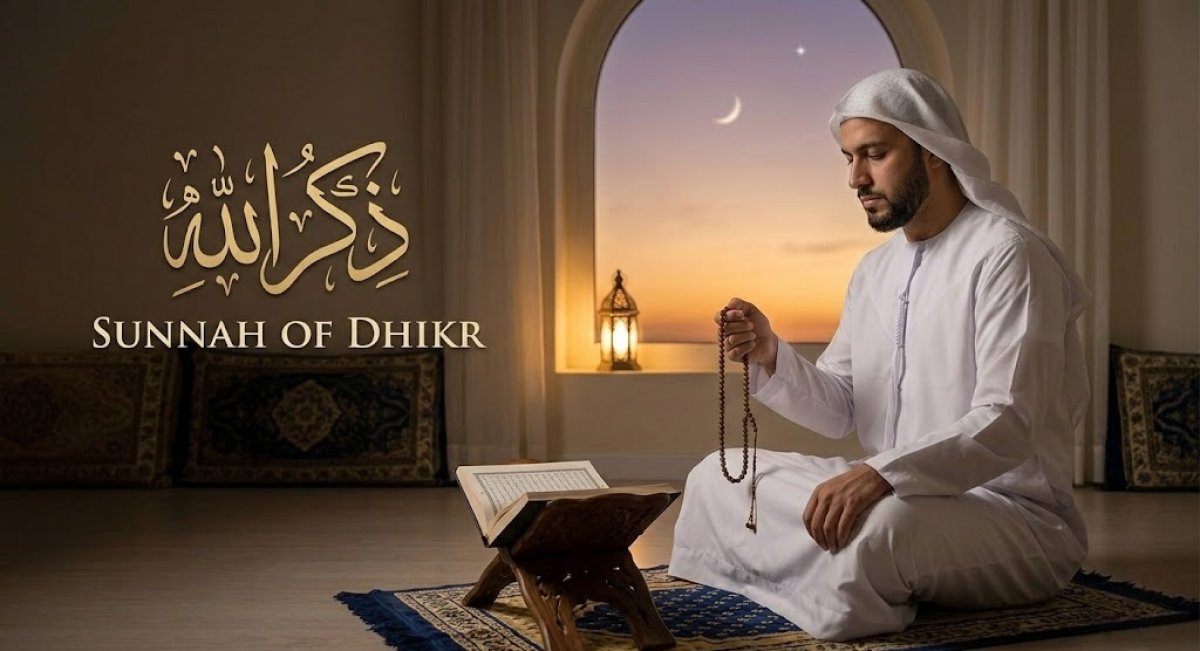
Most people think dhikr is just a nice addition to worship.
Something you do if you have extra time. Something that's optional, secondary, not as important as prayer or fasting.
But the Prophet Muhammad ﷺ said:
مَثَلُ الَّذِي يَذْكُرُ رَبَّهُ وَالَّذِي لَا يَذْكُرُ رَبَّهُ مَثَلُ الْحَيِّ وَالْمَيِّتِ
"The example of the one who remembers his Lord and the one who does not is like that of the living and the dead." (Sahih al-Bukhari)
See?
The one who remembers Allah is alive. The one who doesn't is dead—even if they're walking, talking, and breathing.
Dhikr isn't a bonus.
It's the difference between a heart that's alive and a heart that's dead. Between a soul that's connected and a soul that's disconnected. Between a life of meaning and a life of emptiness.
And yet most Muslims barely engage in dhikr.
They rush through it after prayer. They forget it throughout the day. They don't know the rewards. They don't understand the method.
And they certainly don't know the debate around using fingers versus beads to count.
What Exactly Is Dhikr?
Dhikr comes from the Arabic root dhakara, which means to remember, to mention, to be mindful of.
In the Islamic context, dhikr means remembering Allah with your tongue, your heart, or both.
It means keeping Him in your thoughts, your speech, and your consciousness throughout the day.
Dhikr can be as simple as saying "Subhanallah" (Glory be to Allah) or as profound as reflecting deeply on Allah's attributes while your tongue moves with His praise.
The Quran commands it repeatedly:
يَا أَيُّهَا الَّذِينَ آمَنُوا اذْكُرُوا اللَّهَ ذِكْرًا كَثِيرًا
"O you who have believed, remember Allah with much remembrance." (Quran 33:41)
Not occasional remembrance. Not when you feel like it. Much remembrance. Constantly.
Abundantly. Until it becomes the default state of your tongue and heart.
The Prophet ﷺ remembered Allah in every situation. While walking, sitting, lying down, standing, eating, traveling, at home, in battle. His tongue was never still. His heart was never heedless
Method: Using Your Fingers as the Prophet ﷺ Did.
Now the question is how do you keep count?
The Prophet ﷺ had a clear method. He used his fingers.
Abdullah ibn Amr (may Allah be pleased with him) narrated:
رَأَيْتُ النَّبِيَّ صَلَّى اللهُ عَلَيْهِ وَسَلَّمَ يَعْقِدُ التَّسْبِيحَ بِيَمِينِهِ
"I saw the Prophet ﷺ counting dhikr on his right hand." (Abu Dawud, Tirmidhi)
And in another narration, the Prophet ﷺ specifically instructed the women of his household:
عَلَيْكُنَّ بِالتَّسْبِيحِ وَالتَّهْلِيلِ وَالتَّقْدِيسِ، وَاعْقِدْنَ بِالْأَنَامِلِ فَإِنَّهُنَّ مَسْئُولَاتٌ مُسْتَنْطَقَاتٌ
"Hold fast to glorifying Allah, declaring His oneness, and sanctifying Him. Count on your fingers, for they will be questioned and made to speak." (Abu Dawud, Tirmidhi)
This is profound.
Your fingers will testify on the Day of Judgment. They will speak about the dhikr you made. They will bear witness to your remembrance of Allah.
When you use your fingers to count, you're engaging your body in worship. Your tongue speaks. Your heart reflects. And your fingers participate.
The method is simple: use your right hand.
Starting with your pinky finger, touch it with your thumb for the first count. Then your ring finger for the second. Then your middle finger. Then your index finger.
That's four.
Then move to the next segment of your pinky and continue. You can count to 100 on one hand using this method.
The Prophet ﷺ used his right hand specifically because the right hand is used for honorable actions in Islam.
That’s why making wudu according to the Sunnah is so important—it builds a foundation of purity.
When your body is clean and your hands are ready, your dhikr becomes a more complete act of worship.
The Debate: Are Prayer Beads (Tasbih/Misbaha) Permissible?
Now here's where it gets interesting.
Many Muslims use prayer beads—also called tasbih, misbaha, or sibha—to count their dhikr.
You've probably seen them.
A string of 33 or 99 beads that people move through while making dhikr.
The question is: is this permissible? Or should you only use your fingers as the Prophet ﷺ did?
The scholars have different opinions, and understanding both sides will help you make an informed decision.
The Argument for Using Only Fingers
Some scholars say you should stick to using your fingers because:
First, that's what the Prophet ﷺ did and taught. He never used beads, and he specifically instructed people to count on their fingers.
Second, the hadith says your fingers will be questioned and made to speak on Judgment Day. This implies that using your fingers is part of the reward and testimony.
Third, using beads can become a form of showing off. When people see you holding beads and moving through them publicly, it can attract attention and praise, which contaminates sincerity.
Fourth, relying on beads can make you less mindful. You're just mechanically moving beads without engaging your heart or even paying attention to the count.
The great scholar Ibn Taymiyyah (may Allah have mercy on him) preferred using fingers and said it's closer to the Sunnah.
The Argument for Permitting Beads
Other scholars say using beads is permissible as a tool, and here's their reasoning:
First, the Prophet ﷺ never explicitly forbade using beads. He taught counting on fingers, but he didn't say "don't use anything else."
Second, several Companions used beads or pebbles to keep count. Abu Hurayrah (may Allah be pleased with him) was known to have a string with knots or pebbles that he used for dhikr. Fatimah (may Allah be pleased with her), the daughter of the Prophet ﷺ, had a string with knots for counting tasbih.
Third, beads are simply a tool, like using a Quran app on your phone instead of a physical Mushaf. The tool itself isn't the issue—what matters is the heart and sincerity.
Fourth, for people who are elderly, forgetful, or easily distracted, beads can actually help them maintain focus and consistency. They're not relying on the beads for reward—they're using them as a practical aid.
The great scholars like Imam An-Nawawi and Ibn Hajar al-Asqalani (may Allah have mercy on them) said that using beads is permissible as long as it doesn't lead to showing off or distraction.
The Balanced Approach
Use your fingers as the default method, especially when you're alone and when you're making dhikr after prayer. This keeps you connected to the Sunnah directly.
If you find that using beads helps you maintain consistency, focus, and higher numbers—and you're doing it privately without showing off—then using them as a tool is permissible.
Never let the beads become a source of pride or public display. If you're using them in a way that draws attention or makes people think you're more pious, put them away.
And most importantly, never let the tool overshadow the purpose. Whether you use fingers or beads, the goal is to remember Allah with presence, sincerity, and love.
The Daily Dhikr Routine: What to Say and When
Now that you understand the method and the debate, let's talk about building a daily dhikr practice.
The Prophet ﷺ had specific phrases for specific times. Here's a practical daily routine based on his Sunnah:
After Fajr Prayer
Sit on your prayer mat and recite:
- Subhanallah (33 times)
- Alhamdulillah (33 times)
- Allahu Akbar (34 times)
Then say:
- "La ilaha illallahu wahdahu la sharika lahu, lahul mulku wa lahul hamdu wa huwa 'ala kulli shay'in qadir" (100 times)
This entire routine takes about 10 minutes and earns you protection for the entire day.
Morning Adhkar (After Sunrise)
After Fajr and after the sun has risen, say:
- Ayat al-Kursi (once)
- The last two verses of Surah Al-Baqarah (once)
- Surah Al-Ikhlas, Al-Falaq, An-Nas (three times each)
- "Subhanallahi wa bihamdihi" (100 times)
After Dhuhr, Asr, and Maghrib
After each prayer, recite:
- Subhanallah (33 times)
- Alhamdulillah (33 times)
- Allahu Akbar (34 times)
Evening Adhkar (After Maghrib)
Repeat the morning adhkar routine with the evening-specific duas.
Before Sleep
While there is much more to the Prophetic Sunnah for sleep, these are the core prayers to recite before you drift off:
- Ayat al-Kursi
- Surah Al-Ikhlas, Al-Falaq, An-Nas (three times each)
- "Subhanallah" (33 times), "Alhamdulillah" (33 times), "Allahu Akbar" (34 times)
Throughout the Day
Between activities, while walking, while waiting, while resting—keep your tongue moving with:
- Subhanallah
- Alhamdulillah
- La ilaha illallah
- Allahu Akbar
The Prophet ﷺ said his tongue was never still from remembering Allah.
The Heart of Dhikr: Presence Over Repetition
Dhikr isn't just about moving your lips or counting on your fingers or beads.
It's about presence.
You can say "Subhanallah" 1,000 times with a distracted heart and earn minimal reward. Or you can say it 10 times with complete presence, reflection, and love—and those 10 carry more weight than someone else's 1,000.
The Prophet ﷺ said:
إِنَّ اللهَ لَا يَنْظُرُ إِلَى أَجْسَادِكُمْ وَلَا إِلَى صُوَرِكُمْ، وَلَكِنْ يَنْظُرُ إِلَى قُلُوبِكُمْ
"Indeed, Allah does not look at your bodies or your appearances, but He looks at your hearts." (Sahih Muslim)
When you say "Subhanallah," think about what you're saying.
You're declaring that Allah is free from all imperfections, far above any flaw or deficiency.
When you say "Alhamdulillah," you're acknowledging that every blessing in your life—your breath, your health, your family, your food—comes from Him.
When you say "La ilaha illallah," you're declaring that nothing in existence deserves worship except Him.
Not your desires, not your money, not your status. Only Him.
Dhikr with presence transforms you. Dhikr without presence is just noise.
The Connection to the Broader Sunnah
When the Prophet ﷺ woke up in the morning, his first words were dhikr.
When he went to sleep, his last words were dhikr. When he ate, entered the home, left the home, saw something he liked, experienced hardship, heard thunder, saw the new moon—every situation had its dhikr.
This constant remembrance is what kept him grounded, connected, and unshakeable in every circumstance.
When you live with dhikr, you're never alone. You're never disconnected.
You're never lost. Because your tongue and heart are constantly tethered to the One who created you.
Start Today: Your First 100
You don't need to overhaul your entire routine. Start with one simple practice.
Today, after your next prayer, sit for five minutes and say "Subhanallah" 100 times. Use your fingers to count.
Don't rush. Don't let your mind wander. Say each one with intention. Feel each one.
When you're done, notice how you feel. Notice the calm. Notice the clarity.
Then do it again tomorrow. And the day after. And the day after.
Within a week, it will feel natural. Within a month, it will feel essential. Within a year, you'll wonder how you ever lived without it.
Because dhikr isn't just worship. It's the difference between a heart that's alive and a heart that's dead.
