
You spend roughly one-third of your life sleeping.
It's about 25 years if you live to 75. Twenty-five years of unconsciousness. Twenty-five years where your body repairs itself, your brain consolidates memories, and your soul reconnects with its Creator.
And yet most people treat sleep like an inconvenience. Something to minimize. Something to sacrifice for one more episode, one more scroll, one more hour of work.
The result?
A generation of exhausted, anxious, mentally foggy people who can't focus, can't think clearly, and can't function at their best.
Now contrast that with the Prophet Muhammad ﷺ. A man who carried the weight of revelation, led a community, fought in battles, settled disputes, taught thousands of people, and yet never appeared frantic, stressed, or burned out.
How did he do it?

The Prophet ﷺ didn't just collapse into bed whenever exhaustion hit.
He had a deliberate, intentional sleep routine that maximized rest, protected his body and soul, and prepared him for the next day.
And you can do exactly what he did.
Tonight.
Why Sleep Matters (And Why You're Probably Doing It Wrong)
Let's start with the obvious: you need sleep. Not just any sleep, but quality sleep. Deep, restorative, uninterrupted sleep that allows your body to heal and your mind to reset.
But the problem is, most people don't sleep well.
They stay up too late doing things that don't matter. They scroll through social media, binge-watch shows, or lie in bed staring at the ceiling with racing thoughts. When they finally fall asleep, it's shallow and fragmented.
They wake up multiple times. They toss and turn.
And when morning comes, they feel just as tired as when they went to bed.
Then they drag themselves through the day fueled by caffeine, sugar, and sheer willpower. And the cycle repeats.
The Prophet ﷺ lived differently.
He went to bed early. He woke up early. He slept deeply. And he woke up refreshed, energized, and ready to face the day with clarity and purpose.
The Prophet's ﷺ Bedtime Routine
The Prophet ﷺ didn't just fall into bed whenever he felt tired.
He had a structured routine that prepared his body, mind, and soul for rest.
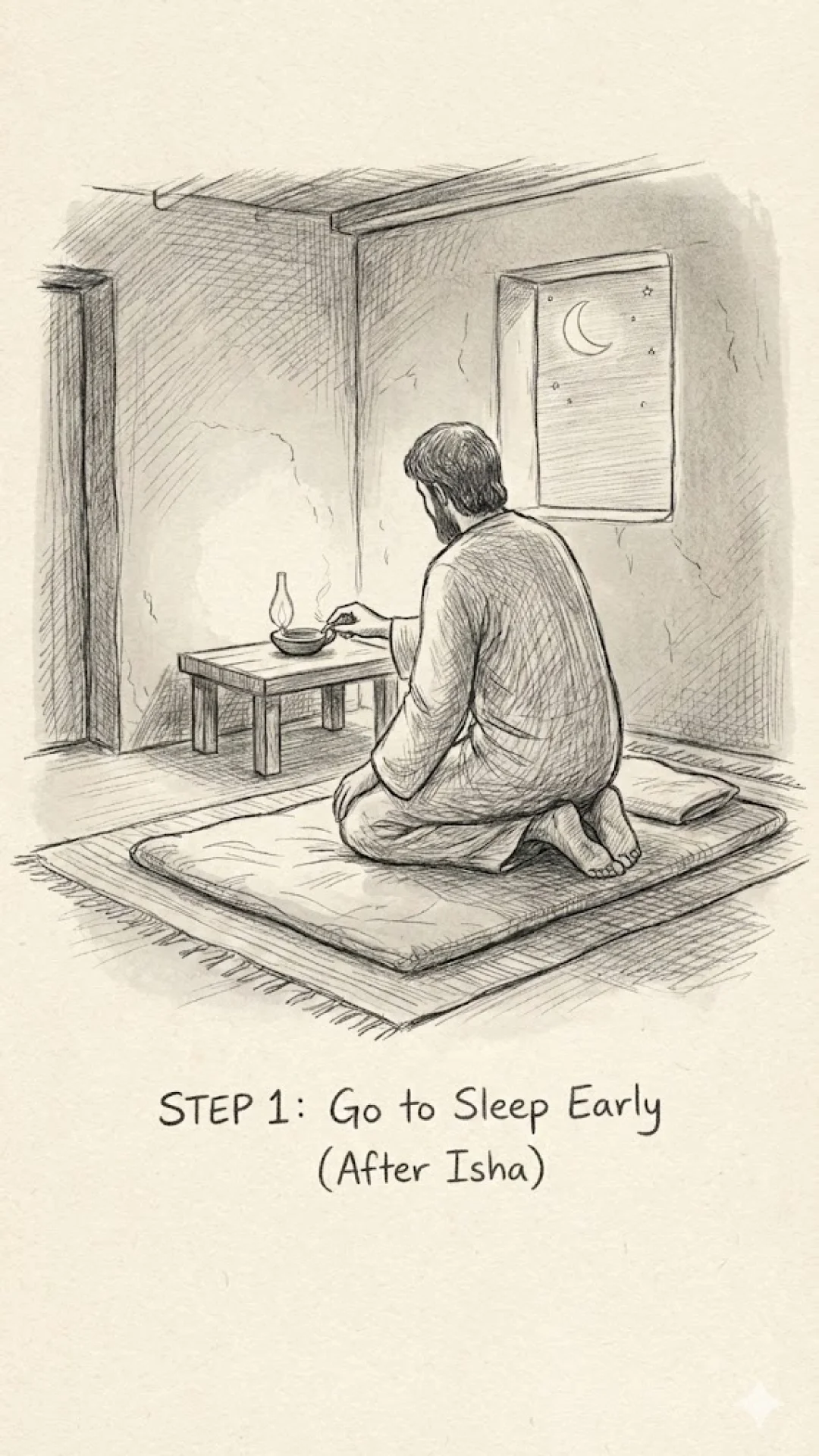
Step 1: He Went to Sleep Early
The Prophet ﷺ discouraged unnecessary talking after Isha prayer.
He would go to sleep within an hour or two after Isha. Not at midnight. Not at 2 AM. Early. This allowed him to wake up naturally before Fajr, rested and ready.
Modern sleep science confirms this.
Your body follows a natural rhythm tied to the sun. When the sun sets, your body produces melatonin—a hormone that signals it's time to sleep. When you stay up late staring at screens, you block melatonin production, making it harder to fall asleep and reducing the quality of your rest.
The Prophet ﷺ lived in harmony with this natural rhythm.
He worked during the day. He rested at night. Simple. Effective. Sustainable.
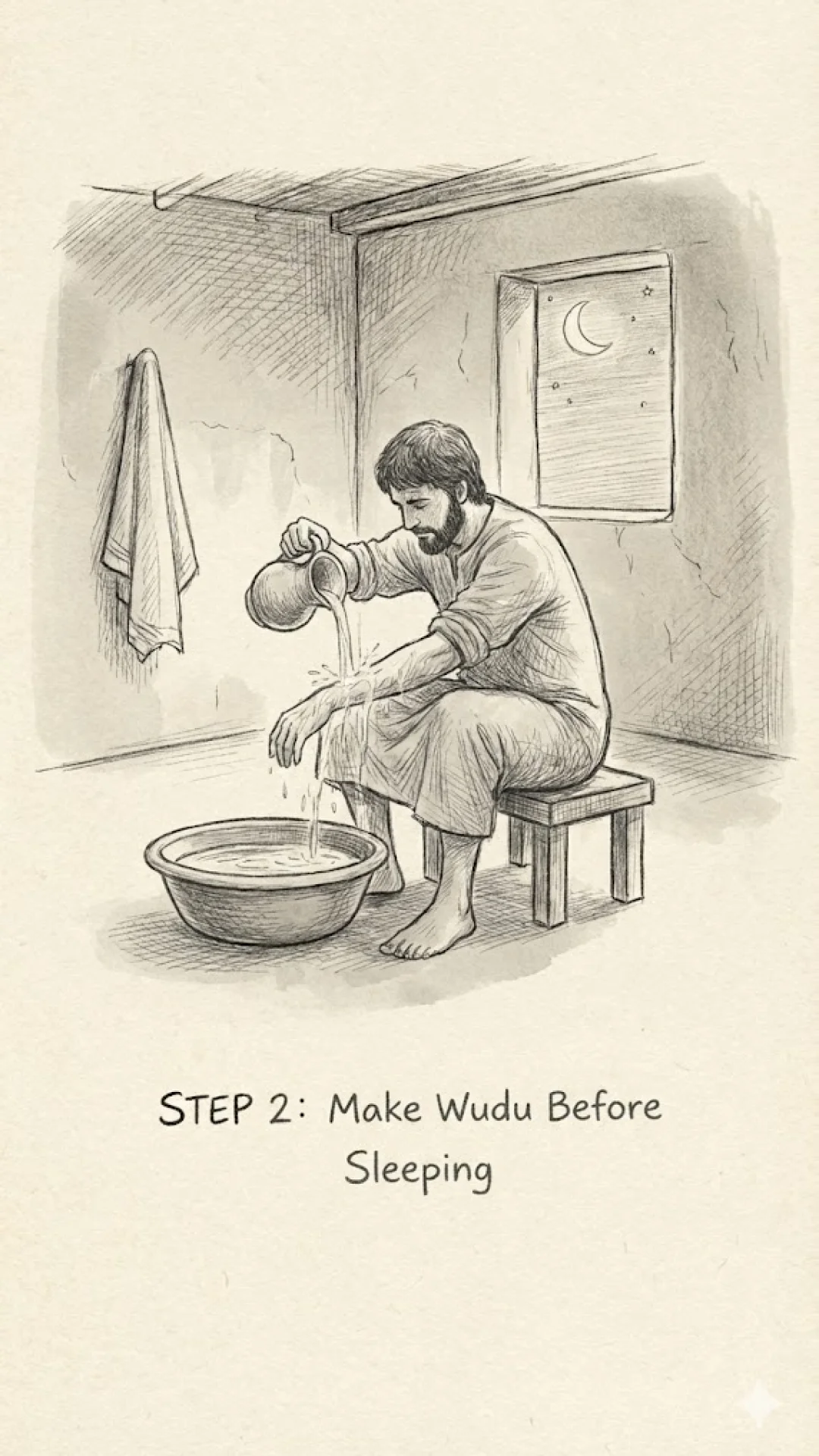
Step 2: He Made Wudu Before Sleeping
Before going to bed, the Prophet ﷺ would perform wudu—washing of the hands, mouth, nose, face, arms, head, and feet.
Why?
Three reasons.
First, physical purification. Wudu removes dirt, sweat, and impurities from your body. It's a mini-shower that refreshes you before bed.
Second, mental preparation.
The act of making wudu is calming. The cool water on your face and hands signals to your brain that it's time to wind down. It's a transition ritual that separates the chaos of the day from the peace of sleep.
Third, protection.
The Prophet ﷺ said that if you make wudu before sleeping and then die in your sleep, you die in a state of purity. An angel stays with you throughout the night, making dua for you. You're protected, covered, and in a state of worship even while unconscious.
Think about that.
You're literally earning reward while you sleep. Just by making wudu first.
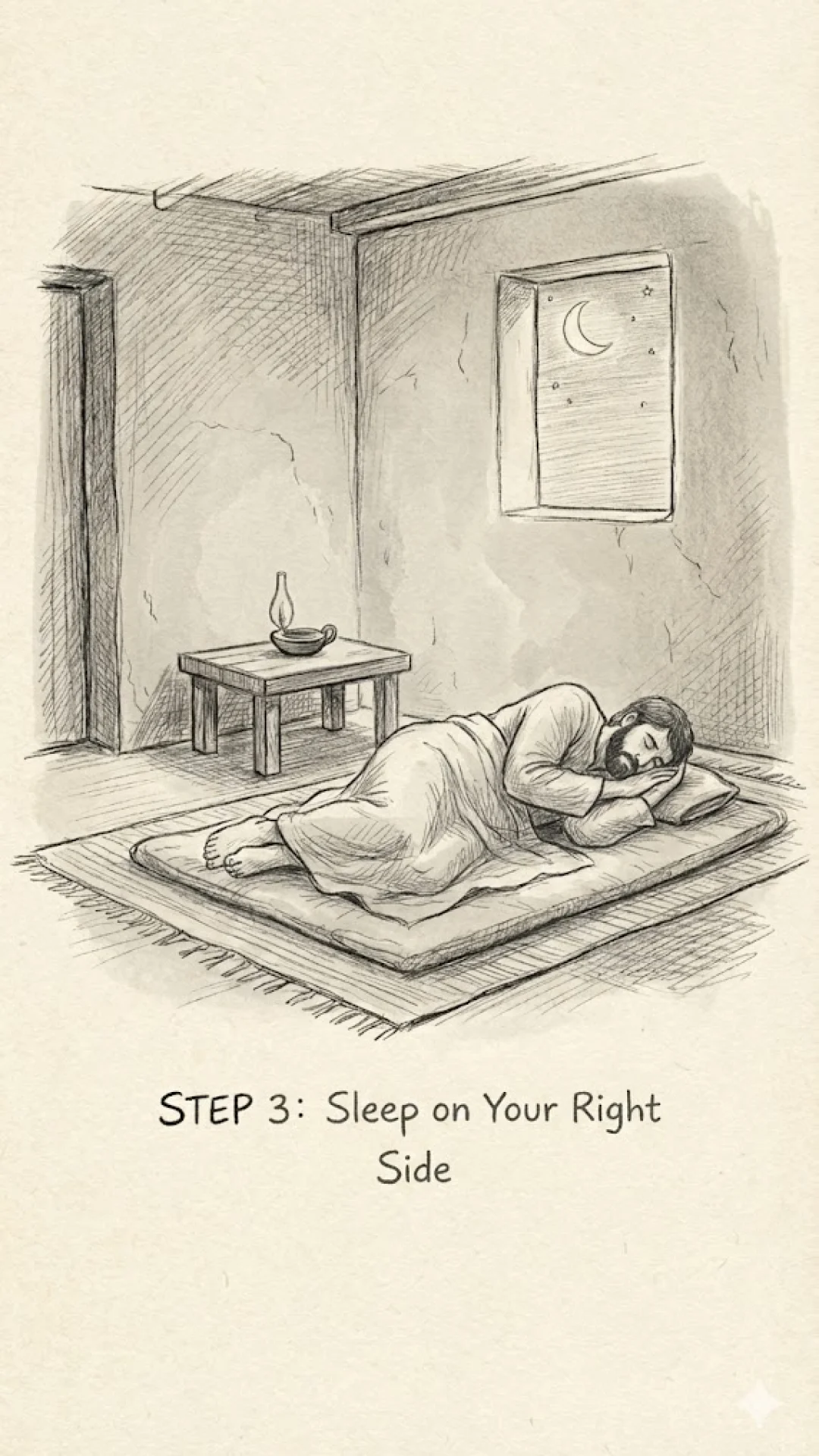
Step 3: He Slept on His Right Side
The Prophet ﷺ had a specific sleeping position: lying on his right side, with his right hand placed under his right cheek.
Modern medical research confirms that sleeping on your right side:
- Reduces pressure on your heart (since the heart is slightly left of center)
- Improves digestion by allowing gravity to help move food through your intestines
- Reduces acid reflux
- Promotes better lymphatic drainage
The Prophet ﷺ did this 1,400 years before cardiologists and gastroenterologists confirmed it.
He would also place his right hand under his right cheek. This position keeps your airway open, prevents snoring, and promotes deeper breathing.
He didn't sleep on his stomach.
He said that's the way the people of the Fire sleep. And modern science backs this up—sleeping on your stomach compresses your organs, strains your neck, and disrupts breathing.
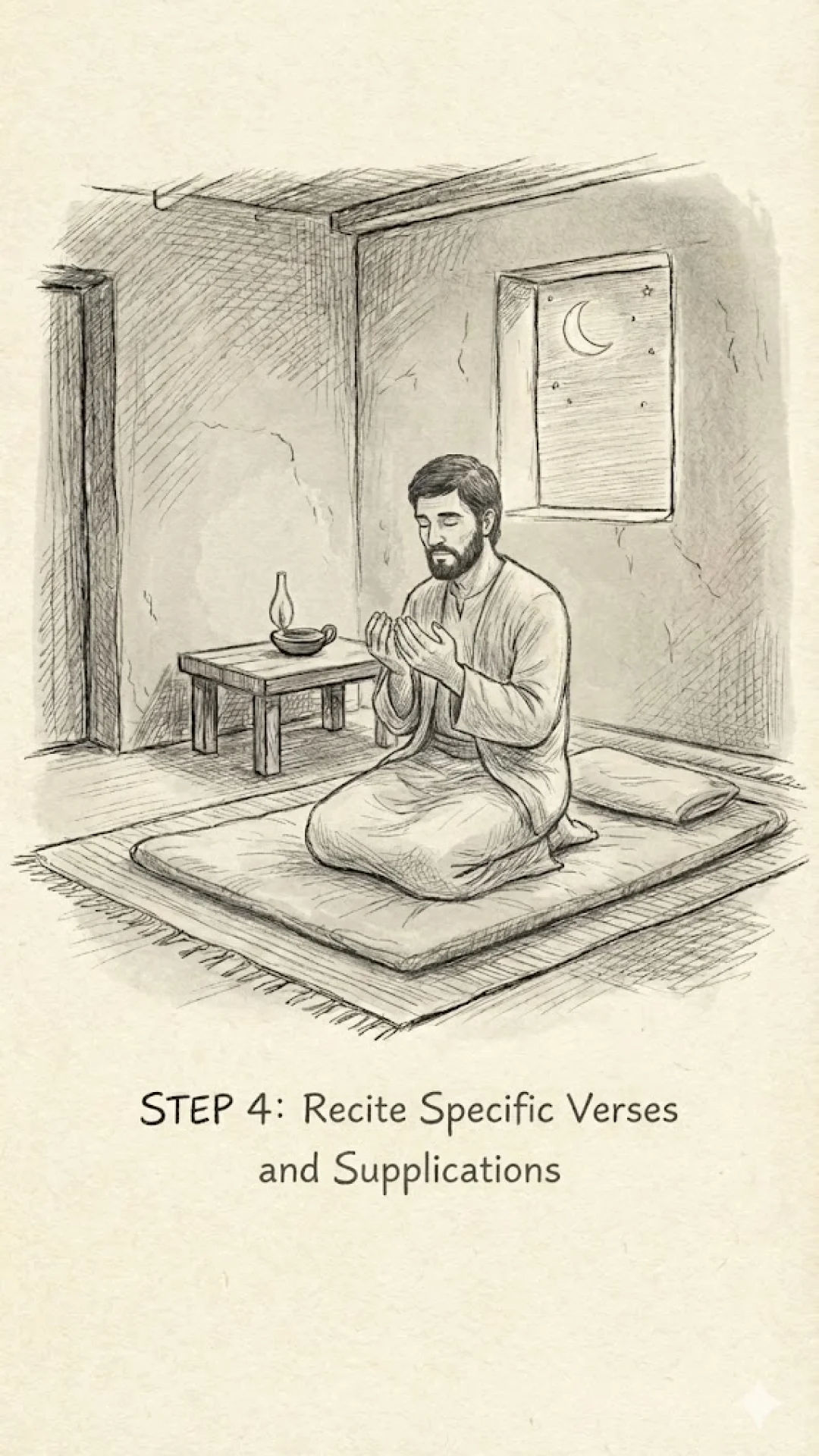
Step 4: He Recited Specific Verses and Supplications
The Prophet ﷺ didn't just lie down and close his eyes. He would recite specific verses and supplications that brought peace, protection, and barakah to his sleep.
Here's what he would recite every single night:
1) Ayat al-Kursi (Surah Al-Baqarah, verse 255)
...اللَّهُ لَا إِلَٰهَ إِلَّا هُوَ الْحَيُّ الْقَيُّومُ
He said that whoever recites Ayat al-Kursi before sleeping will be protected by Allah throughout the night, and no devil will approach them until morning.
When you recite this verse, you're surrounding yourself with divine words. You're acknowledging Allah's power, His watchfulness, His protection. And that brings peace to your heart and safety to your sleep.
2) The Last Two Verses of Surah Al-Baqarah (verses 285-286)
The Prophet ﷺ said that whoever recites these two verses at night, they will be sufficient for him.
Sufficient for what?
Protection from harm. Relief from anxiety. Enough to carry him through the night.
3) Surah Al-Ikhlas, Al-Falaq, and An-Nas (Three Times Each)
The Prophet ﷺ would cup his hands together, recite these three short surahs, blow into his hands, and then wipe them over his body—starting with his head and face, then his chest, and as much of his body as he could reach.
He would do this three times.
These surahs are about protection. Al-Ikhlas declares the oneness of Allah. Al-Falaq and An-Nas seek refuge from evil—from envy, from whispers, from harm.
By reciting them and wiping them over your body, you're creating a shield.
A barrier between you and anything that could harm you during the night.
4) The Bedtime Dua
After lying down on his right side, the Prophet ﷺ would say:
اللَّهُمَّ بِاسْمِكَ أَمُوتُ وَأَحْيَا
"O Allah, in Your name I die and I live."
This simple dua acknowledges that sleep is a form of death—a temporary departure from consciousness—and that waking up is resurrection.
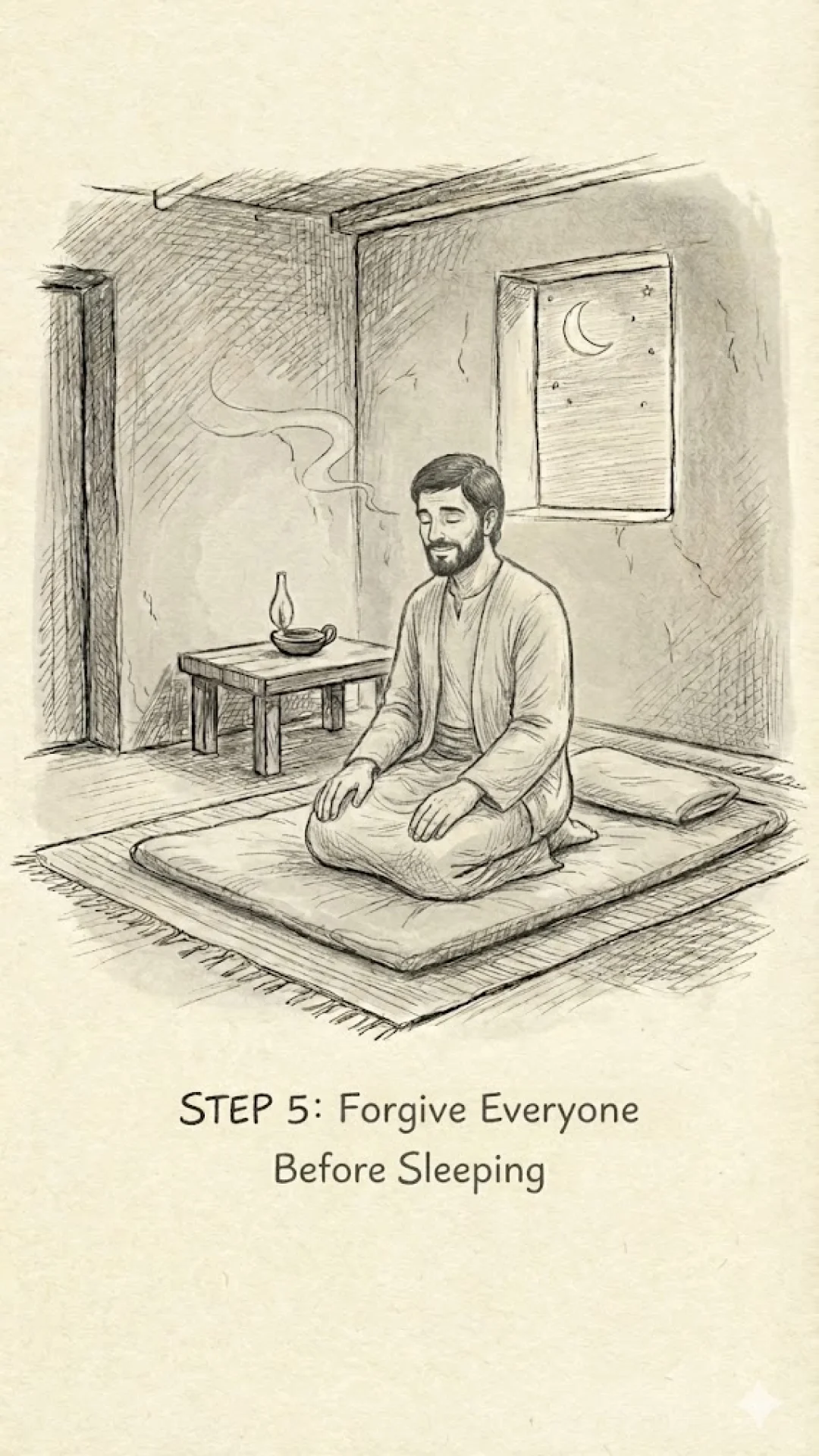
Step 5) He Forgave Everyone Before Sleeping
One of the most powerful habits the Prophet ﷺ practiced was this: he never went to sleep while holding a grudge.
If he had a disagreement with someone, he resolved it before sleeping. If someone wronged him, he forgave them. He didn't carry anger, resentment, or bitterness into his sleep.
Why?
Because unresolved conflict poisons your rest.
When you go to bed angry, your mind replays the situation over and over. You can't relax. You can't let go.
And you wake up just as angry—or angrier—than you were the night before.
The Prophet ﷺ understood that holding onto anger doesn't hurt the other person. It hurts you. It steals your peace. It blocks your prayers. It ruins your sleep.
So he let it go.
Every night. Before his head hit the pillow, his heart was clean.
And that's why he slept so peacefully.
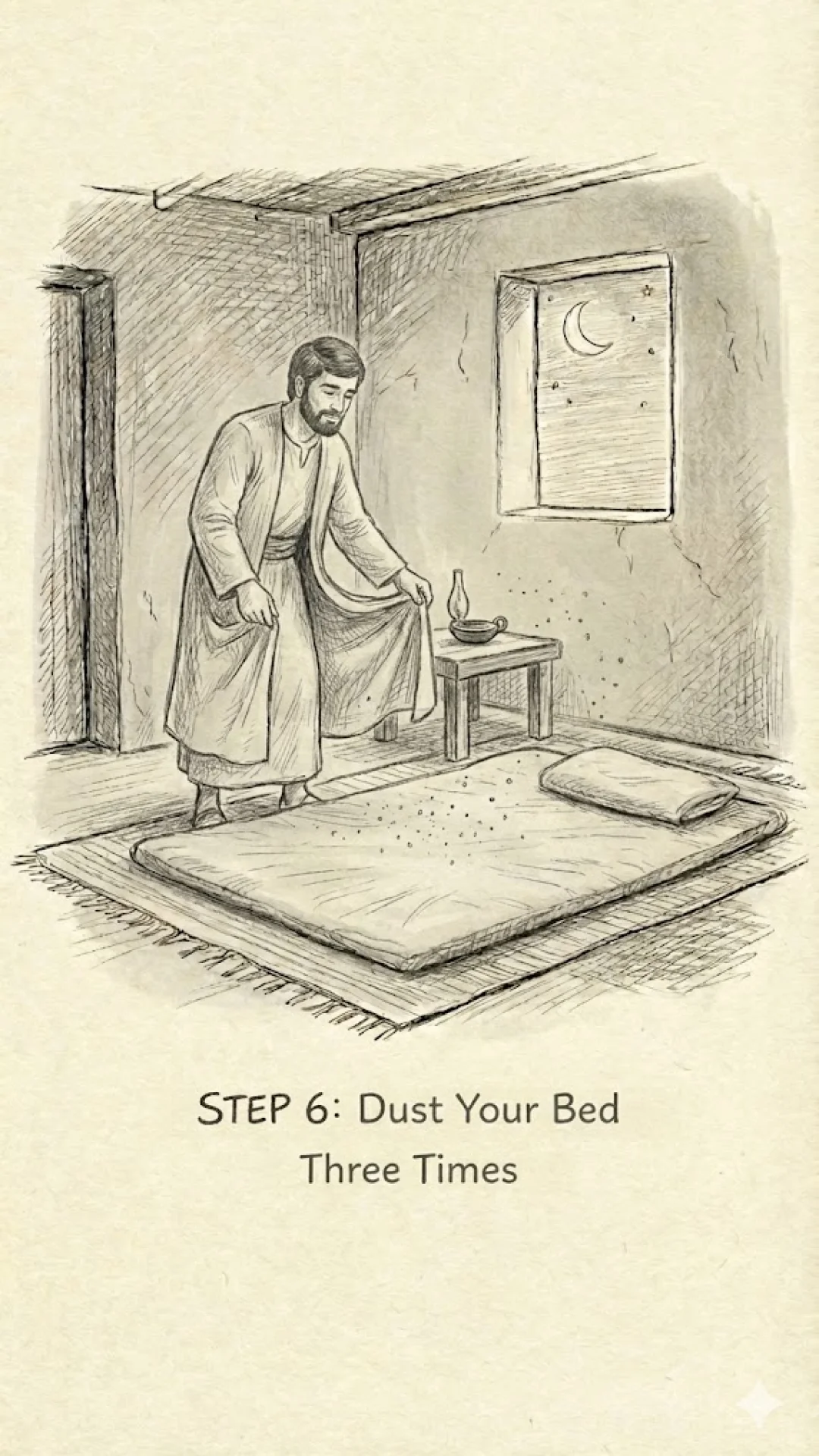
Step 6) He Dusted His Bed Three Times
Before lying down, the Prophet ﷺ would take the edge of his garment and dust off his bed three times.
He would say:
بِاسْمِكَ رَبِّي وَضَعْتُ جَنْبِي، وَبِكَ أَرْفَعُهُ، إِنْ أَمْسَكْتَ نَفْسِي فَارْحَمْهَا، وَإِنْ أَرْسَلْتَهَا فَاحْفَظْهَا بِمَا تَحْفَظُ بِهِ عِبَادَكَ الصَّالِحِينَ
"In Your name, my Lord, I lay down my side, and by You I raise it. If You take my soul, have mercy on it. And if You release it, protect it with that which You protect Your righteous servants."
This dua does three things.
First, it's a practical act—dusting your bed removes any dirt, insects, or harm that might have accumulated.
Second, it's a mindful transition—you're not just throwing yourself into bed, you're preparing your space intentionally.
Third, it's a surrender—you're acknowledging that you might not wake up, and if that happens, you're asking Allah for mercy.
The Prophet's ﷺ Wake-Up Routine: Starting the Day with Gratitude
The way you wake up is just as important as the way you fall asleep.
The Prophet ﷺ didn't wake up to the jarring sound of an alarm. He woke up naturally, before Fajr, refreshed and ready.
And the first words out of his mouth weren't complaints or groans. They were words of gratitude:
الْحَمْدُ لِلَّهِ الَّذِي أَحْيَانَا بَعْدَ مَا أَمَاتَنَا وَإِلَيْهِ النُّشُورُ
"All praise is to Allah who gave us life after causing us to die, and to Him is the resurrection."
Think about what this does.
Before checking your phone. Before worrying about your to-do list. Before thinking about anything else. You acknowledge that simply being alive is a gift. That every morning is a resurrection. That you've been given another chance.
He would also wipe his face with his hand to fully wake himself up, then make wudu and pray.
Why This Routine Works: The Science Behind the Sunnah
Everything the Prophet ﷺ did has been validated by modern research.
Sleeping on your right side improves heart function and digestion. Studies published in the Journal of Clinical Gastroenterology confirm that sleeping on the right side reduces acid reflux and promotes better digestion.
Going to bed early and waking up early aligns with your circadian rhythm.
Research shows that early sleepers have better mental health, lower rates of depression, and higher productivity.
Making wudu before bed cools your body temperature, which signals your brain to produce melatonin. Cooler body temperature equals deeper sleep.
Reciting Quran before sleeping calms the mind. Studies on meditation and mindfulness show that repetitive, focused recitation reduces anxiety and promotes relaxation.
Forgiving before sleeping reduces cortisol (the stress hormone). When you let go of anger and resentment, your body relaxes, your heart rate slows, and you sleep more deeply.
The Common Sleep Mistakes You're Probably Making
Let's talk about what you're doing wrong.
Mistake 1: Staying Up Too Late
If you're going to bed at midnight or later, you're robbing yourself of the most productive hours of the next morning.
The Prophet ﷺ discouraged staying up late unnecessarily.
The night is for rest and the early morning is for productivity.
Mistake 2: Sleeping on Your Stomach
The Prophet ﷺ warned against this.
He said it's the way the people of the Fire sleep. Modern doctors agree—sleeping on your stomach compresses your organs, strains your spine, and disrupts breathing.
Mistake 3: Scrolling Before Bed
Blue light from screens suppresses melatonin production.
Every minute you spend on your phone before bed is making it harder to fall asleep and reducing the quality of your rest.
Mistake 4: Going to Bed Angry
Unresolved conflict ruins your sleep.
If you're holding onto anger, resentment, or bitterness, your mind won't rest. Forgive before you sleep. Let it go.
The 30-Day Sleep Challenge
Here's the challenge: follow the Prophet's ﷺ sleep routine for 30 days and see what happens.
Night 1-10: Build the Foundation
Start with the basics.
Go to bed within an hour after Isha. Make wudu before sleeping. Sleep on your right side.
Recite Ayat al-Kursi.
Night 11-20: Add the Protection
Continue the basics and add the last two verses of Surah Al-Baqarah.
Add Surah Al-Ikhlas, Al-Falaq, and An-Nas three times each.
Night 21-30: Complete the Routine
Add all the supplications.
Forgive everyone before sleeping. Dust your bed. Say the bedtime dua. Wake up with gratitude.
By Day 30, this won't feel like a chore; it will become a seamless part of your daily sunnah routine.
And you'll sleep deeper. You'll wake up easier. You'll feel more energized, more focused, and more at peace.
Not because you're doing something complicated. But because you're following the way of the best human being who ever lived.
The Reward
This is the most beautiful part.
When you follow the Prophet's ﷺ sleep routine, your sleep becomes worship.
You're not just resting. You're obeying Allah. You're following the Sunnah. You're earning reward while unconscious.
The Prophet ﷺ said that a believer's sleep is rest and reward. When you sleep with the intention of preparing yourself for Fajr, for worship, for serving others the next day—that sleep counts.
So every hour you sleep in a state of wudu, on your right side, after reciting the adhkar, is an hour of worship.
You're literally being rewarded for something your body needs anyway.
Start Tonight
You don't need to wait for the perfect time. You don't need to overhaul your entire life. You just need to start tonight.
Make wudu before bed. Sleep on your right side. Recite Ayat al-Kursi. Say the bedtime dua.
That's it.
Four simple actions. And tomorrow morning, notice the difference.
You'll wake up calmer. Clearer. More grateful. More prepared.
And over time, as you build the full routine, you'll transform not just your sleep, but your entire life.
Because when you rest like the Prophet ﷺ, you live like the Prophet ﷺ.
And there's no better way to live than that.
