
February 20, 2026
Sunnah of Hygiene: Cleanliness as a Way of Life
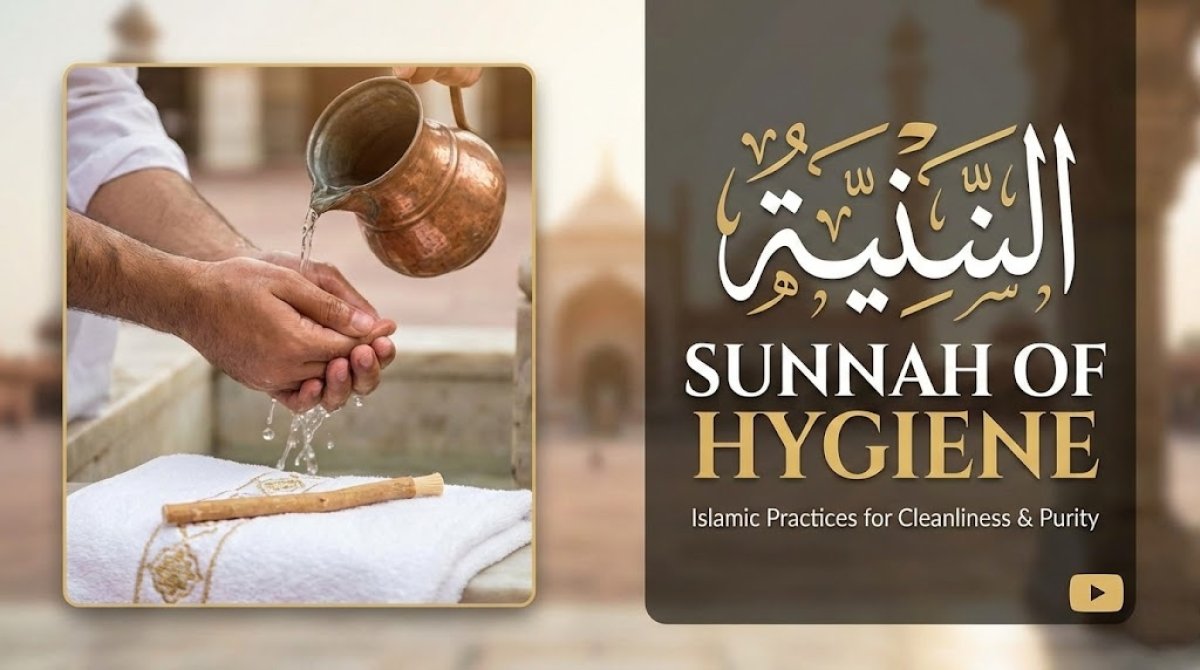
His clothes were clean. His hair was groomed. His body smelled of musk and perfume. His teeth were white.
Read Article →
There's a man who lived 1,400 years ago whose daily habits have been studied, documented, and followed by billions of people across continents and centuries.
His morning routine didn't involve checking his phone. His diet wasn't influenced by the latest health trends.
And yet, the way he lived—the Prophet Muhammad ﷺ—has produced some of the most disciplined, balanced, and purposeful people in human history.
Sunnah is a complete operating system for your life. A blueprint for how to eat, sleep, work, speak, rest, and interact with others in a way that brings you peace, productivity, and purpose.
Modern self-help gurus charge thousands of dollars for courses on habits, routines, and optimization. But the Prophet ﷺ already showed us how to live optimally—1,400 years ago.
For free. In every detail.
Let's be honest.
Most of us wake up the same way: alarm blaring, hitting snooze three times, finally dragging ourselves out of bed feeling groggy and resentful. We check our phones before our eyes are fully open. We scroll through notifications, emails, and social media—absorbing negativity, comparison, and anxiety before we've even said a word to another human being.
We skip breakfast or grab something quick and unhealthy. We rush through our day in a constant state of reactivity—putting out fires, responding to demands, feeling perpetually behind.
We eat lunch at our desks, barely tasting the food. We come home exhausted, mindlessly consume content for hours, eat dinner too late, and collapse into bed with our minds still racing.
Then we wonder why we feel drained, anxious, and unfulfilled.
The Prophet's ﷺ routine was the exact opposite.
Intentional. Balanced. Purposeful.
Rooted in gratitude, mindfulness, and connection to something greater than himself.
Most people lose their day before it even starts.
They wake up reactive, rushed, and already behind. The Prophet ﷺ did the opposite.
He owned his mornings.
He would wake up before Fajr, not to the jarring sound of an alarm, but naturally, with a clear mind and a grateful heart. The first words he would say were words of gratitude:
"Alhamdulillahil ladhi ahyana ba'da ma amatana wa ilayhin nushoor."
All praise is due to Allah who gave us life after causing us to die, and to Him is the resurrection.
Notice what's happening here. Before checking anything. Before worrying about anything. Before doing anything. He acknowledged that simply being alive is a gift. That every new day is a mercy. That waking up itself is resurrection—a second chance.
That mindset changes everything.
Then he would make wudu—not just for prayer, but as an act of purification and preparation. He would pray Tahajjud, the night prayer, in the last third of the night. This wasn't obligatory, but he did it because he understood something most people don't: the quiet hours before dawn are when you're most focused, most connected, and most productive.
Modern productivity experts call it "the miracle morning." The Prophet ﷺ was doing it 1,400 years ago.
After Tahajjud, he would pray Fajr—the pre-dawn prayer. Then he wouldn't go back to sleep. He would stay awake, making dhikr (remembrance of Allah), reading Quran, and preparing for the day ahead. He understood that how you start your morning determines how you live your day.
If you wake up rushed and reactive, you'll spend the whole day playing catch-up. But if you wake up early, calm, and centered, you set the tone for everything that follows.
The Prophet ﷺ also prayed Ishraq—a voluntary prayer about 15-20 minutes after sunrise. He said that whoever prays Fajr in congregation, sits remembering Allah until the sun rises, then prays two rak'ahs, gets the reward of Hajj and Umrah—complete, complete, complete.
Think about that. The reward of a lifetime journey. Just by structuring your morning correctly.
If you want to understand exactly how to implement the Sunnah of morning in a way that transforms your entire day, there's a detailed breakdown that shows you not just what to do, but why it works and how to make it sustainable even in the chaos of modern life.
Most of us eat mindlessly.
We eat because we're bored. We eat because food is there. We eat while scrolling, while watching TV, while working. We overeat until we feel sluggish and regretful. We eat foods that taste good but make us feel terrible.
The Prophet ﷺ ate differently.
Not as a means of indulgence, but as fuel for his body and an act of worship.
He followed a simple principle that modern nutritionists are only now catching up to: divide your stomach into thirds. One third for food. One third for water. One third for air.
No overeating. No stuffing yourself until you can barely move. Just enough to sustain you, energize you, and keep you functioning at your best.
He ate with his right hand, using three fingers.
Why three? Because it prevents overeating. When you use a spoon or fork, you shovel food in quickly without thinking. When you use three fingers, you eat slowly, mindfully, savoring each bite.
He would sit on the floor when eating, not reclined on a couch. This posture aids digestion and prevents the kind of lazy, mindless eating that leads to weight gain and lethargy.
He would say "Bismillah" (In the name of Allah) before eating and "Alhamdulillah" (All praise is to Allah) after.
He also taught that you should never criticize food.
If you like it, eat it. If you don't, leave it. But don't complain.
This attitude eliminates so much unnecessary negativity and teaches gratitude even for the meals we don't particularly enjoy.
And here's something modern science has confirmed: he would stop eating before he was full. He said the worst vessel a human being can fill is his stomach. Overeating leads to sluggishness, disease, and a clouded mind. Eating moderately keeps you sharp, energized, and healthy.
If you struggle with overeating, emotional eating, or just want to transform your relationship with food, the Sunnah of eating breaks down every principle the Prophet ﷺ followed and how to apply it in your life today.
Sleep is not an afterthought. It's a necessity.
And the way you sleep affects everything—your mood, your focus, your health, your relationships.
Most people collapse into bed exhausted, scroll for another hour, and then wonder why they can't fall asleep or why they wake up tired. The Prophet ﷺ had a completely different approach.
He would make wudu before sleeping.
This act of purification serves multiple purposes. Physically, it cools you down and signals to your body that it's time to rest.
Mentally, it clears your mind.
And if you happen to die in your sleep, you die in a state of purity.
He would sleep on his right side, with his right hand under his right cheek.
Modern science now confirms that sleeping on your right side is better for your heart and digestion. The Prophet ﷺ knew this 1,400 years ago.
He would recite specific verses and supplications before sleeping.
Ayat al-Kursi for protection. The last two verses of Surah Al-Baqarah. Surah Al-Ikhlas, Al-Falaq, and An-Nas. These weren't just rituals—they were acts of protection, gratitude, and remembrance that brought peace to his heart and mind before sleep.
He also made a practice of forgiving everyone before going to bed.
He wouldn't sleep with anger, resentment, or unresolved conflict in his heart. This practice alone would eliminate so much of the anxiety and insomnia people experience today.
And he didn't stay up late unnecessarily. He understood that the night is for rest and the early morning is for productivity. Staying up late scrolling, watching, or doing meaningless things robs you of the most productive hours of the next day.
The way you end your day determines how you start the next one.
If you want to wake up refreshed, energized, and ready to conquer the day, you need to master your sleep routine.
Every detail of the Sunnah of sleep is explained with practical steps you can implement tonight.
In a time when basic hygiene was rare, the Prophet ﷺ set a standard that modern medicine would later confirm as essential for health.
He used the miswak—a natural tooth-cleaning stick—multiple times a day.
Not just before prayer, but after waking up, before eating, after eating, and before sleeping. Modern dentists now confirm that miswak contains natural antibacterial properties and is more effective than many modern toothpastes.
He trimmed his nails regularly, kept his hair clean and groomed, and wore clean clothes. He applied perfume—not to show off, but because pleasant scent is part of human dignity.
He taught that cleanliness is half of faith.
Not because Allah needs you to be clean, but because how you care for yourself reflects how you value yourself. If you neglect your hygiene, you're neglecting your dignity.
He also emphasized cleanliness of character—avoiding foul language, gossip, and anything that pollutes the heart and tongue.
If you want a full breakdown of every hygienic practice the Prophet ﷺ followed and how to incorporate them into your modern routine, the Sunnah of hygiene covers everything from the miswak to the etiquette of using the bathroom.
One of the most overlooked aspects of the Prophet's ﷺ life is how he interacted with people.
He smiled. Constantly. Not a fake, forced smile, but a genuine expression of warmth and approachability.
His Companions said that he never met anyone without a smile on his face.
He gave salam—greetings of peace—to everyone he met. Not just to friends or people he knew, but to strangers, children, even people who didn't like him. This simple act breaks down barriers, creates connection, and spreads positivity.
He listened more than he spoke. When someone talked to him, he gave them his full attention. He didn't interrupt. He didn't check his phone. He didn't look over their shoulder to see if someone more important was coming. He made them feel like they were the most important person in the world at that moment.
He spoke with kindness and clarity. No harsh words. No unnecessary arguments. No gossip or backbiting. If he had nothing good to say, he remained silent.
He also set boundaries.
He didn't allow people to drain him. He took time alone for reflection, rest, and worship. He understood that you can't pour from an empty cup.
Be warm. Be present. Be kind. And protect your energy.
If you want to learn how to navigate social situations without burning out, how to build meaningful relationships instead of shallow connections, and how to communicate in a way that uplifts instead of drains, the Sunnah of socializing gives you the complete framework.
Let's put it all together.
Here's what a day structured around the Prophet's ﷺ routine looks like:
Before Dawn: Wake up naturally before Fajr. Make wudu. Pray Tahajjud. Spend time in dhikr and Quran. Pray Fajr. Stay awake until sunrise. Pray Ishraq.
Morning: Work or engage in productive activities. The Prophet ﷺ would meet with people, handle community affairs, teach, and lead. But he did it all with calm, focus, and presence.
Midday: Pray Dhuhr. Take a short nap (Qaylulah). This isn't laziness—modern science confirms that a 20-30 minute nap after lunch boosts productivity, memory, and mood for the rest of the day.
Afternoon: Pray Asr. Continue working or engaging in beneficial activities. Spend time with family. Exercise (the Prophet ﷺ was physically active—he wrestled, raced, and walked regularly).
Evening: Pray Maghrib. Eat a moderate dinner. Spend time with family. Engage in light conversation, laughter, and connection.
Night: Pray Isha. Pray Taraweeh if it's Ramadan, or voluntary prayers if it's not. Make wudu before bed. Recite your bedtime adhkar. Forgive everyone. Sleep early on your right side.
That's it. Simple. Balanced. Sustainable.
And it produces a life of discipline, peace, and purpose.
Everything the Prophet ﷺ did has been validated by modern research:
Waking up early improves focus, productivity, and mental health. Studies show that early risers are more proactive, optimistic, and successful.
The one-third rule for eating prevents overeating, reduces digestive issues, and promotes longevity. Nutritionists worldwide now recommend portion control and mindful eating.
Sleeping on your right side improves heart function and digestion. Medical studies confirm this position is optimal for rest.
Using the miswak improves oral health.
Research shows it fights bacteria, strengthens gums, and whitens teeth naturally.
Taking a midday nap boosts cognitive function. NASA studied naps and found that a 26-minute nap improved performance by 34% and alertness by 54%.
Smiling reduces stress and improves mood. Neuroscience shows that even forced smiles trigger the release of dopamine and serotonin.
The Prophet ﷺ wasn't guessing. He was living according to divine guidance—and modern science is only now catching up.
Reading this article won't change your life.
Only action will.
So here's the challenge: pick ONE aspect of the Prophet's ﷺ routine and commit to it for 30 days.
Maybe it's waking up for Fajr and praying Ishraq. Maybe it's eating moderately and mindfully. Maybe it's making wudu and reciting adhkar before bed. Maybe it's smiling at everyone you meet.
Just one. For 30 days. And watch what happens.
Because transformation doesn't come from doing everything at once. It comes from doing one thing consistently until it becomes who you are.
The Prophet ﷺ didn't overwhelm people with a hundred rules. He taught them one thing at a time. And each habit built on the last until they had completely transformed their lives.
You can do the same.
Start today. Pick one Sunnah. Commit to it for a month. And watch how it changes everything.

His clothes were clean. His hair was groomed. His body smelled of musk and perfume. His teeth were white.
Read Article →
Wake up before Fajr. Say the morning dua. Make wudu. Pray Tahajjud. Pray Fajr. Stay awake. Make dhikr. Pray Ishraq. Eat breakfast with gratitude.
Read Article →
Say Bismillah. Sit properly. Eat with your right hand. Stop before you're full. Thank Allah when you're done.
Read Article →
The Prophet ﷺ didn't just collapse into bed whenever exhaustion hit. He had a deliberate, intentional sleep routine that maximized rest.
Read Article →