There's a question that haunts every sincere Muslim at some point in their journey: Am I doing enough?
You pray your five daily prayers.
You fast Ramadan. You give charity when you can. You try to be a good person. But deep down, there's this nagging feeling that you could be doing more.
That there's a level of closeness to Allah you haven't reached yet. That the great Muslims of the past had something you don't.
And you're right.
They did have something. But it wasn't some secret knowledge or mystical experience. It was simpler than that.
They prayed more.
Not just the obligatory prayers. They prayed the voluntary prayers—the ones most Muslims skip.
They woke up in the middle of the night when everyone else was sleeping. They prayed in the brightness of the morning when most people were rushing to work. They turned every Friday into a day of heightened worship.
They remembered Allah with their tongues constantly, whether using their fingers or beads to count.
These are the prayers and practices that separate those who simply fulfill their duties from those who thrive in their relationship with Allah.
The ones who don't just avoid the Fire, but actively pursue closeness to their Creator.
Why Voluntary Worship Matters More Than You Think
Let's start with a fundamental truth that changes everything: Allah doesn't need your worship.
He's not benefiting from your prayers.
He's not enriched by your fasting. He's not made more powerful by your dhikr. He's completely self-sufficient. Perfect. Independent of all creation.
So why does He command worship?
And why does He encourage voluntary acts beyond the obligatory ones?
Because you need it. Your soul needs it. Your heart needs it.
The obligatory acts—the five daily prayers, Ramadan, Zakat, Hajj—are the foundation. They're the bare minimum required to keep your faith alive and your soul from deteriorating.
But the voluntary acts?
Those are what elevate you. Those are what polish your heart, deepen your connection, and transform you from someone who merely obeys into someone who loves.
The Prophet ﷺ explained this through a hadith Qudsi, where Allah says:
وَمَا تَقَرَّبَ إِلَيَّ عَبْدِي بِشَيْءٍ أَحَبَّ إِلَيَّ مِمَّا افْتَرَضْتُ عَلَيْهِ، وَمَا يَزَالُ عَبْدِي يَتَقَرَّبُ إِلَيَّ بِالنَّوَافِلِ حَتَّى أُحِبَّهُ
"My servant does not draw near to Me with anything more beloved to Me than what I have made obligatory upon him. And My servant continues to draw near to Me with voluntary acts until I love him." (Sahih al-Bukhari)
Read that again.
When you perform voluntary acts consistently, Allah doesn't just accept your worship—He begins to love you.
And when Allah loves you, everything changes.
Your duas are answered. Your affairs become easy. Protection surrounds you. Barakah enters your life. Doors open that you didn't even know existed.
That's why the great scholars and righteous people throughout history weren't content with just the obligatory prayers.
They understood that the voluntary prayers are the secret to transformation.
Understanding Sunnah Prayers
Before diving into specific prayers, you need to understand the different types of Sunnah prayers and how they fit into your day.
Sunnah prayers fall into several categories:
The Rawatib are the regular Sunnah prayers attached to the five daily obligatory prayers.
The Prophet ﷺ prayed these consistently—so consistently that they're considered near-obligatory for anyone serious about following his way.
There are twelve rak'ahs of Rawatib total: two before Fajr, four before Dhuhr and two after, two after Maghrib, and two after Isha. (You can see the full chart here)
The Prophet ﷺ said that whoever prays these twelve rak'ahs daily, Allah will build a house for them in Paradise.
Then there are the standalone voluntary prayers like Tahajjud, Duha, Ishraq, and Witr. These aren't tied to the obligatory prayers. They're independent acts of worship with their own specific times and tremendous rewards.
Finally, there are prayers for specific occasions—like the prayer for seeking guidance (Istikhara), the prayer for need (Salat al-Hajah), and the prayer of repentance (Salat at-Tawbah).
Each of these prayers serves a purpose. Each one opens a door.
And when you start incorporating them into your routine, you'll notice something remarkable: your relationship with prayer transforms from obligation to conversation.
Tahajjud: The Prayer That Separates the Sincere from the Casual
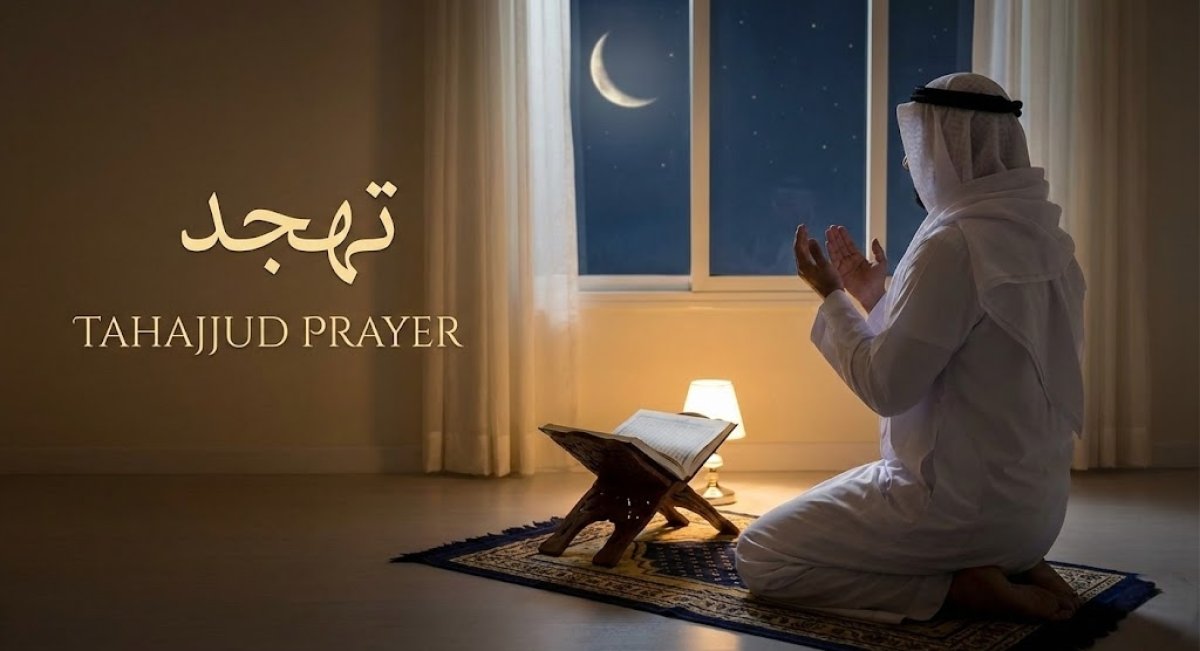
If there's one voluntary prayer that defines a person's seriousness about their faith, it's Tahajjud—the night prayer performed in the last third of the night, before Fajr.
The Prophet ﷺ never abandoned this prayer.
Not when he was traveling. Not when he was sick. Not when he was exhausted from battle.
He would wake up, sometimes so tired that his feet would swell from standing, and pray long into the night.
Why?
Because the night prayer is where transformation happens.
Allah Himself descends to the lowest heaven during the last third of the night and calls out:
مَنْ يَدْعُونِي فَأَسْتَجِيبَ لَهُ، مَنْ يَسْأَلُنِي فَأُعْطِيَهُ، مَنْ يَسْتَغْفِرُنِي فَأَغْفِرَ لَهُ
"Who is calling upon Me so I may answer him? Who is asking of Me so I may give him? Who is seeking My forgiveness so I may forgive him?" (Sahih al-Bukhari)
This is the moment when heaven and earth are closest.
When duas are most likely to be answered. When sins are most readily forgiven. When the heart is most receptive to guidance.
The Prophet ﷺ said that Tahajjud is the best prayer after the obligatory prayers. Better than any other voluntary act you can do.
Those who pray Tahajjud consistently report the same experience: clarity in their decisions, peace in their hearts, strength in their character, and a sense of connection with Allah that they can't find anywhere else.
When you sacrifice sleep to stand before Allah, you're proving to yourself and to Him that you value that relationship more than comfort. And that sincerity opens doors.
If you want to understand the full depth, timing, and method of this transformative prayer, the complete breakdown of Tahajjud Prayer will show you exactly how to make this the cornerstone of your worship.
This beautiful prayer was already part of the daily routine of Prophet Muhammad.
In the Sunnah of his mornings, waking up before Fajr was not only about praying — it was about using the most blessed hours of the day in the best way.
Salat al-Duha
While most people are rushing to work, distracted and reactive, there's a prayer that brings barakah, protection, and productivity to your entire day.
It's called Salat al-Duha—the mid-morning prayer.
This prayer is performed after the sun has fully risen and before the time of Dhuhr begins. Typically between 15-20 minutes after sunrise until about an hour before noon.
The Prophet ﷺ described it as the prayer of the penitent—those who turn to Allah seeking His mercy and forgiveness. He also called it Salat al-Awwabin—the prayer of those who return to Allah.
The minimum is two rak'ahs. The maximum is eight.
The Prophet ﷺ most commonly prayed four rak'ahs, two at a time.
And the reward? He said:
يُصْبِحُ عَلَى كُلِّ سُلَامَى مِنْ أَحَدِكُمْ صَدَقَةٌ... وَيُجْزِئُ مِنْ ذَلِكَ رَكْعَتَانِ يَرْكَعُهُمَا مِنَ الضُّحَى
"Every morning, charity is due on every joint of yours... and two rak'ahs prayed in the mid-morning (Duha) are sufficient for that." (Sahih Muslim)
You have 360 joints in your body. Each one requires a charity every day. But just two rak'ahs of Duha prayer fulfills that obligation.
Beyond that, the scholars have noted that people who pray Duha consistently experience barakah in their time, their work, and their sustenance.
There's something about starting your day with voluntary worship—after you've already prayed Fajr.
This prayer is closely connected to another powerful practice: Salat al-Ishraq, which is simply Duha prayer performed at its earliest time (about 15 minutes after sunrise).
The Prophet ﷺ said that whoever prays Fajr in congregation, sits remembering Allah until sunrise, then prays two rak'ahs, gets the reward of a complete Hajj and Umrah.
One prayer. The reward of a lifetime journey.
For the complete understanding of this prayer—its timing, benefits, and how to incorporate it into your routine—read this dedicated guide on Salat-ul-Duha where I tried to give every question's anewer.
Jumu'ah: The Day That Demands More
Friday isn't just another day. It's the best day of the week.
The day when Allah created Adam. The day when the Hour will be established. The day when there's a specific hour during which every dua is answered.
The Prophet ﷺ said:
خَيْرُ يَوْمٍ طَلَعَتْ عَلَيْهِ الشَّمْسُ يَوْمُ الْجُمُعَةِ
"The best day on which the sun rises is Friday." (Sahih Muslim)
And because it's the best day, it demands more from you. Not as a burden, but as an opportunity.
The Prophet ﷺ had specific practices for Friday.
He would take a full bath (ghusl) on Friday morning, even if he wasn't in a state of ritual impurity.
He would wear his best clean clothes.
He would apply perfume. He would arrive at the mosque early. He would recite Surah Al-Kahf. He would send abundant blessings upon the Prophet ﷺ. He would make specific duas during the time of acceptance.
And those who follow these practices report the same thing: Friday feels different.
It feels elevated.
It feels like a breath of fresh air in the middle of a busy week.
There are ten specific practices that the Prophet ﷺ followed on Jumu'ah, and when you implement them, you don't just attend Friday prayer—you experience it.
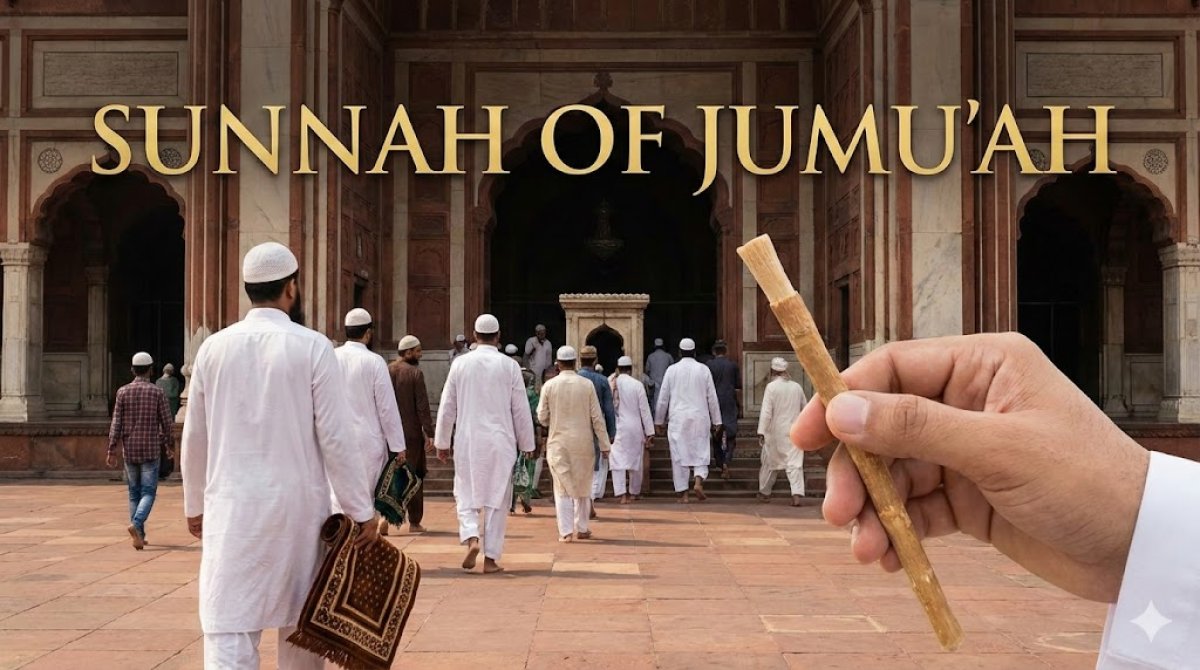
Every detail, every timing, and every practice is explained in our previous article: sunnah of Jumu'ah.
You can check that out.
Wudu: The Foundation You're Probably Getting Wrong
Before you can pray any of these voluntary prayers, you need wudu—the ritual washing that purifies you and prepares you to stand before Allah.
Most Muslims have been making wudu since childhood.
But most Muslims are making mistakes in their wudu.
Small mistakes that don't invalidate it, but that mean they're missing the full reward and the full benefit.
The Prophet ﷺ was meticulous about wudu.
He would wash each part thoroughly. He would use minimal water but ensure complete coverage. He would follow a specific order.
He said:
مَنْ تَوَضَّأَ فَأَحْسَنَ الْوُضُوءَ خَرَجَتْ خَطَايَاهُ مِنْ جَسَدِهِ حَتَّى تَخْرُجَ مِنْ تَحْتِ أَظْفَارِهِ
"Whoever performs wudu and does it well, his sins will exit from his body, even from under his fingernails." (Sahih Muslim)
But "doing it well" requires knowing what you're doing.
And most people don't.
Common mistakes include rushing through it, not washing each part three times, missing the areas between fingers and toes, not rinsing the mouth and nose properly, and performing the steps out of order.
Each of these mistakes doesn't invalidate your wudu, but they reduce the reward and the purification.
The Prophet ﷺ demonstrated wudu multiple times to his Companions, ensuring they understood every detail.
And when you perform wudu the way he did, you'll notice something: it becomes more than a preparation for prayer. It becomes a moment of mindfulness, a reset, a purification that affects not just your body but your state of mind.
If you want a clear and simple guide that shows the correct way to make wudu — step by step — and helps you avoid common mistakes, read a detailed guide on how to perform wudu according to the Sunnah.
Proper wudu was very important in the life of Prophet Muhammad.
In the Sunnah of hygiene, cleanliness is not only about washing the body. It is the first step toward spiritual purity and drawing closer to Allah.
Dhikr: The Worship You Can Do Anytime, Anywhere
All the prayers we've discussed require specific times, specific postures, and specific states of purity.
But there's one form of worship that has no such restrictions: dhikr—the remembrance of Allah with your tongue and heart.
The Prophet ﷺ remembered Allah constantly.
While walking. While sitting. While lying down.
In every situation, his tongue was moving with the remembrance of Allah.
And he taught specific phrases that carry immense reward:
Saying "Subhanallah" (Glory be to Allah) 100 times in the morning and evening is heavier on the scale than a mountain of good deeds.
Saying "Alhamdulillah" (All praise to Allah) fills the scale on the Day of Judgment.
Saying "La ilaha illallah" (There is no god but Allah) is the best statement, the key to Paradise, and the declaration that saved every prophet.
But here's where a practical question arises: how do you keep count?
Should you use your fingers, as the Prophet ﷺ did? Or is it permissible to use prayer beads (tasbih/misbaha)?
The Prophet ﷺ used his fingers.
He would count on his right hand, using his thumb to move across his fingers. And he encouraged the women of his household to do the same, saying:
عَلَيْكُنَّ بِالتَّسْبِيحِ وَالتَّهْلِيلِ وَالتَّقْدِيسِ، وَاعْقِدْنَ بِالْأَنَامِلِ فَإِنَّهُنَّ مَسْئُولَاتٌ مُسْتَنْطَقَاتٌ
"Hold fast to glorifying Allah, declaring His oneness, and sanctifying Him. Count on your fingers, for they will be questioned and made to speak." (Abu Dawud, Tirmidhi)
The fingers will testify on the Day of Judgment. They'll speak about the dhikr you made.
But many scholars have also permitted the use of beads as a tool for counting, as long as it doesn't become a source of showing off or distraction.
The early Muslims, including Companions like Abu Hurayrah, were known to use pebbles and beads to keep count of their dhikr.
The key is the heart, not the method.
Whether you use fingers or beads, the goal is to remember Allah abundantly, sincerely, and consistently.
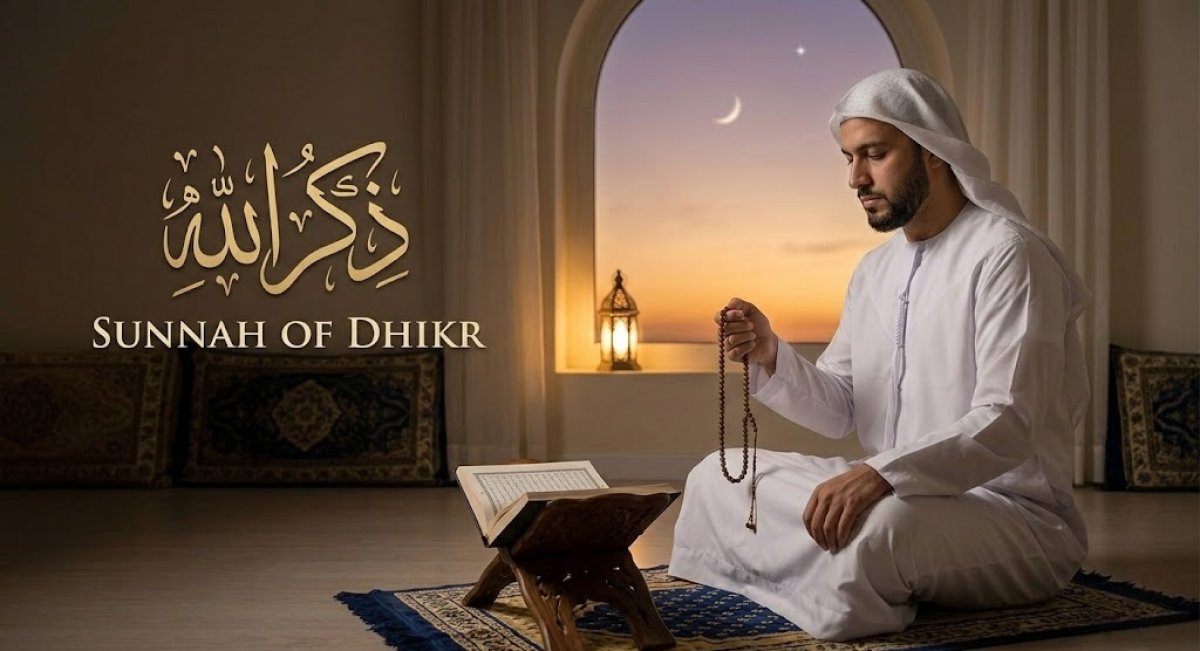
For a complete breakdown of the different opinions, the rewards of specific phrases, and how to build a daily dhikr practice that transforms your day, read this guide about the Sunnah of Dhikr.
The Bigger Picture: Worship as a Lifestyle, Not a Checklist
Here's what separates the people who benefit from Sunnah prayers and those who don't: intention.
If you approach voluntary worship as a checklist—something to do to rack up rewards—you'll burn out.
You'll feel burdened. You'll eventually quit.
But if you approach it as a conversation, a relationship, a means of drawing closer to Allah, everything changes.
The Prophet ﷺ didn't wake up for Tahajjud because he was trying to earn points. He woke up because he loved standing before Allah in the stillness of the night. He didn't pray Duha to check a box. He prayed it because it brought peace and barakah to his day.
When you shift your mindset from "I have to" to "I get to," everything changes.
You're not burdened by voluntary prayers.
You're privileged to have the opportunity. You're not forced to remember Allah. You're honored that He's given you a tongue to speak His name.
How to Start: A Practical Plan for Adding Sunnah Prayers
You don't need to do everything at once. In fact, trying to do everything at once is the fastest way to quit.
Start small. Build slowly. Be consistent.
Here's a practical 90-day plan to incorporate Sunnah prayers into your life:
The first month focuses on mastering the Rawatib.
Start with just the two rak'ahs before Fajr. That's it. For 30 days, make sure you pray those two rak'ahs before every Fajr prayer. Once that's a habit, add the two after Maghrib. Once that's consistent, add the two after Isha.
Build gradually.
The second month introduces one major voluntary prayer. If you're a morning person, add Duha prayer. If you're a night person, start with Tahajjud once or twice a week. Don't try to do both. Pick one and build the habit.
The third month focuses on Friday.
Implement the full Sunnah of Jumu'ah.
Take a bath on Friday morning. Wear clean clothes. Arrive early. Recite Surah Al-Kahf. Send abundant salawat. Make dua during the accepted hour. Make Friday feel different.
By the end of 90 days, you'll have transformed your worship from the bare minimum to something rich, deep, and transformative. And you'll wonder how you ever lived without it.
The Ultimate Goal: Becoming Someone Allah Loves
Let's return to where we started. The hadith where Allah says:
"My servant continues to draw near to Me with voluntary acts until I love him."
That's the goal.
Not just to fulfill obligations. Not just to avoid punishment.
But to draw so close to Allah through consistent voluntary worship that He begins to love you.
And when Allah loves you, He tells the angel Jibril, "I love so-and-so, so love him." And Jibril loves you. And then Jibril announces to the inhabitants of the heavens, "Allah loves so-and-so, so love him."
And the inhabitants of the heavens love you.
And then acceptance is placed for you on earth.
People are naturally drawn to you. Your character improves. Your decisions become clearer. Your life becomes easier. Doors open. Duas are answered. Protection surrounds you.
All because you consistently performed acts of worship that most people neglect.
So start tonight.
Wake up for Tahajjud. Or tomorrow morning, pray Duha. Or this Friday, implement the full Sunnah of Jumu'ah.
Pick one. Build the habit. Stay consistent.
And watch how your relationship with Allah transforms from distant to intimate, from obligation to love.
Because that's what Sunnah prayers do. They don't just add acts of worship to your day. They transform who you are.

Abdul Kader (Ashik)
Experts in Islamic spiritual development and habit formation
Islamic scholars and app developers dedicated to helping Muslims strengthen their Deen