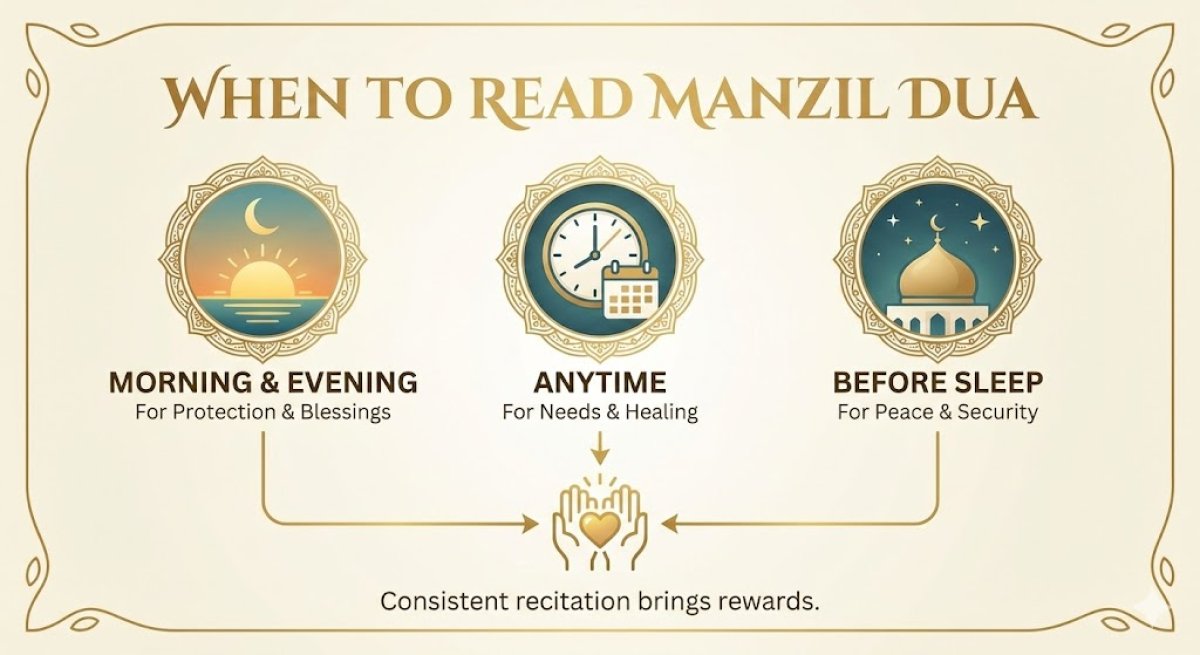
Manzil Dua does not have a fixed, obligatory time, but it is traditionally recited at specific times based on authentic Islamic evidence related to protection, ruqyah, and daily adhkar.
The recommended times come from the Sunnah practice of protection through Qur’anic recitation.
1) Morning and Evening (Most Recommended)
The best and most common time to read Manzil Dua is morning and evening, similar to other protection adhkar.
The Qur’an commands remembrance of Allah at these times:
Qur’an (33:41–42):
يَـٰٓأَيُّهَا ٱلَّذِينَ ءَامَنُوا۟ ٱذْكُرُوا۟ ٱللَّهَ ذِكْرًا كَثِيرًا
وَسَبِّحُوهُ بُكْرَةً وَأَصِيلًا
“O you who believe, remember Allah with much remembrance, and glorify Him morning and evening.”

Manzil Dua aligns with this command because it consists entirely of Qur’anic verses recited for protection.
2) Morning Protection (After Fajr or Before Sunrise)
Many verses included in Manzil Dua are part of the morning protection adhkar taught by the Prophet ﷺ.
The Prophet ﷺ said regarding protective supplications:
مَنْ قَالَ حِينَ يُصْبِحُ وَحِينَ يُمْسِي… لَمْ يَضُرَّهُ شَيْءٌ
“Whoever says them in the morning and evening, nothing will harm him.”
Reference: Sunan Abi Dawood (5088), Hasan
Because Manzil Dua serves the same purpose (protection), scholars recommend reading it after Fajr.
3) Evening or Night (After Maghrib or Before Sleep)
Manzil Dua is also commonly read in the evening or before sleeping, based on authentic narrations about Qur’anic protection at night.
The Prophet ﷺ said about Ayatul Kursi:
مَنْ قَرَأَ آيَةَ الْكُرْسِيِّ لَيْلًا لَمْ يَزَلْ عَلَيْهِ مِنَ اللَّهِ حَافِظٌ
“Whoever recites Ayatul Kursi at night will have a guardian from Allah.”
Reference: Sahih al-Bukhari (2311)
Since Ayatul Kursi is part of Manzil Dua, reciting it at night fulfills this protection.
4) During Illness, Fear, or Spiritual Distress
Manzil Dua may be read at any time when protection or healing is needed.
The Qur’an states:
Qur’an (17:82):
وَنُنَزِّلُ مِنَ ٱلْقُرْءَانِ مَا هُوَ شِفَآءٌ وَرَحْمَةٌ لِّلْمُؤْمِنِينَ
“And We send down from the Qur’an that which is healing and mercy for the believers.”
The Prophet ﷺ allowed ruqyah at any time as long as it contains no shirk.
Hadith:
لَا بَأْسَ بِالرُّقَىٰ مَا لَمْ تَكُنْ شِرْكًا
“There is no harm in ruqyah as long as it does not contain shirk.”
Reference: Sahih Muslim (2200)
5) No Fixed Number or Mandatory Time
-
Manzil Dua is not obligatory
-
There is no fixed number of recitations
-
It may be read once daily or more if needed
Its benefit depends on sincerity, consistency, and reliance on Allah, not timing alone.
So the summary is, you can read the manzil dua in the morning (after Fajr), in the evening (after Maghrib), or even before sleeping.
