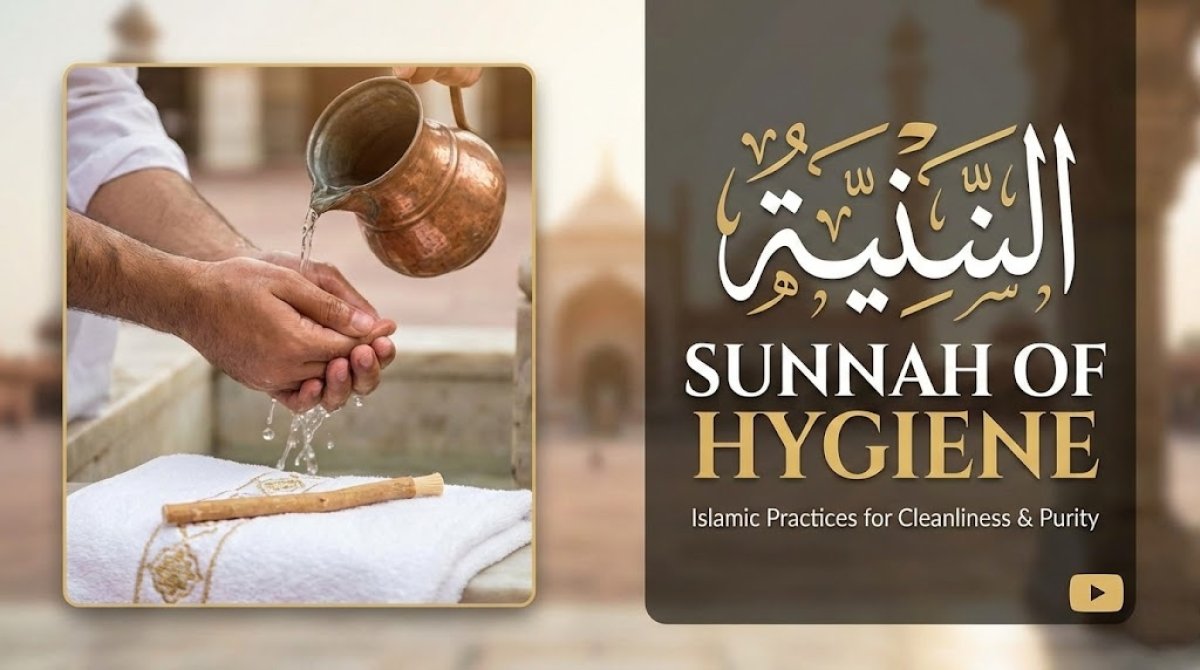
A delegation of prominent Quraysh leaders came to meet the Prophet ﷺ.
They wanted to see this man who was "disrupting" their society with a new message.
When they arrived, they found him sitting calmly, composed, and dignified.
His clothes were clean. His hair was groomed. His body smelled of musk and perfume. His teeth were white. His nails were trimmed. His appearance was impeccable.
And they were stunned.
They had expected to find a wild-eyed revolutionary. A man disheveled, unkempt, and radical in appearance to match his radical ideas. Instead, they found someone who carried himself with such dignity, such cleanliness, such attention to personal care that they couldn't help but be impressed.
One of them later remarked that the Prophet ﷺ was the most beautiful and dignified man they had ever seen—not because of his facial features, but because of how he carried himself.

The Foundation: Cleanliness is Half of Faith
The Prophet ﷺ said:
الطَّهُورُ شَطْرُ الْإِيمَانِ
"Cleanliness is half of faith." (Sahih Muslim)
The question is: why would the Prophet ﷺ say that hygiene is half of faith?
This is because cleanliness isn't just about your body. It's about your character.
How you care for yourself reflects how you value yourself. How you present yourself reflects how you respect others. And how you maintain purity—both physical and internal—reflects your relationship with Allah.
A person who neglects their hygiene is often neglecting other areas of their life. They're neglecting their prayers. Their relationships. Their responsibilities. Their self-respect.
But a person who takes care of their body, their clothes, their environment—that person is disciplined. That person values dignity. That person understands that every aspect of life matters, including the parts no one else sees.
This is why Islam doesn't separate the physical from the internal.
They're connected. And hygiene is the bridge between them.
Wudu: The Five-Times-a-Day Reset
Before we talk about the specific hygiene practices, we need to talk about wudu.
Wudu isn't just about preparing for prayer. It's a hygienic practice disguised as worship.
Five times a day, every day, a practicing Muslim washes their hands, mouth, nose, face, arms, head, and feet.
The Prophet ﷺ said:
مَنْ تَوَضَّأَ فَأَحْسَنَ الْوُضُوءَ خَرَجَتْ خَطَايَاهُ مِنْ جَسَدِهِ حَتَّى تَخْرُجَ مِنْ تَحْتِ أَظْفَارِهِ
"Whoever performs wudu and does it well, his sins will exit from his body, even from under his fingernails." (Sahih Muslim)
Notice the phrase "does it well."
The Prophet ﷺ wasn't talking about rushing through the motions. He was talking about being thorough. Mindful. Intentional.
Modern research on handwashing confirms what the Prophet ﷺ practiced 1,400 years ago.
Washing your hands five times a day—especially before following the prophetic philosophy of eating—dramatically reduces the spread of bacteria, viruses, and disease.
But wudu goes beyond hands.
You're washing your face, which removes dirt, oil, and pollutants that accumulate throughout the day. You're rinsing your mouth and nose, which clears bacteria and allergens. You're washing your arms and feet, which refreshes your body and prevents fungal infections.
All of this, five times a day, every day.
Before modern medicine even understood the importance of hygiene, Muslims were already practicing it as an act of worship.
The Miswak: The Ancient Toothbrush That Science Validates
One of the most distinctive hygiene practices of the Prophet ﷺ was his use of the miswak—a natural tooth-cleaning stick made from the Salvadora persica tree.
He didn't just use it once a day.
He used it constantly—before prayer, after waking up, and especially as part of his intentional sleep routine to ensure he ended the day in a state of purity.
Any time he entered his home. He was obsessive about oral hygiene.
He said:
لَوْلَا أَنْ أَشُقَّ عَلَى أُمَّتِي لَأَمَرْتُهُمْ بِالسِّوَاكِ عِنْدَ كُلِّ صَلَاةٍ
"If it were not that I would burden my Ummah, I would have commanded them to use the miswak before every prayer." (Sahih al-Bukhari)
That's how much he valued it.
He would have made it obligatory if he didn't think it would be too difficult for people.
And modern science has confirmed why.
Studies published in the Journal of Contemporary Dental Practice and the World Health Organization have found that miswak:
- Contains natural antibacterial compounds that kill harmful bacteria in the mouth
- Prevents plaque buildup and gum disease
- Whitens teeth naturally
- Freshens breath more effectively than many commercial mouthwashes
- Strengthens gums and prevents bleeding
- Contains fluoride, silica, and other minerals that protect tooth enamel
The Prophet ﷺ was using the most advanced dental care available—not because he had access to modern dentistry, but because he followed divine guidance.
Miswak is easy to find, low in cost, and even more beneficial than many modern toothbrushes.
You can buy it online or from any Islamic shop.
When you use miswak, you are not only cleaning your teeth — you are also following the Sunnah and gaining reward.
The same idea applies to how Prophet Muhammad began his mornings.
Sunan al-Fitra: The Natural Practices of Cleanliness
The Prophet ﷺ said:
عَشْرٌ مِنَ الْفِطْرَةِ: قَصُّ الشَّارِبِ، وَإِعْفَاءُ اللِّحْيَةِ، وَالسِّوَاكُ، وَاسْتِنْشَاقُ الْمَاءِ، وَقَصُّ الْأَظْفَارِ، وَغَسْلُ الْبَرَاجِمِ، وَنَتْفُ الْإِبِطِ، وَحَلْقُ الْعَانَةِ، وَانْتِقَاصُ الْمَاءِ
"Ten things are from the natural disposition: trimming the mustache, letting the beard grow, using the miswak, rinsing the nose with water, cutting the nails, washing the knuckles, plucking the armpit hair, shaving the pubic hair, and cleaning oneself with water after using the restroom." (Sahih Muslim)
Let's break them down:
1. Trimming the Mustache
The Prophet ﷺ kept his mustache trimmed short so it didn't interfere with eating or drinking. Long mustaches collect food particles and become unhygienic.
Keeping them trimmed is both practical and clean.
2. Letting the Beard Grow
For men, the beard is part of natural masculinity and distinction.
The Prophet ﷺ encouraged men to grow their beards as a mark of identity and dignity. But he also kept his beard well-groomed—clean, combed, and occasionally oiled with musk.
3. Cutting the Nails
The Prophet ﷺ would trim his nails regularly—never letting them grow long enough to collect dirt.
Long nails harbor bacteria, fungi, and germs. Keeping them short is a basic hygiene practice that prevents disease.
He also specified that nails should be trimmed at least once every 40 days. Not letting weeks or months go by.
Regular maintenance.
4. Washing the Knuckles
The joints between your fingers collect dirt, dead skin, and grime.
The Prophet ﷺ emphasized washing these areas thoroughly during wudu.
Modern dermatologists confirm that these areas, if neglected, can become breeding grounds for bacteria.
5. Removing Armpit and Pubic Hair
Hair in these areas traps sweat and bacteria, leading to odor and infection.
The Prophet ﷺ taught removing this hair regularly—at least once every 40 days—as an act of cleanliness and hygiene.
This practice prevents skin infections, reduces body odor, and promotes overall cleanliness in the most private areas of the body.
6. Cleaning After Using the Restroom (Istinja)
Prophet Muhammad taught us to use water to clean ourselves after using the bathroom — not just dry tissue.
He used his left hand with water to make sure the area was properly cleaned.
Today, modern medicine also shows that water removes bacteria much better than dry wiping alone.
That’s why in many cultures, bidets are seen as more hygienic than only using toilet paper.
The Prophet ﷺ also instructed us not to touch our private parts with the right hand and not to use the right hand for cleaning.
This helps keep the right hand — the one used for eating and greeting others — clean and separate from bathroom hygiene.
Bathing: Ghusl and Regular Full-Body Washing
The Prophet ﷺ placed great emphasis on bathing.
He would perform ghusl (full-body washing) in specific situations: after marital relations, after a wet dream, upon converting to Islam, and for Friday prayer.
But beyond the obligatory times, he would also bathe regularly for cleanliness and refreshment.
He said:
حَقٌّ عَلَى كُلِّ مُسْلِمٍ أَنْ يَغْتَسِلَ فِي كُلِّ سَبْعَةِ أَيَّامٍ يَوْمًا يَغْسِلُ فِيهِ رَأْسَهُ وَجَسَدَهُ
"It is the right of every Muslim to bathe at least once every seven days, washing his head and body." (Sahih al-Bukhari)
At minimum, once a week.
But the Prophet ﷺ himself bathed far more frequently. He would bathe after sweating, after traveling, before Friday prayer, before the two Eid prayers, and whenever he wanted to feel refreshed.
Bathing wasn't a chore. It was an act of self-care and dignity.
And when he bathed, he was thorough.
He would start by washing his hands three times. Then his private parts. Then he would perform wudu. Then he would pour water over his head three times, making sure it reached the roots of his hair. Then he would wash his entire body, starting with the right side, then the left, making sure no part was left dry.
Perfume and Pleasant Scent: Not Vanity, but Dignity
The Prophet ﷺ loved perfume.
He would apply it daily—not occasionally, not for special events, but as part of his regular routine.
He said:
حُبِّبَ إِلَيَّ مِنَ الدُّنْيَا النِّسَاءُ وَالطِّيبُ، وَجُعِلَتْ قُرَّةُ عَيْنِي فِي الصَّلَاةِ
"Made beloved to me from your world are women and perfume, but my eyes' delight is in prayer." (Nasa'i)
Notice that he mentioned perfume alongside prayer.
He connected pleasant scent with worship.
He specifically loved musk and would apply it to his beard, his clothes, and his body. When he walked, people could smell his fragrance from a distance.
His Companions said that the scent of the Prophet ﷺ was more pleasant than the finest perfumes they had ever encountered.
He said:
مَنْ أَكَلَ ثُومًا أَوْ بَصَلًا فَلْيَعْتَزِلْنَا أَوْ لِيَعْتَزِلْ مَسْجِدَنَا
"Whoever eats garlic or onions should keep away from us or keep away from our mosque." (Sahih al-Bukhari)
He wasn't being harsh.
He was protecting the comfort of others. Because when you come to the mosque smelling of strong, unpleasant odors, you distract people from worship. You make the environment uncomfortable.
The same principle applies today.
Wearing deodorant, using pleasant scents, and avoiding strong body odor isn't vanity. It's consideration for others. It's dignity. It's respect.
Hair and Grooming: Neat, Clean, and Intentional
The Prophet ﷺ kept his hair clean and well-groomed. He would comb it regularly. He would oil it occasionally with musk or other pleasant oils. He would part it in the middle or let it grow to his shoulders, but he would never let it become tangled, dirty, or unkempt.
He said:
مَنْ كَانَ لَهُ شَعْرٌ فَلْيُكْرِمْهُ
"Whoever has hair, let him honor it." (Abu Dawud)
"Honor it" means take care of it. Wash it. Comb it. Oil it. Don't neglect it.
This wasn't about vanity.
It was about dignity. When you take care of your appearance, you're showing respect for yourself and for others.
He also taught that men should not imitate women in their appearance, and women should not imitate men.
Each gender has its natural form and dignity.
Honor it. Don't distort it.
Clean Clothes: Dignity Begins with What You Wear
The Prophet ﷺ placed great emphasis on wearing clean clothes.
He would wash his clothes regularly. He would avoid wearing dirty, stained, or smelly garments, even if they were expensive or well-made.
He said:
إِنَّ اللهَ جَمِيلٌ يُحِبُّ الْجَمَالَ
"Indeed, Allah is beautiful and loves beauty." (Sahih Muslim)
But notice—the beauty he was referring to wasn't extravagance or showing off. It was cleanliness, dignity, and taking care of yourself.
You don't need designer clothes. You don't need the latest fashion. You need clean clothes that fit well, smell good, and reflect self-respect.
The Prophet ﷺ would also wear white clothes most often, saying:
الْبَسُوا مِنْ ثِيَابِكُمُ الْبَيَاضَ، فَإِنَّهَا مِنْ خَيْرِ ثِيَابِكُمْ، وَكَفِّنُوا فِيهَا مَوْتَاكُمْ
"Wear white clothes, for they are among your best clothes, and shroud your dead in them." (Tirmidhi)
White is simple, clean, and dignified.
It's the color of purity. And it forces you to keep your clothes clean because every stain shows.
The Etiquette of Using the Restroom: Privacy and Purity
The Prophet ﷺ even taught etiquette for using the restroom—because hygiene doesn't end when you leave the bathroom.
It begins there.
He taught:
- Enter with your left foot and exit with your right foot
- Say a dua before entering: "Allahumma inni a'udhu bika minal khubthi wal khaba'ith" (O Allah, I seek refuge in You from male and female devils)
- Never face the qiblah (direction of Makkah) while using the restroom
- Use your left hand for cleaning yourself
- Never urinate while standing if it causes splashing
- Use water for cleaning—not just dry tissue
- Wash your hands thoroughly after using the restroom
Modern medicine confirms that washing hands after using the restroom is the single most effective way to prevent the spread of bacteria and viruses.
The Prophet ﷺ made it a religious obligation 1,400 years before doctors understood why.
The Environment: Keeping Your Space Clean
Hygiene doesn't stop at your body. It extends to your environment.
The Prophet ﷺ said:
إِنَّ اللهَ طَيِّبٌ يُحِبُّ الطَّيِّبَ، نَظِيفٌ يُحِبُّ النَّظَافَةَ
"Indeed, Allah is pure and loves purity, clean and loves cleanliness." (Tirmidhi)
He taught removing harmful objects from the road as an act of charity.
He taught keeping your home, your mosque, and your surroundings clean. He taught that leaving garbage or waste in public spaces is sinful because it harms others.
This principle still applies today.
When you litter, you're not just being inconsiderate. You're violating the Sunnah. When you keep your home, your car, your workspace clean and organized, you're following the Sunnah.
And when you maintain cleanliness as part of your routine—just as the Prophet ﷺ did throughout his day—you're living the fullness of what's described in the daily Sunnah roadmap.
How to Start: A Practical Hygiene Routine Based on the Sunnah
You don't need to overhaul your entire routine overnight.
Start with these steps, one at a time.
The first step is to make wudu properly five times a day. Not rushing. Being thorough.
This alone will transform your hygiene.
The second step is to use the miswak (or at least brush your teeth) before every prayer. Clean teeth, fresh breath, following the Sunnah.
The third step is to trim your nails once a week. Set a specific day—Friday is ideal—and make it a habit.
The fourth step is to bathe regularly—at minimum once a week, but ideally two or three times depending on your activity level.
The fifth step is to wear clean clothes every day. No exceptions. Wash your clothes regularly. Don't wear the same thing multiple days in a row without washing.
The sixth step is to apply deodorant and, if possible, a pleasant scent. Don't make people uncomfortable with body odor.
The seventh step is to keep your environment clean. Your home. Your car. Your workspace. Everything.
These seven steps will completely transform how you feel, how others perceive you, and how you carry yourself.
The Bigger Picture: Hygiene as Worship
When you neglect hygiene, you're saying, "I don't value myself. I don't respect others. I don't care about dignity."
But when you maintain cleanliness, you're saying, "I honor myself. I respect those around me. I care about how I present myself to the world and to Allah."
And here's the beautiful part: every act of hygiene done with the intention of following the Sunnah becomes worship.
You're not just brushing your teeth—you're earning reward. You're not just trimming your nails—you're following the Prophet ﷺ. You're not just bathing—you're purifying yourself for Allah.
Hygiene isn't superficial. It's half of faith.
So take care of yourself.
Clean your body. Groom your appearance. Wear clean clothes. Use pleasant scents. Keep your environment tidy.
Not because you're vain. But because you're a Muslim. And Muslims are people of dignity, cleanliness, and self-respect.
Live like the Prophet ﷺ lived. And watch how the world responds to you differently.
