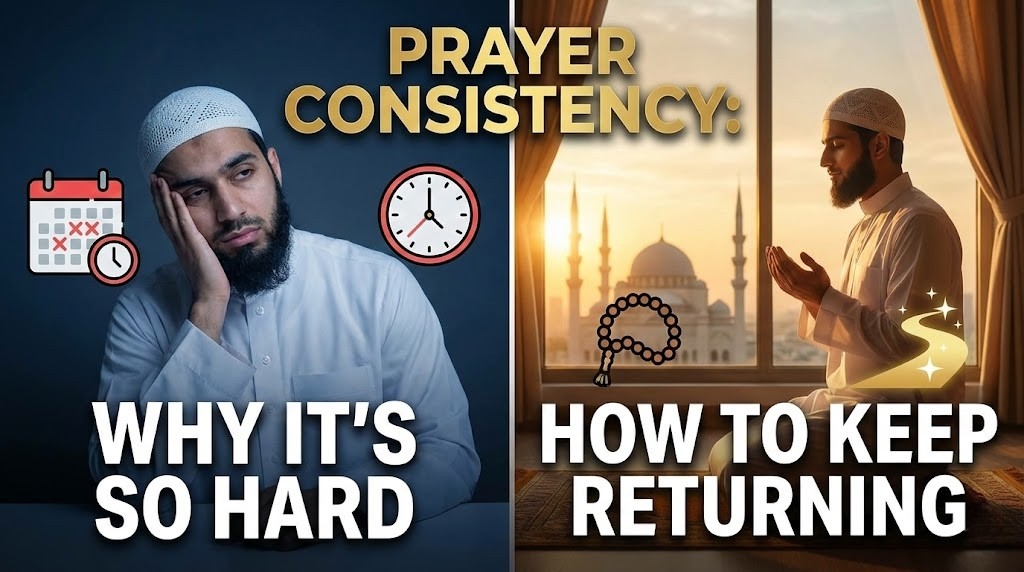
Prayer is not difficult because Muslims don’t believe.
It’s difficult because hearts get tired, minds get distracted, and life becomes heavy.
Prayer consistency is one of the most common struggles among sincere Muslims.
Not because they reject salah, but because they fear failing it again and again.
This page explores why prayer consistency breaks, and how returning to prayer is itself an act of worship.
Consistency Breaks More Often Than Prayer Itself
Most people don’t abandon prayer completely.
They:
- Pray sometimes
- Miss sometimes
- Feel guilty
- Avoid thinking about it
- Restart later
This cycle repeats quietly for years.
The problem is not prayer.
The problem is what happens emotionally after missing prayer.
Guilt Is Often the Real Barrier
Guilt is supposed to push us toward Allah.
But unmanaged guilt pushes many people away.
When guilt turns into:
- “I’m too far gone”
- “I’m a hypocrite”
- “What’s the point now?”
Consistency collapses.
Understanding guilt is essential to fixing prayer consistency.
Fear of Hypocrisy Keeps Many Away
Some Muslims stop praying not because they don’t care,
but because they care too much.
They fear:
- Praying without khushu
- Praying while sinning
- Praying inconsistently
So they avoid prayer entirely.
This fear needs correction, not judgment.
Prayer Is a Relationship, Not a Streak
Consistency improves when prayer stops being treated like a performance.
Allah does not ask for:
- Perfect focus
- Emotional highs
- Public displays
Allah asks for return.
Returning again and again is a form of sincerity.
Why Returning Matters More Than Never Falling
Every return:
- Weakens Shaytan’s grip
- Softens the heart
- Rebuilds spiritual muscle
Consistency is not built by never falling.
It is built by not staying down.
For structured ways to support returning, see
→ the 40 day prayer challenge
Start Where You Are, Not Where You Think You Should Be
Many people delay prayer because they want to “fix themselves first”.
But prayer is what fixes.
Even:
- Weak prayer
- Distracted prayer
- Incomplete prayer
Is better than no prayer.
Final Thought
Prayer consistency is not about strength.
It is about humility.
It is about standing before Allah again, even when ashamed, tired, or afraid.
And every return is counted.

Abdul Kader (Ashik)
Experts in Islamic spiritual development and habit formation
Islamic scholars and app developers dedicated to helping Muslims strengthen their Deen