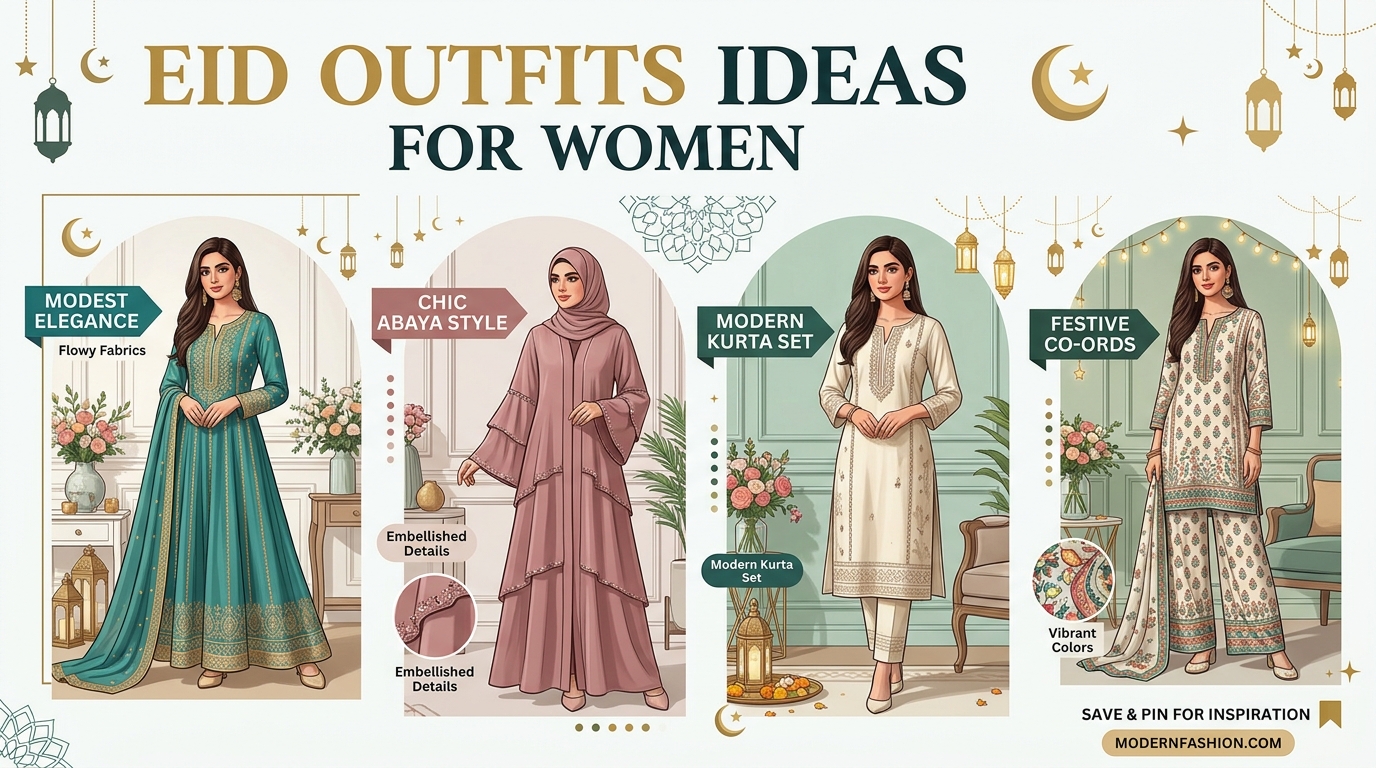
I have been dressing for two Eids my whole life — the Eid in my head, which is the Indian one, the one I grew up seeing in my mother's old photos, all that deep colour and heavy embroidery.
And then the actual Eid, which is me standing outside a masjid in the Netherlands in April wondering why I thought a sleeveless anarkali was a good idea.
The European Eid is the real problem.
You want to look festive.
You also do not want to freeze. You also want to wear something that looks intentional and not like you threw a dupatta over a coat at the last second — although I have done this and honestly it looked fine.
Over the years I have found what actually works.
1) Pastel Sharara Set With a Longline Blazer
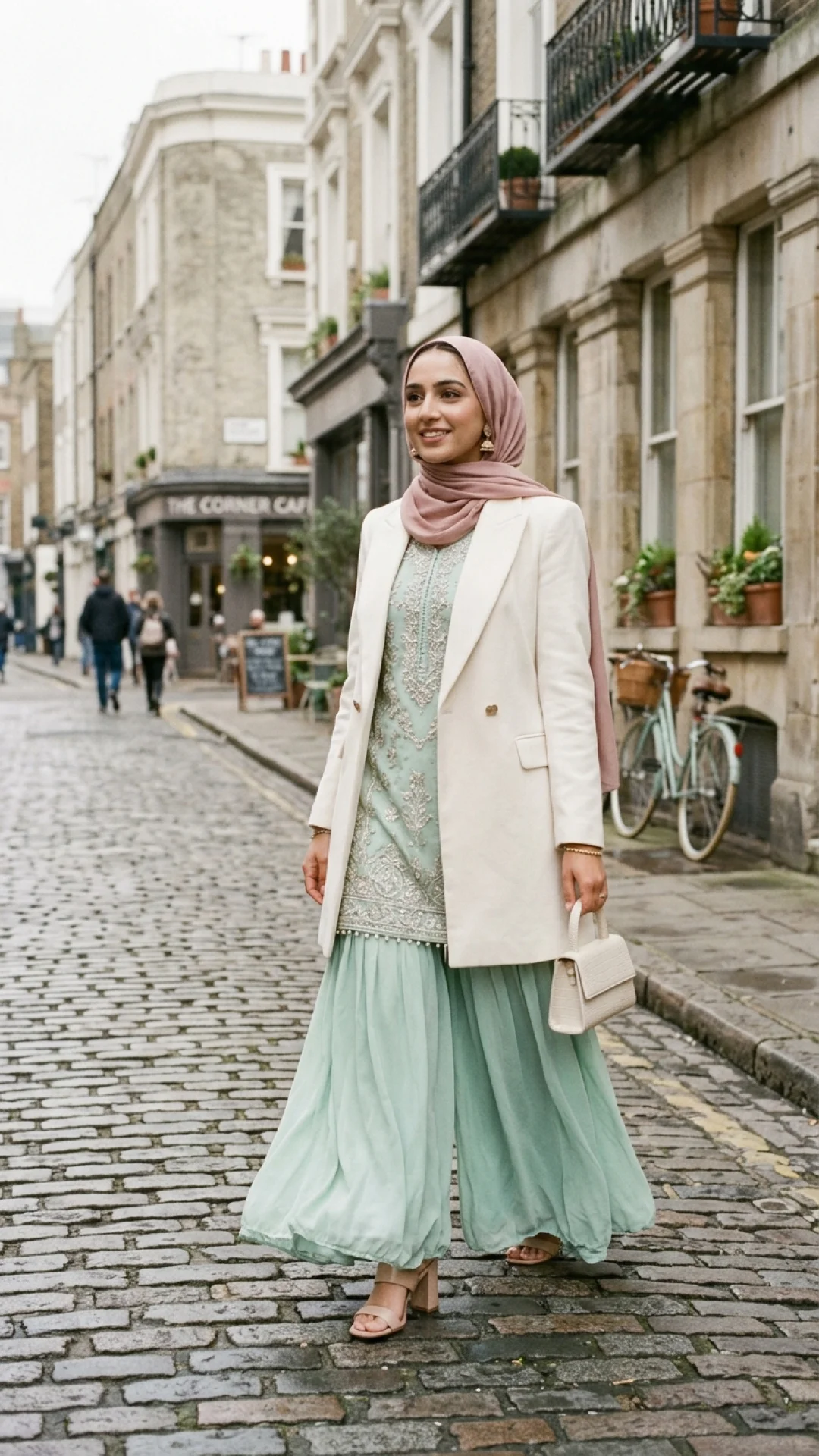
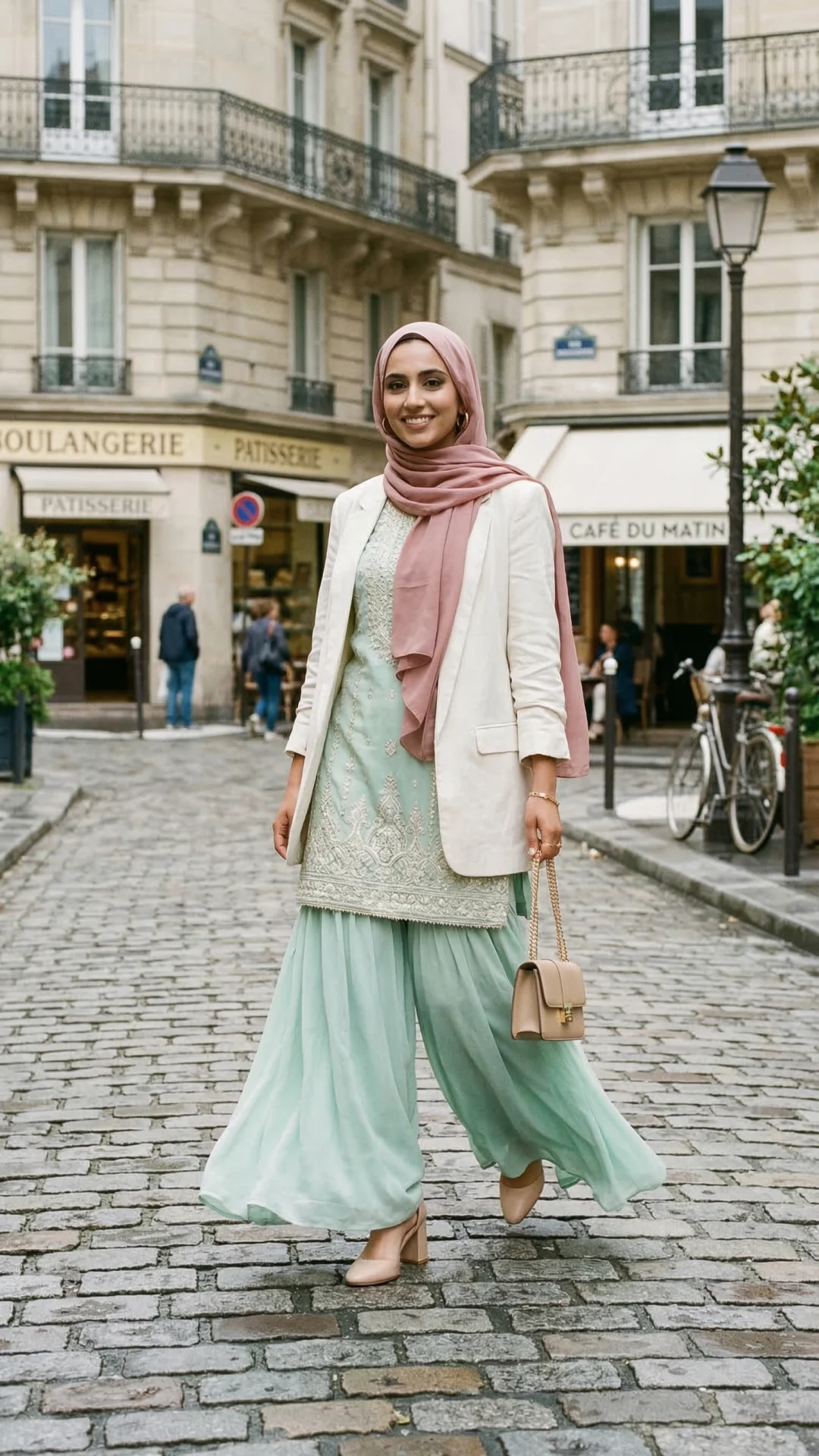
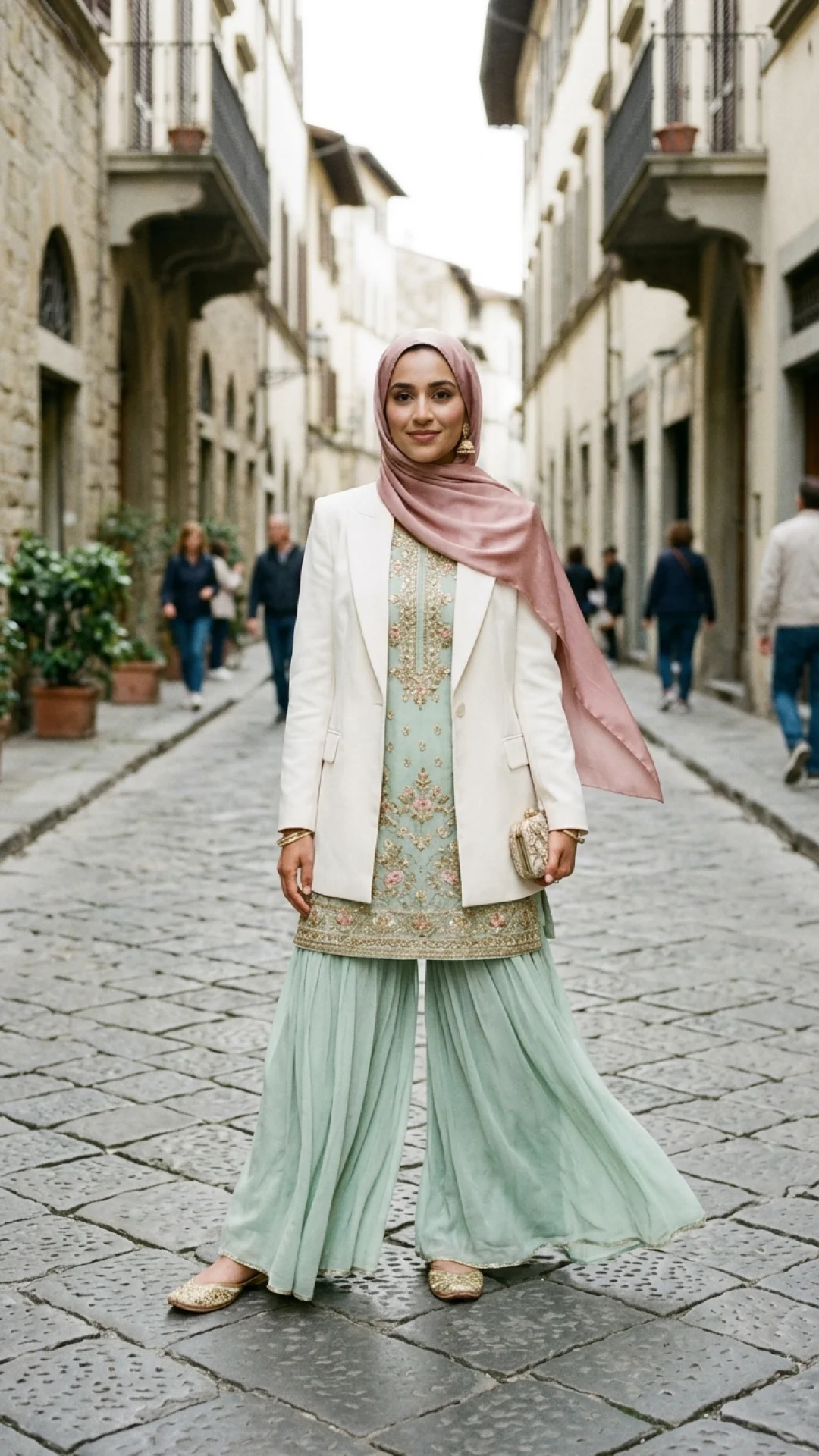
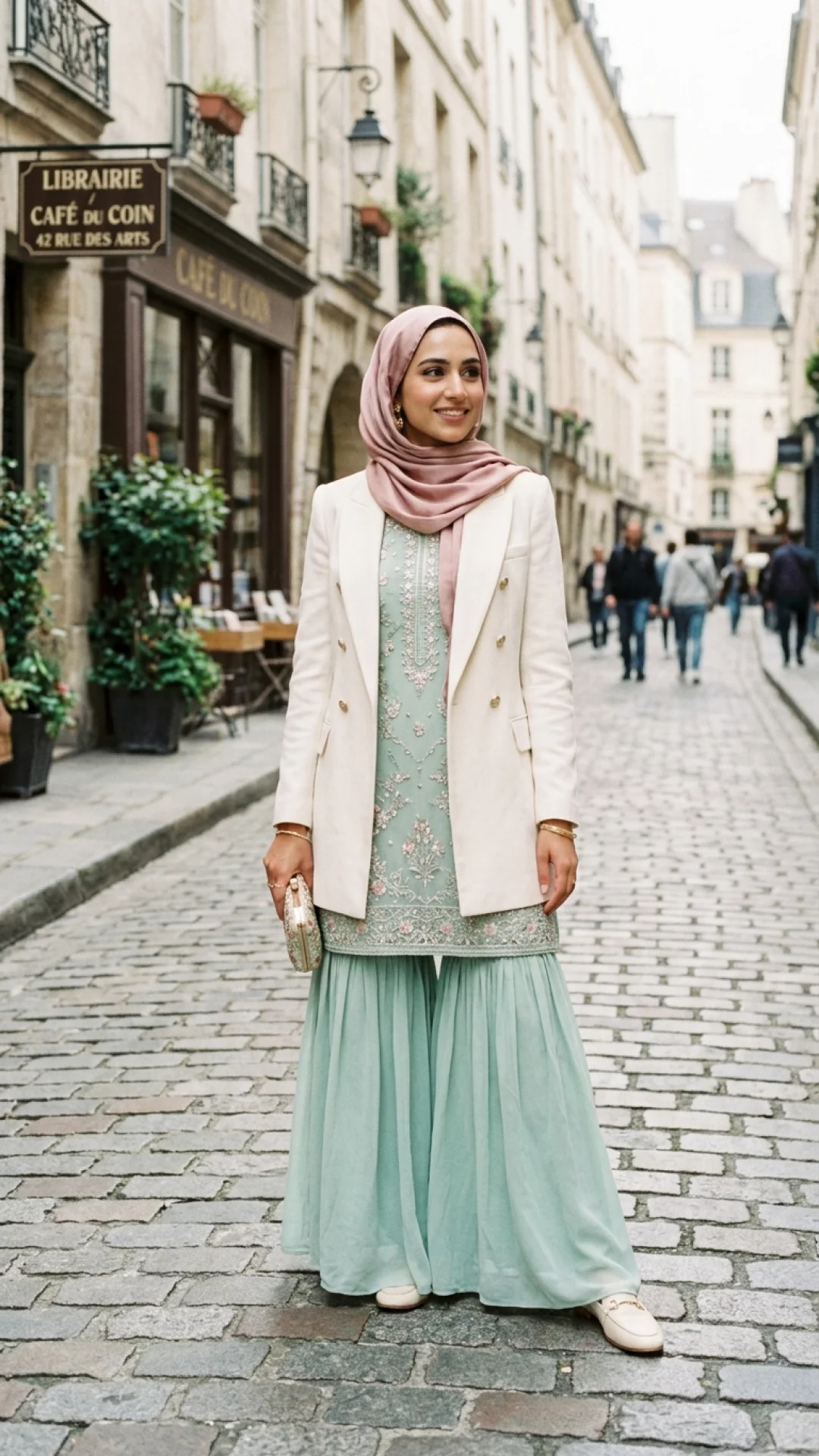
Sharara pants are having a moment everywhere right now and honestly they deserve it. Wide leg, flowy, very forgiving, very elegant.
The trick for Europe is pairing the sharara set with a structured longline blazer in a matching or tonal colour instead of the traditional dupatta-only look.
Think pale mint sharara with an ivory or sage blazer.
Or a dusty rose sharara with a blush pink blazer. The blazer keeps you warm, it reads as fashion-forward rather than "I layered because I was cold," and it photographs beautifully.
This is probably my favourite look right now because it crosses over.
You can wear this exact outfit to a work event, a wedding, a gallery opening — it does not scream one specific occasion.
2) Anarkali With a Tailored Trench
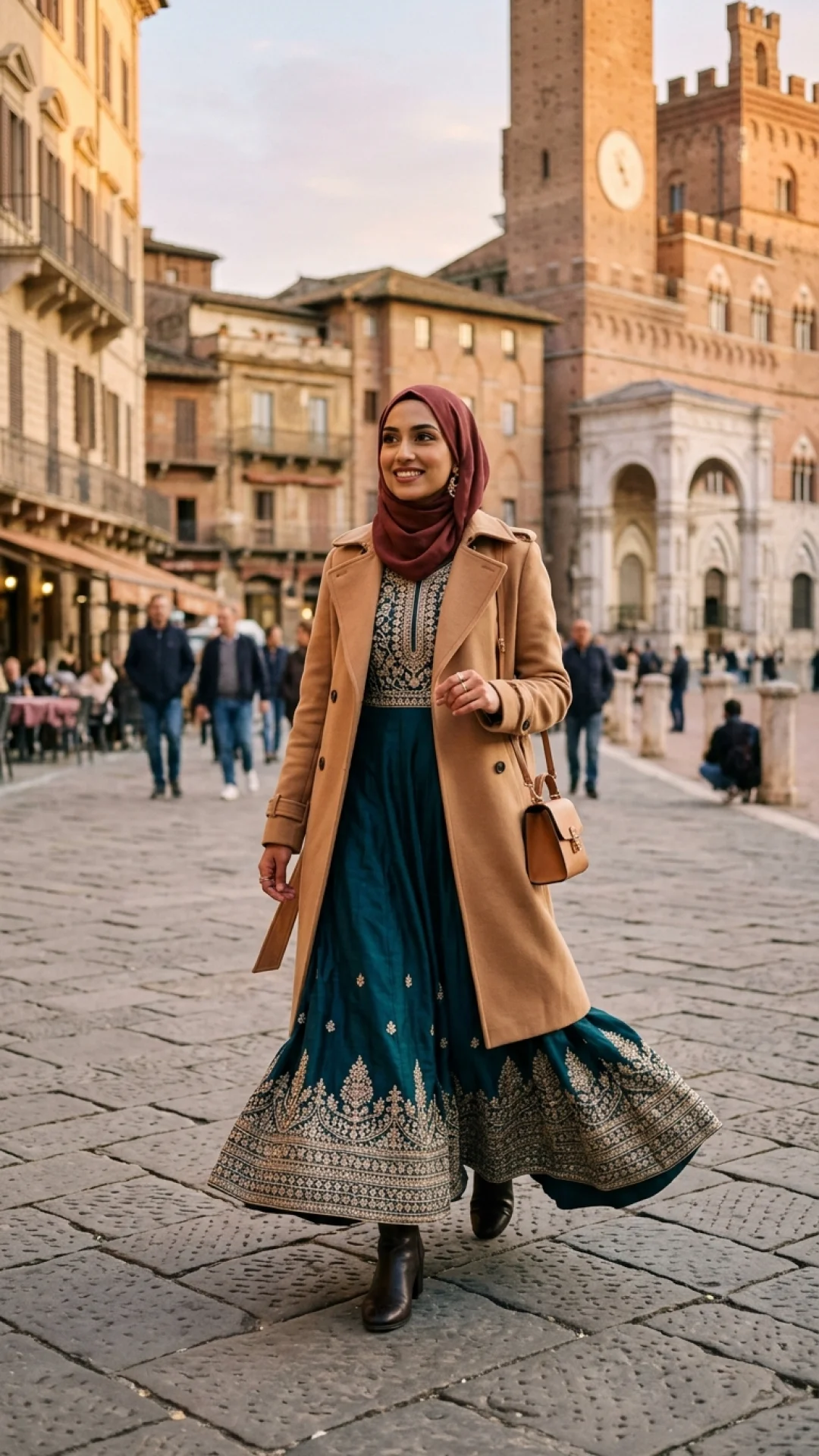
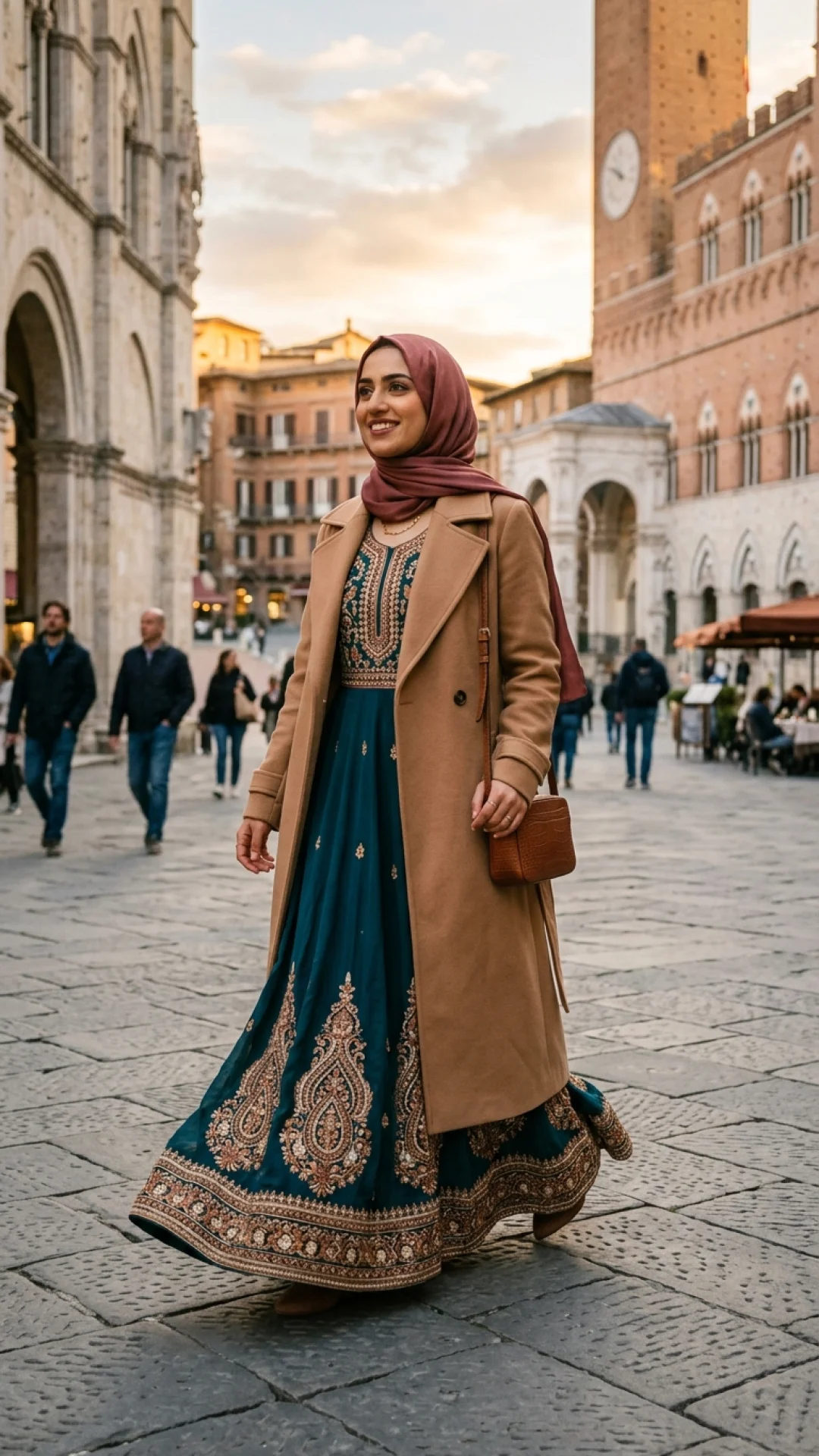
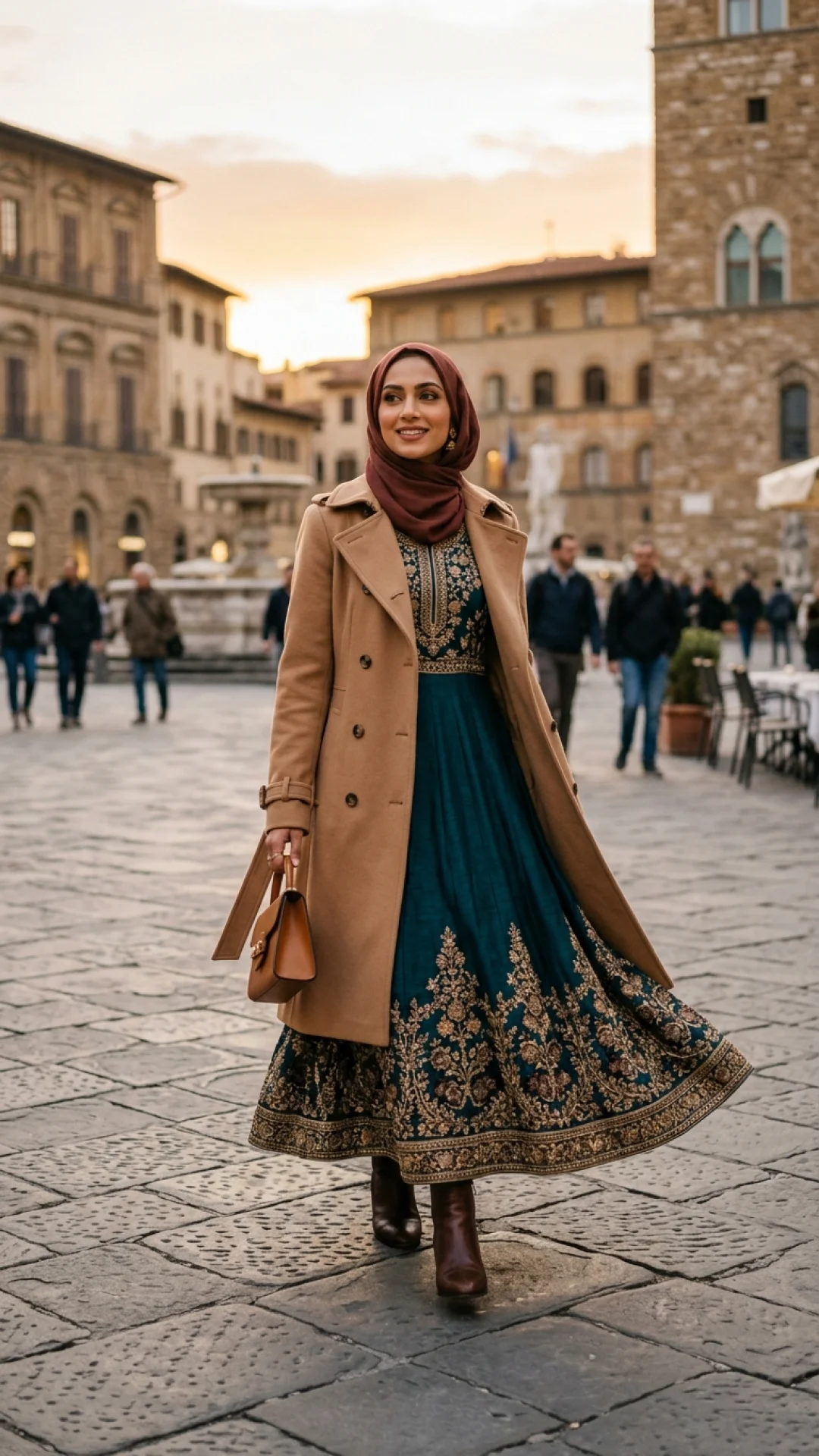
The classic.
The Anarkali is probably the most universally flattering South Asian silhouette — fitted at the top, flared at the bottom, works on every body.
The European upgrade is straightforward: swap the thin dupatta wrap for a camel or beige tailored trench coat.
The contrast between the traditional embroidered anarkali underneath and the clean modern trench on top is genuinely stunning.
It also means you can take the trench off inside and still have a complete, elegant look.
Colours that work especially well: deep teal, wine red, forest green. Anything jewel-toned against a neutral trench.
3) Co-ord Set Route — Kurta and Wide Pants in a Graphic Print
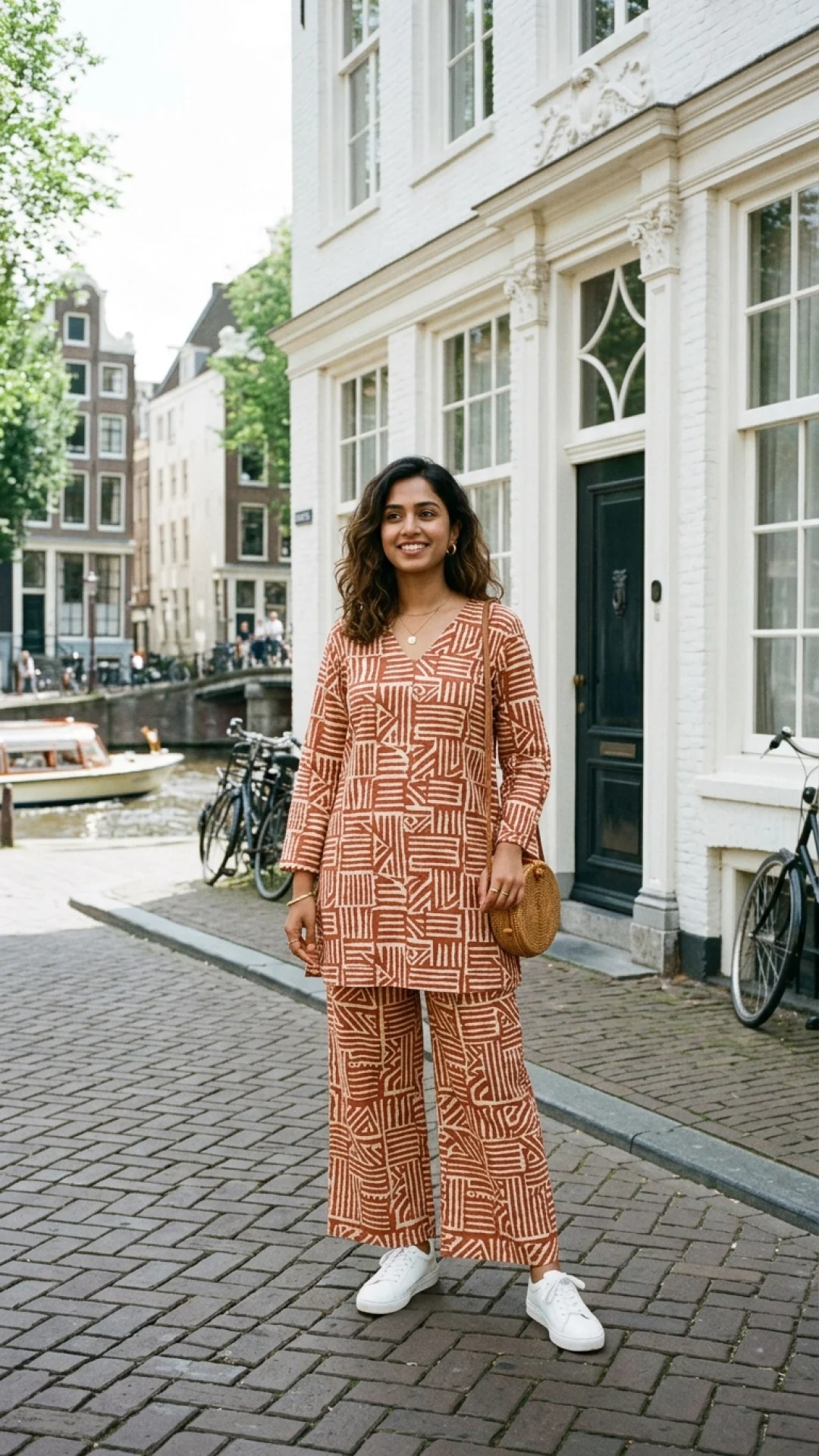
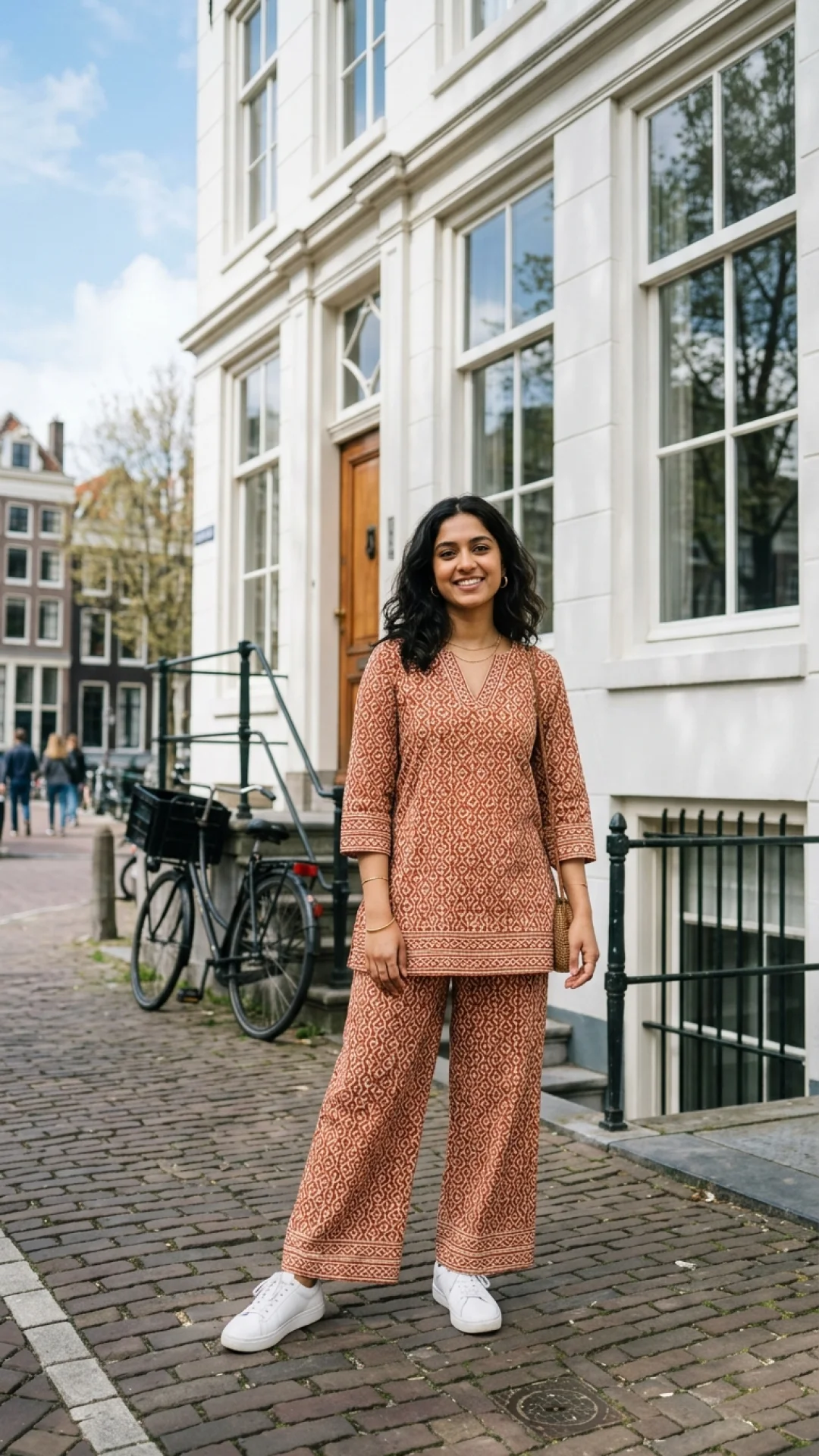
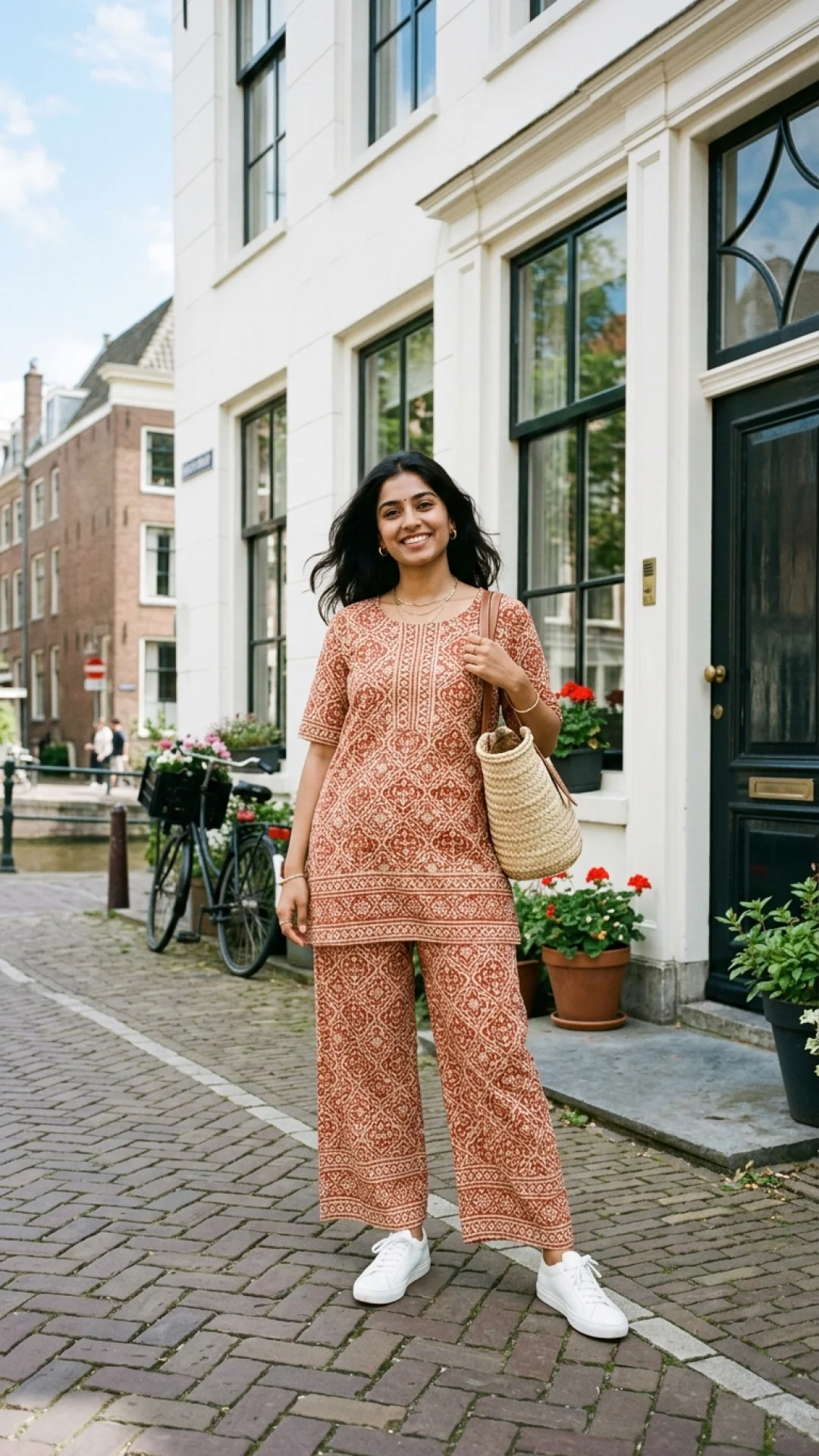
This is the younger sister look and I mean that as a compliment. Block print co-ords, especially the kind coming out of Jaipur-inspired designers right now — geometric, earthy, a little bold — look incredible in European settings because they read as fashion rather than ethnic costume.
A block print kurta with matching wide-leg pants in terracotta, indigo, or ochre. Simple gold earrings.
White sneakers or flat sandals if weather allows.
This is the Eid look for the girl who also goes to the farmers market and reads design magazines and has opinions about chairs.
4) Monochrome Abaya With Embroidered Edges
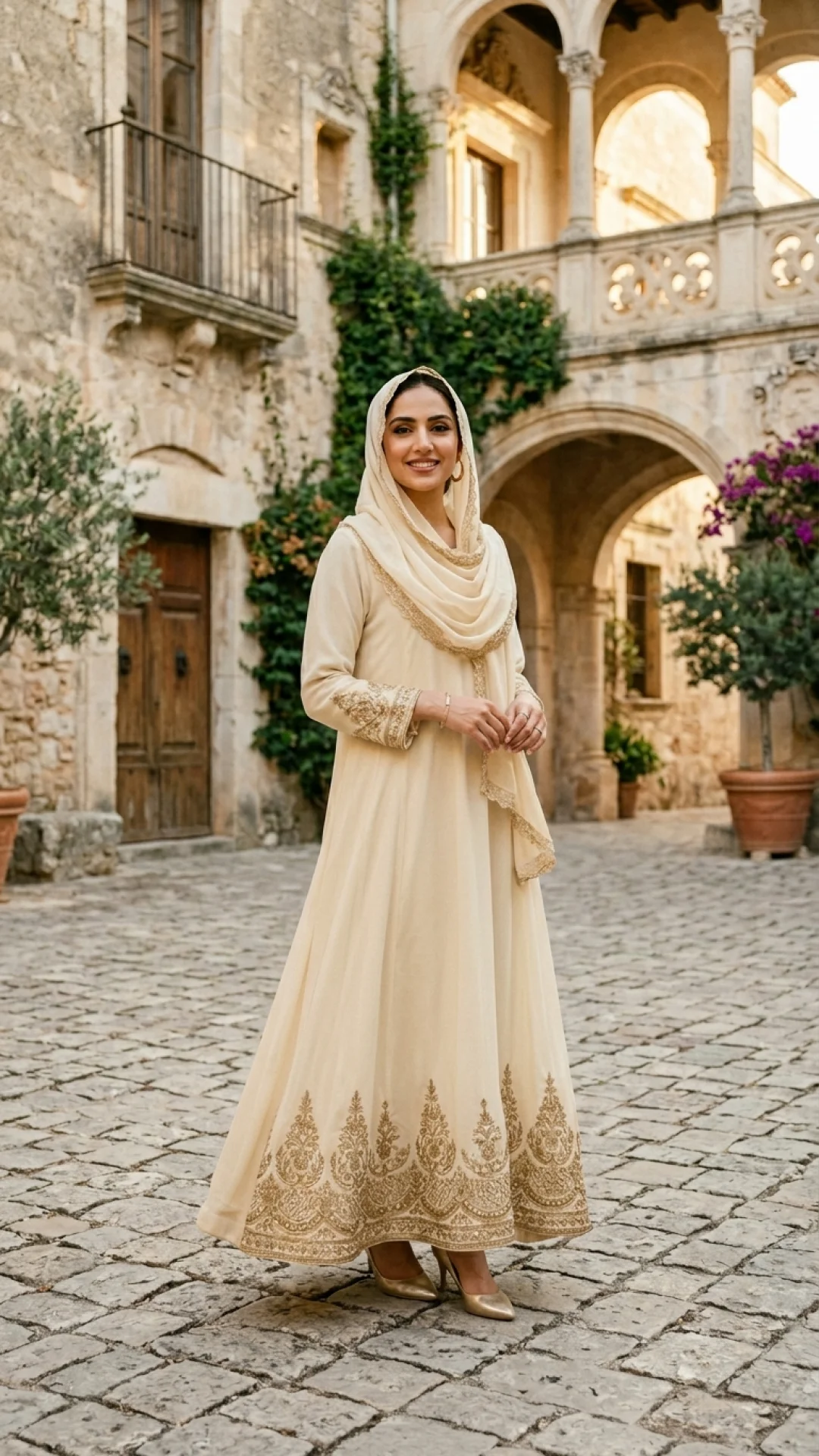
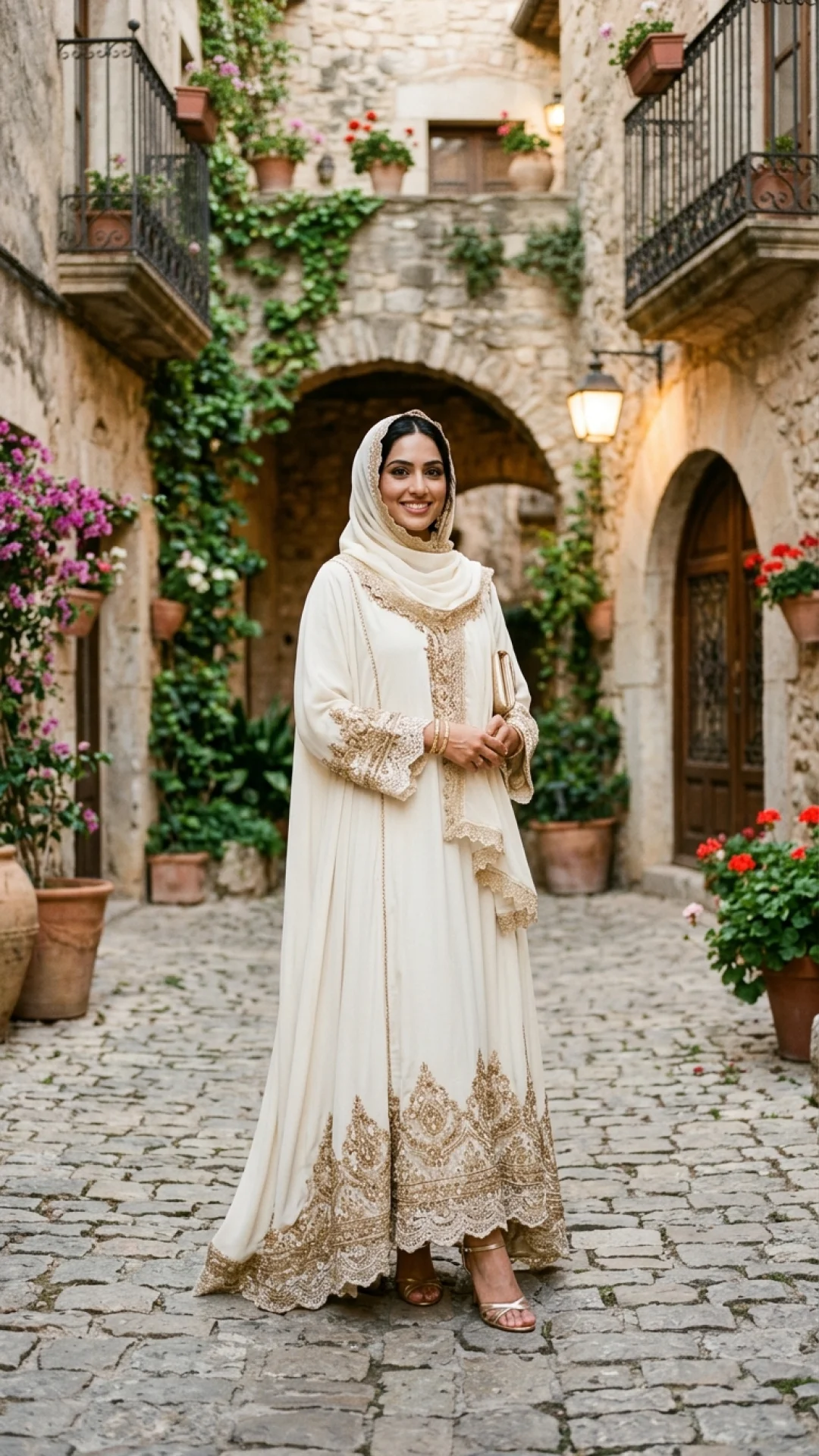
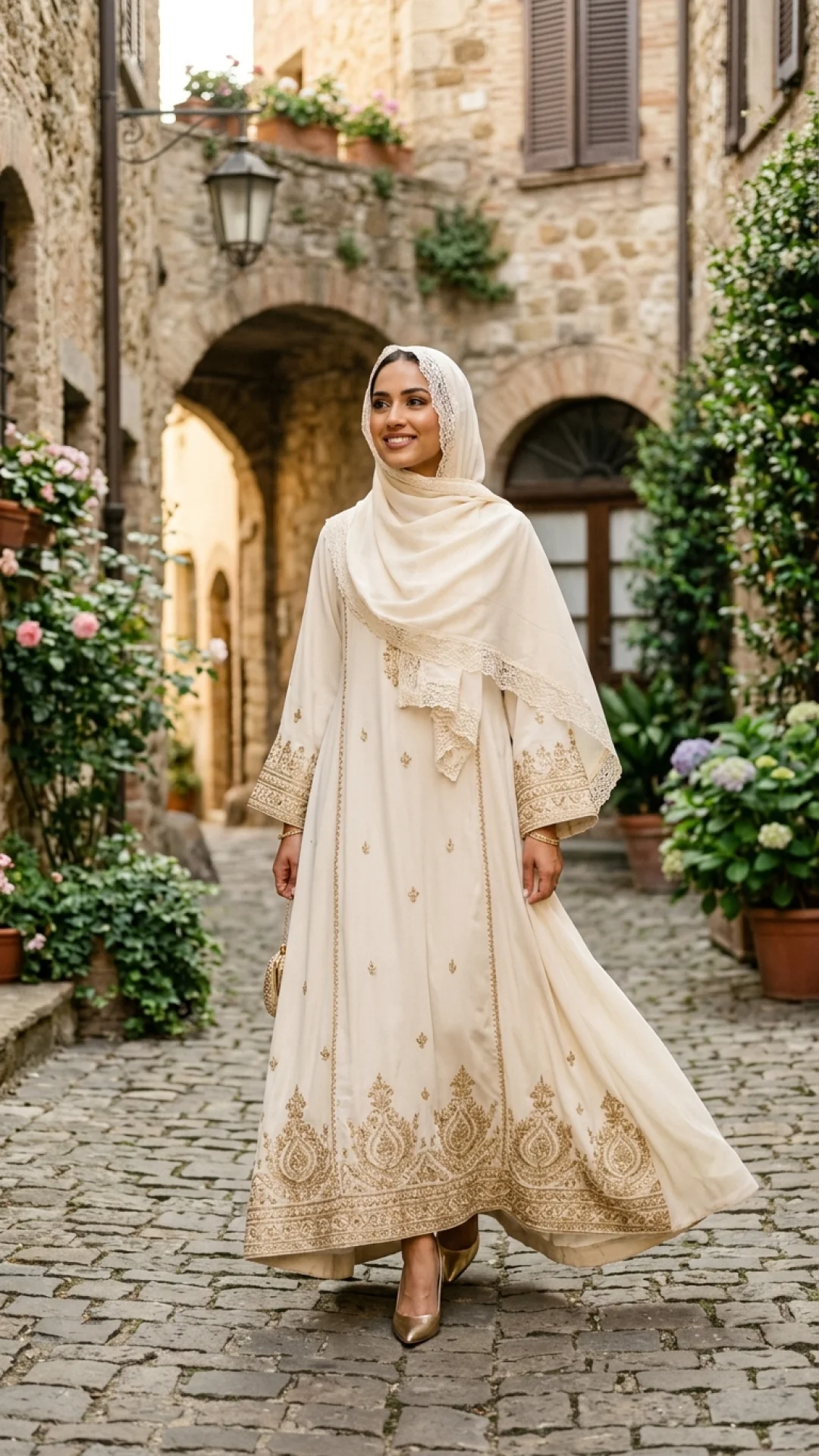
The abaya has moved so far beyond black-practical.
The modern embroidered abaya — especially the ones with tonal embroidery at the hem and cuffs — is one of the most effortlessly chic things you can wear to Eid.
For Europe specifically, I love ivory or off-white with gold thread embroidery at the edges. Or dusty lilac with silver.
You throw this on over anything, you wear your nicest shoes underneath, and you look like you made a lot of effort without actually making a lot of effort. Which is, let's be honest, the goal.
5) Lehenga Skirt as a Maxi Skirt
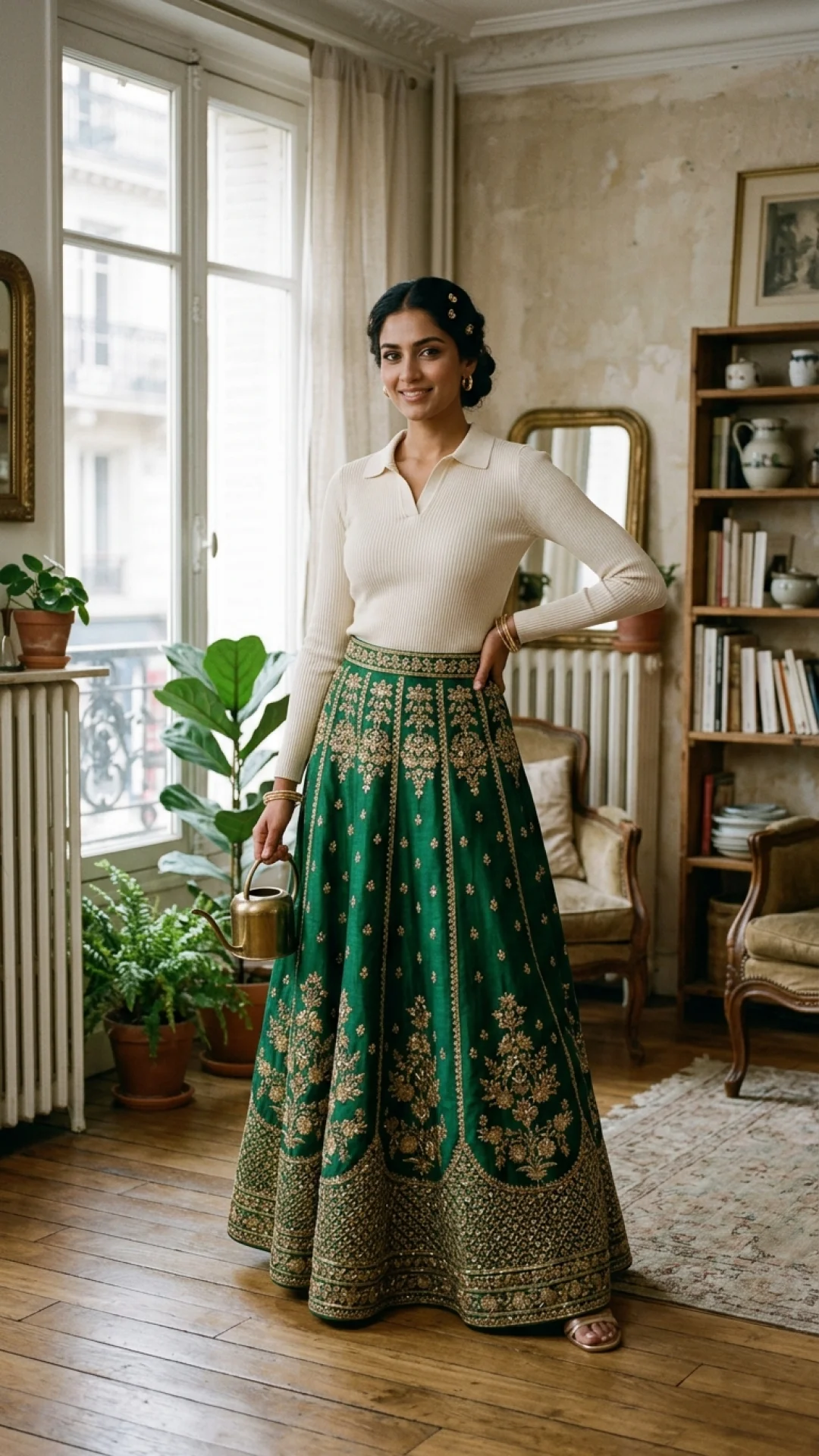
Okay this one changed how I think about my wardrobe.
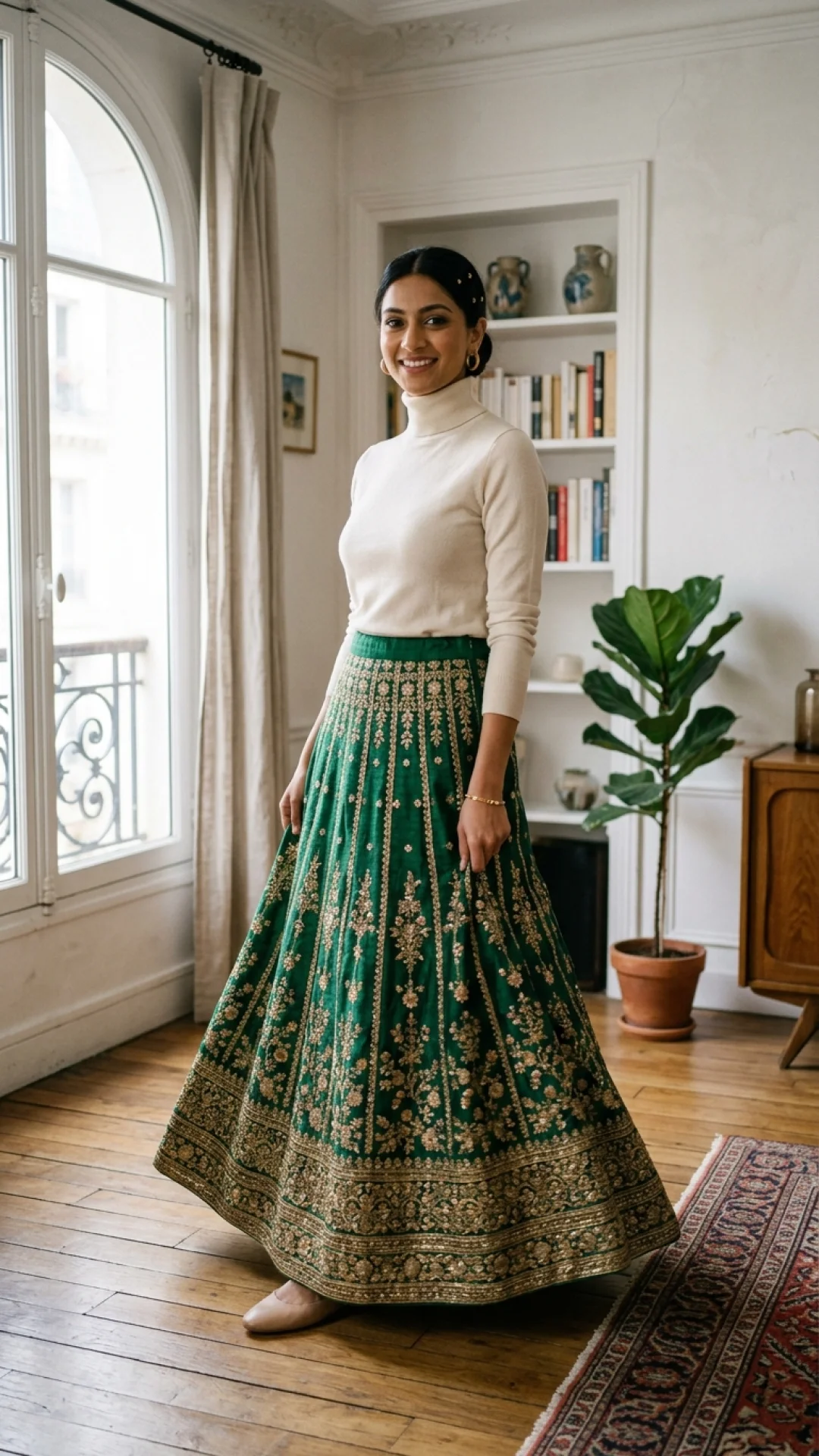
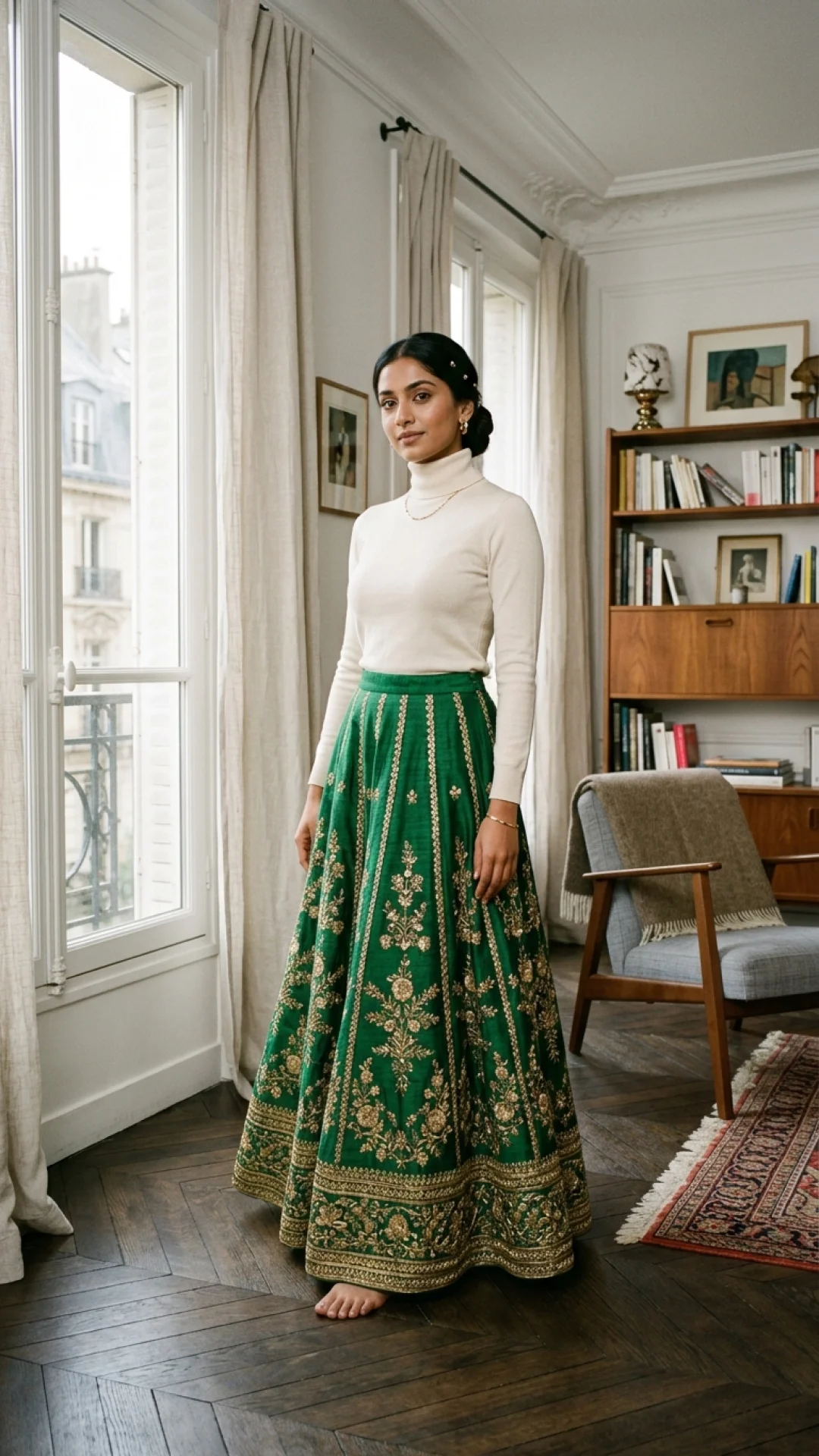
A lehenga skirt — especially a simpler, less heavily embroidered one — wears perfectly as a statement maxi skirt when paired with a simple fitted top or even a plain knitwear top.
This means the lehenga you own already has a second life.
It means you can walk into an Eid gathering looking completely traditional from the waist down and completely modern from the waist up. It also photographs interestingly because the contrast is intentional, not accidental.
A deep green or navy lehenga skirt with a simple cream or tan fitted polo neck top for colder months.
For warmer Eid days — a structured white blouse tucked in.
6) Shalwar Kameez in Linen — The Underrated Option
Everyone goes for silk and chiffon for Eid. Which is beautiful.
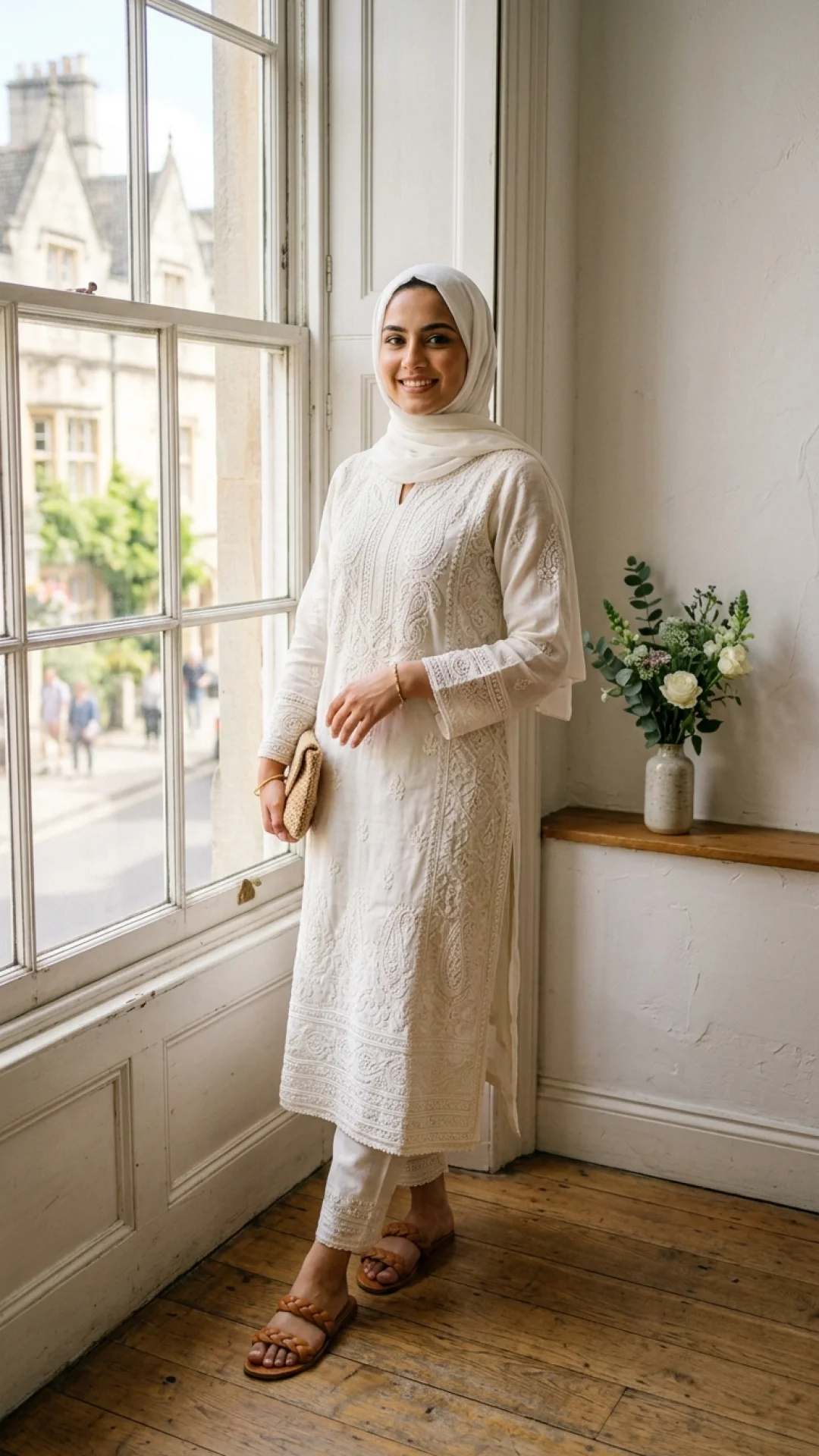
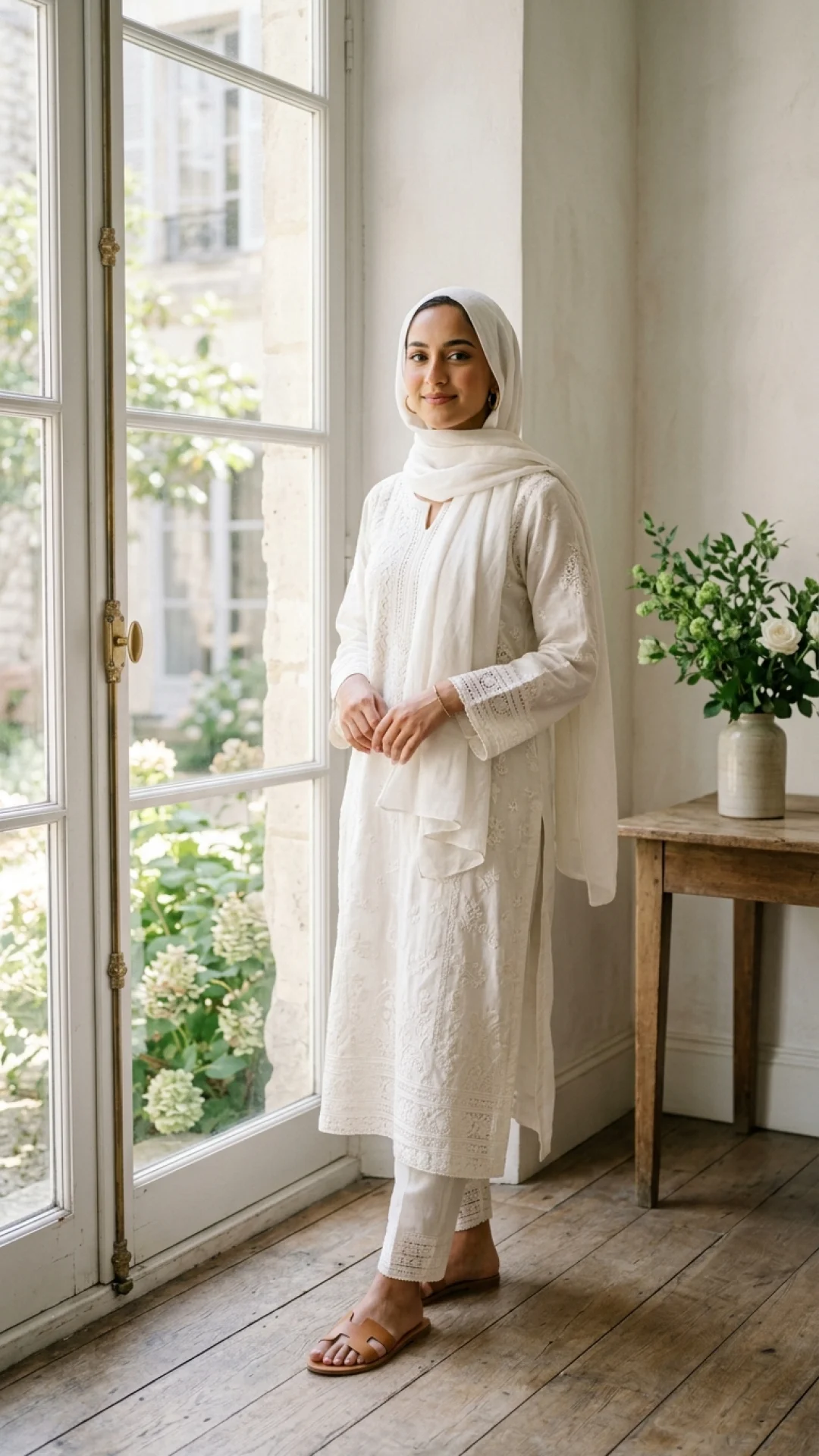
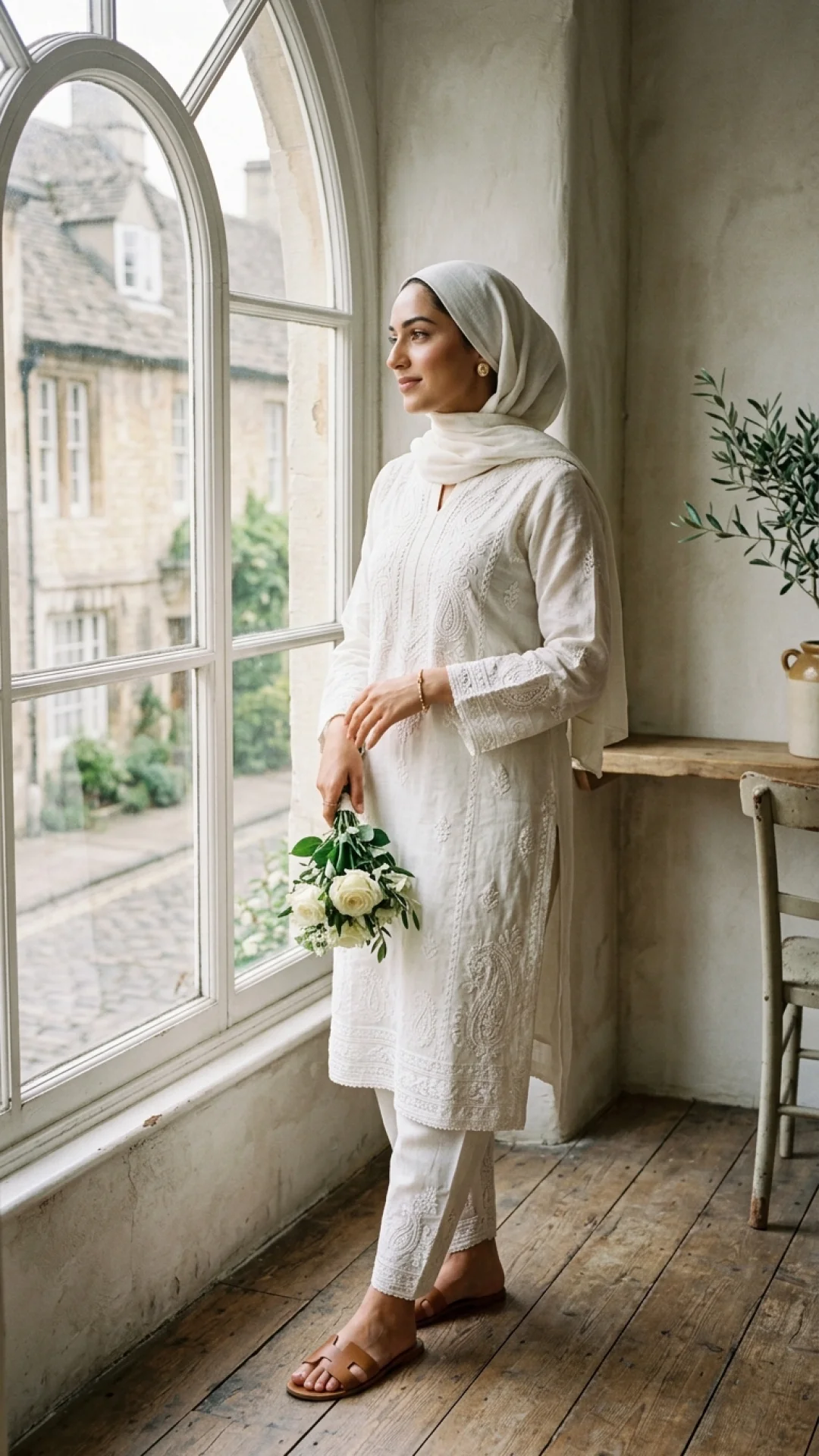
But linen shalwar kameez — especially in the hand-embroidered or chikan kari style — is criminally underappreciated, especially for summer Eid.
Linen reads as sophisticated in European contexts in a way that silk sometimes doesn't. It also breathes.
It also actually exists well in both a masjid context and a European street context. The ivory-on-ivory chikan kari shalwar kameez in linen, with simple tan sandals and a wrapped hijab in the same ivory — this is an incredibly clean, beautiful look that not enough people do.
7) Fusion Midi Dress With Indian Embroidery Detail
This one is for the sister who grew up here and sometimes wants to feel European and South Asian at the exact same time and not have to choose.
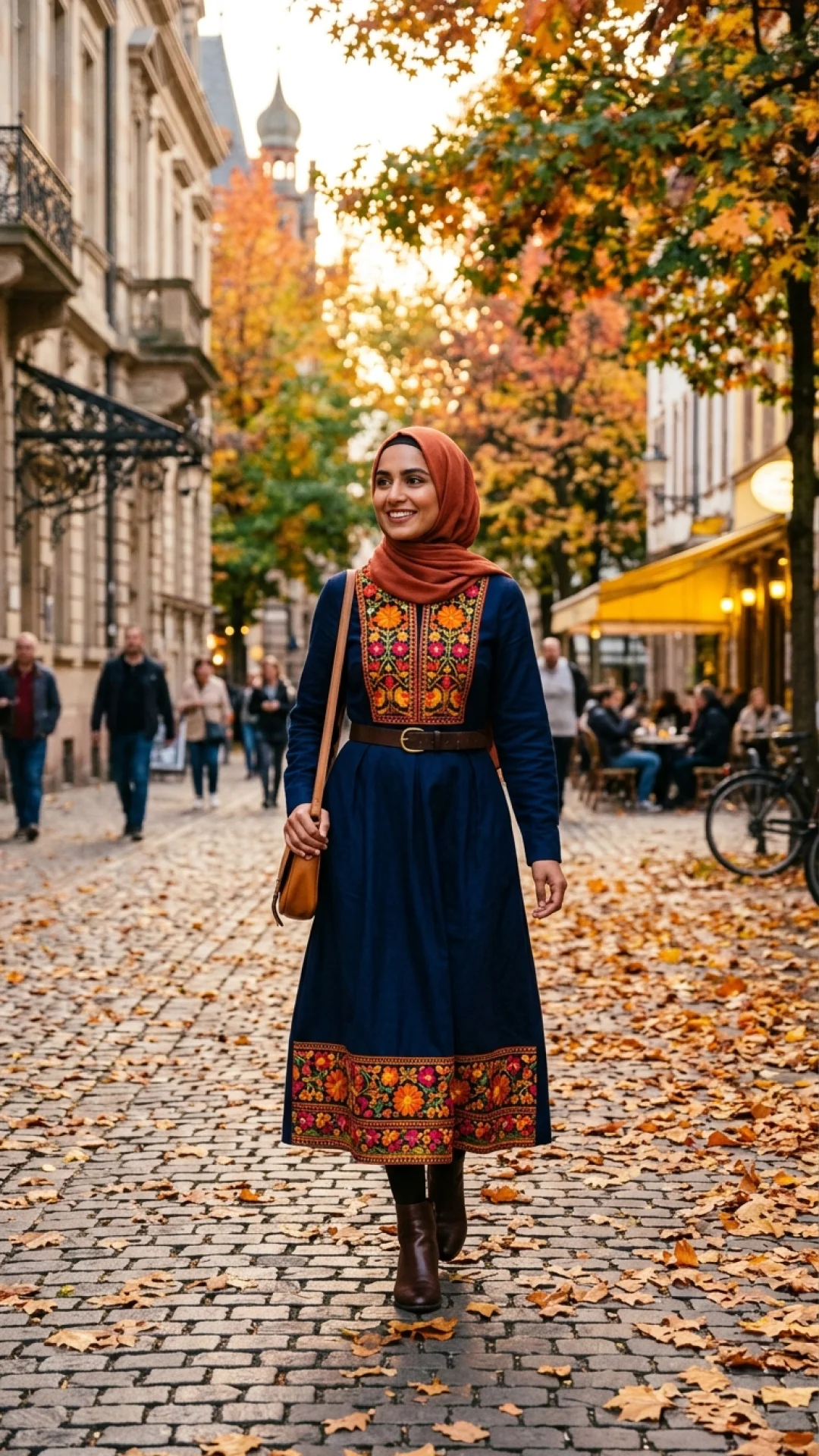
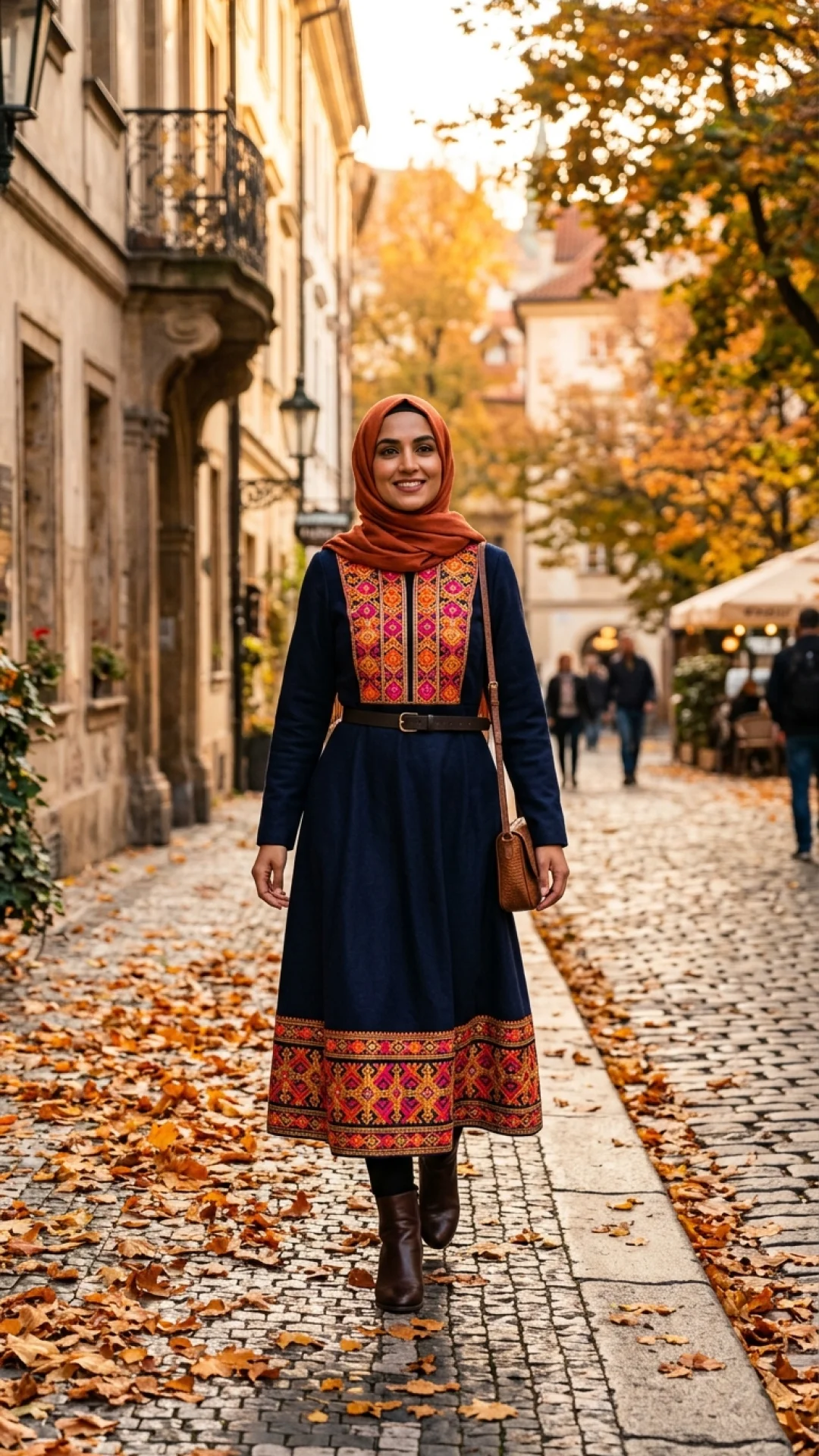
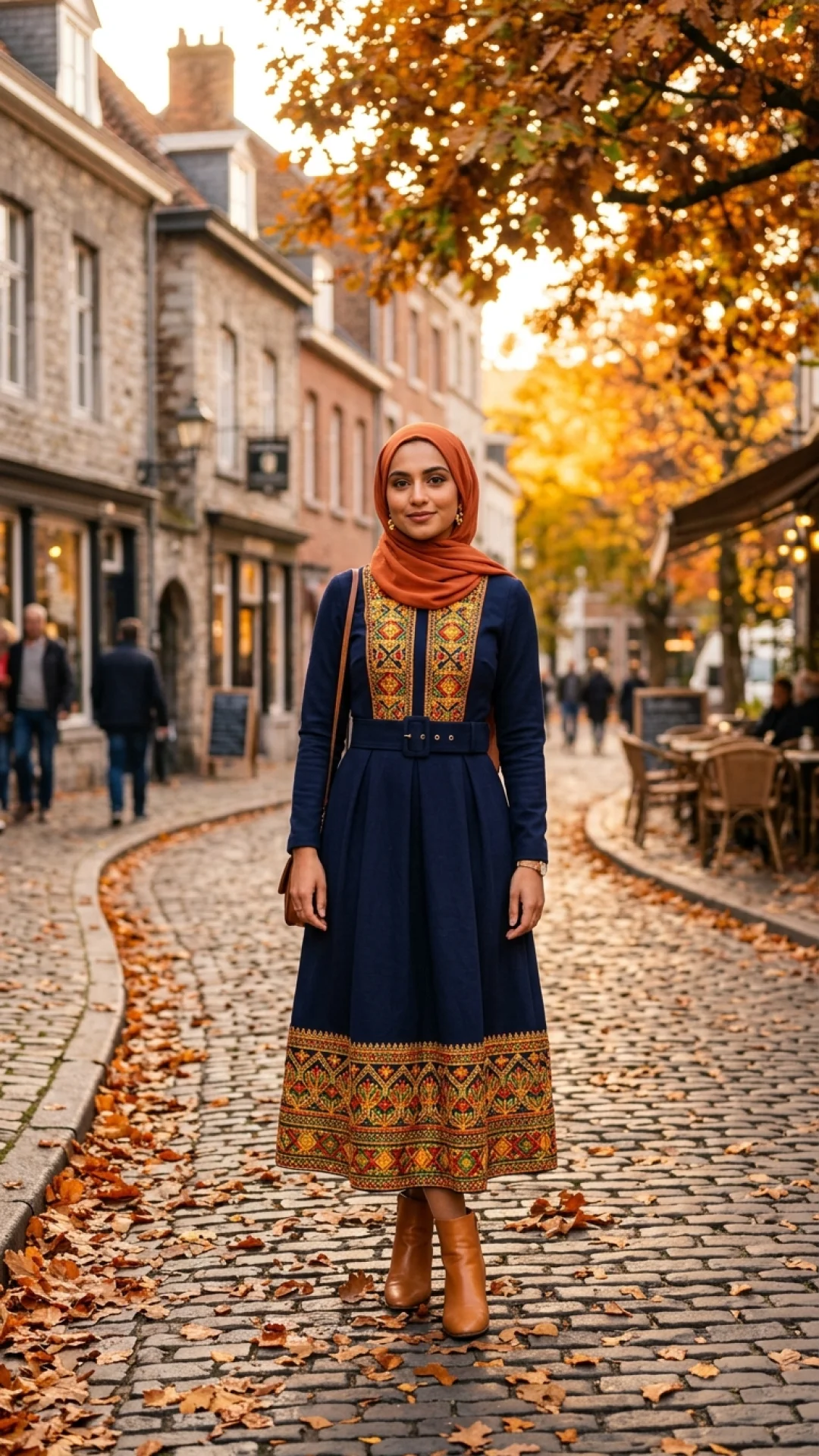
A structured midi dress — think something between a shirt dress and an a-line — in a fabric that has phulkari or suzani embroidery panels. Designers are doing this now and doing it beautifully.
The silhouette is completely Western, the fabric tells the other story.
Navy or forest green base with bright phulkari embroidery panels at the front or hem. This goes with boots in autumn, sandals in summer, and requires no explanation to anyone while also being an entire conversation for people who notice things.
8) Gharara Pants With an Oversized Linen Shirt
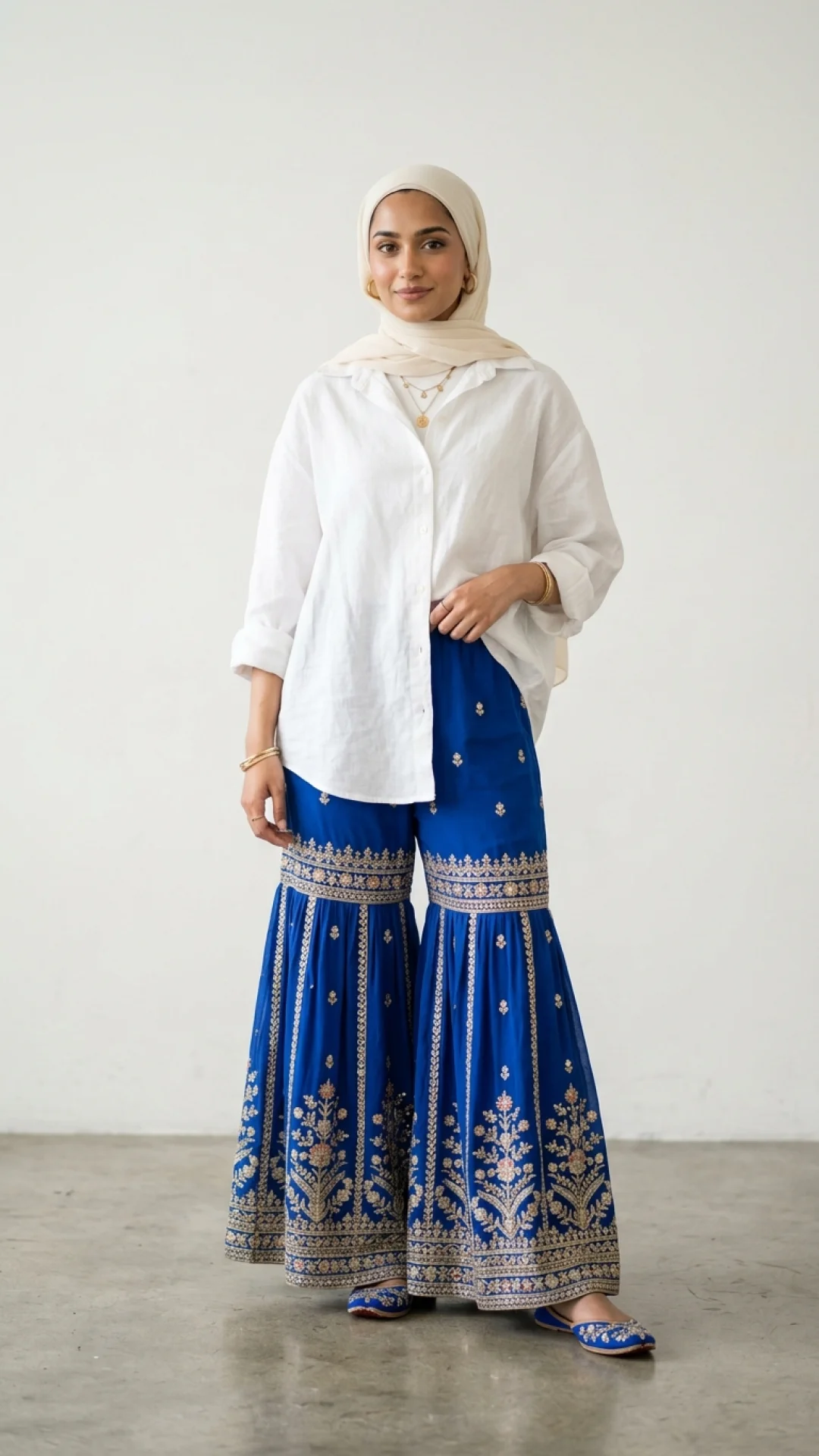
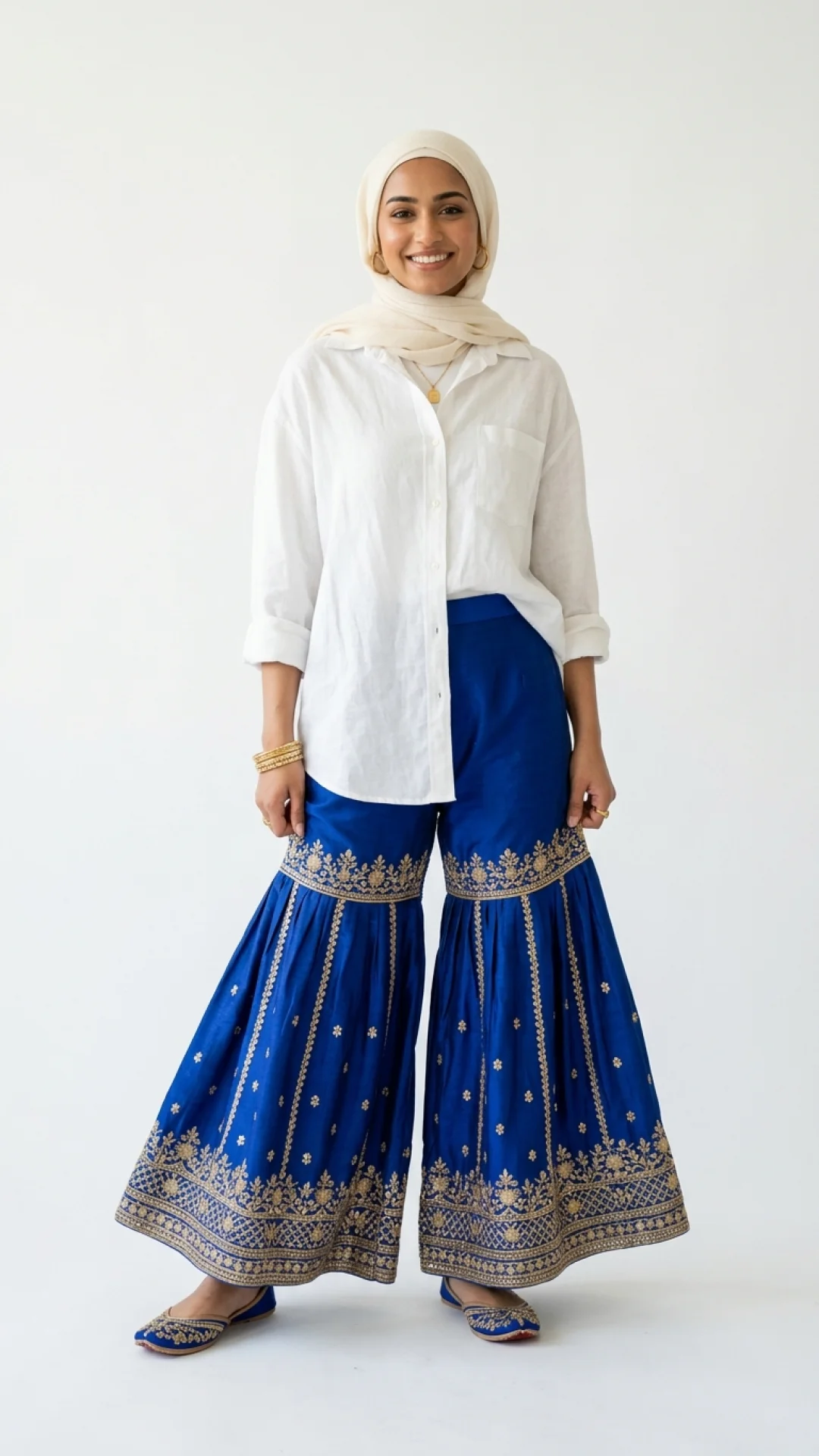
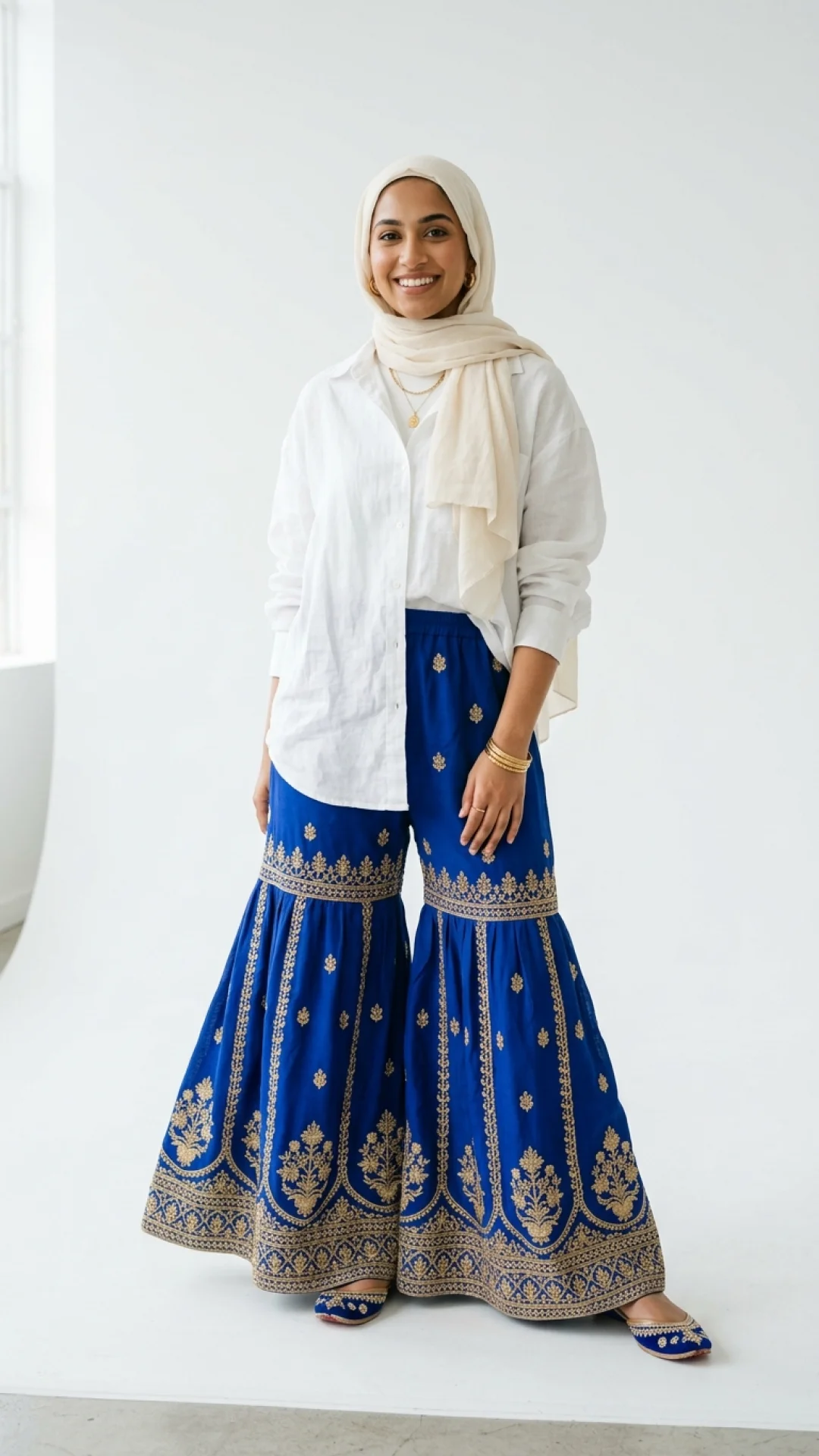
The gharara — the wide, almost palazzo-style pants gathered at the knee — with a modern oversized shirt is a combination that should not work as well as it does.
But it does.
The key is in the proportions.
The shirt needs to be properly oversized, not just slightly big. The gharara needs to be the statement piece — heavily embroidered or in a bold colour.
You are balancing bold with plain, structured with flowy.
White or ivory oversized linen shirt, tucked slightly at the front, with deep red or royal blue embroidered gharara. Flat embroidered mojris or block heels.
This is the look that makes people ask where you got dressed because it doesn't look like one easy answer.
9) All-Black With One Gold Statement Piece
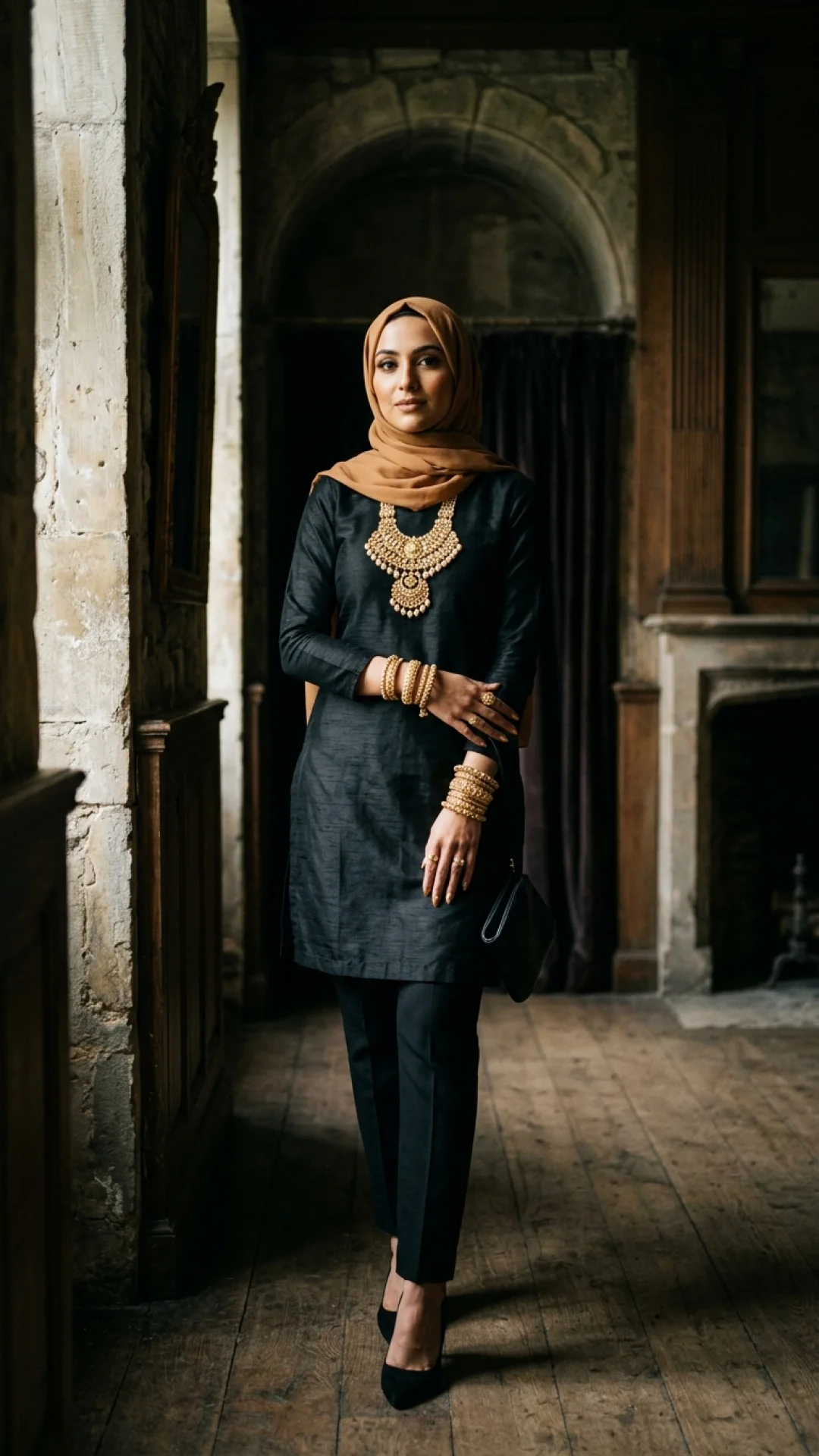
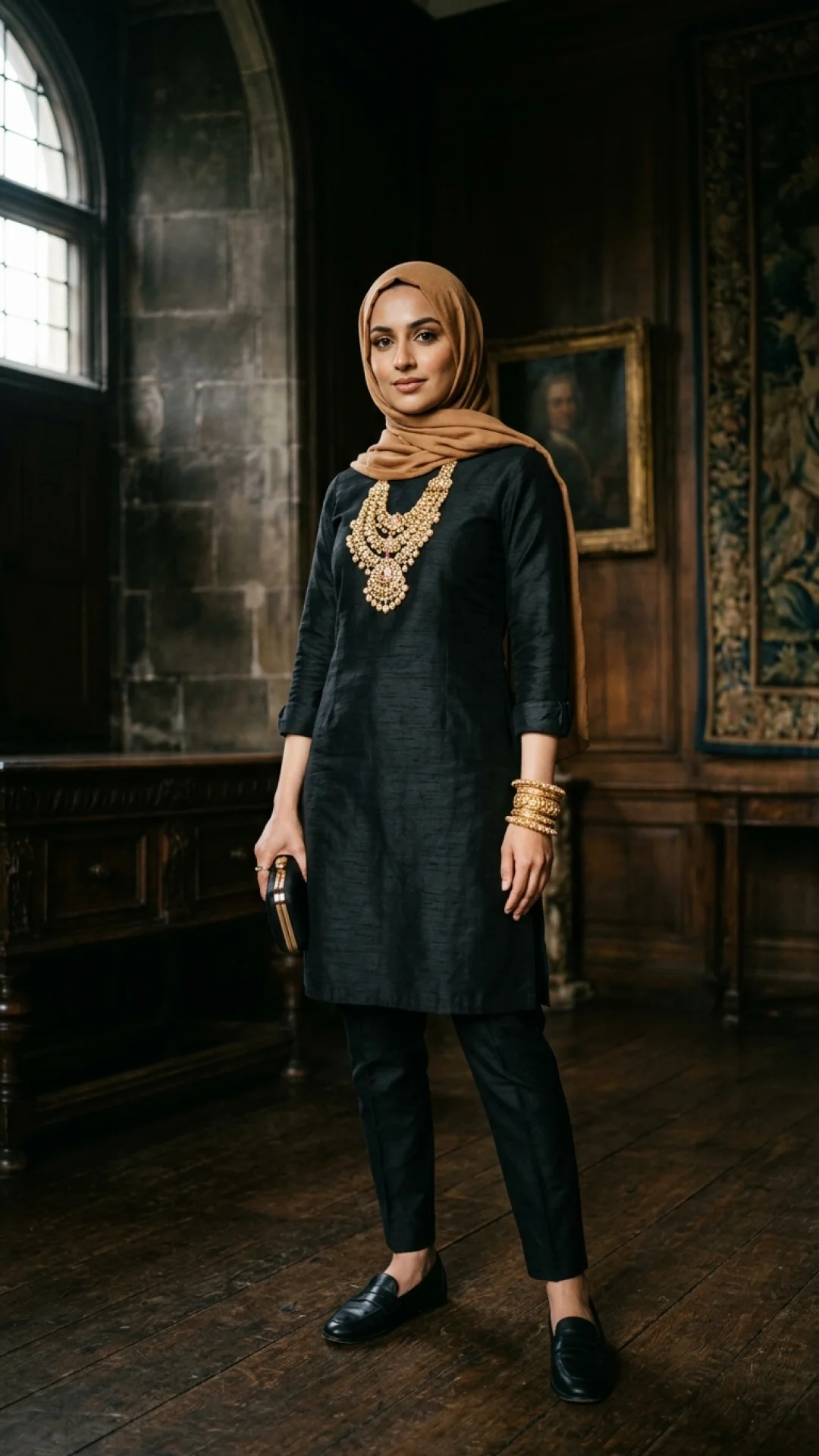
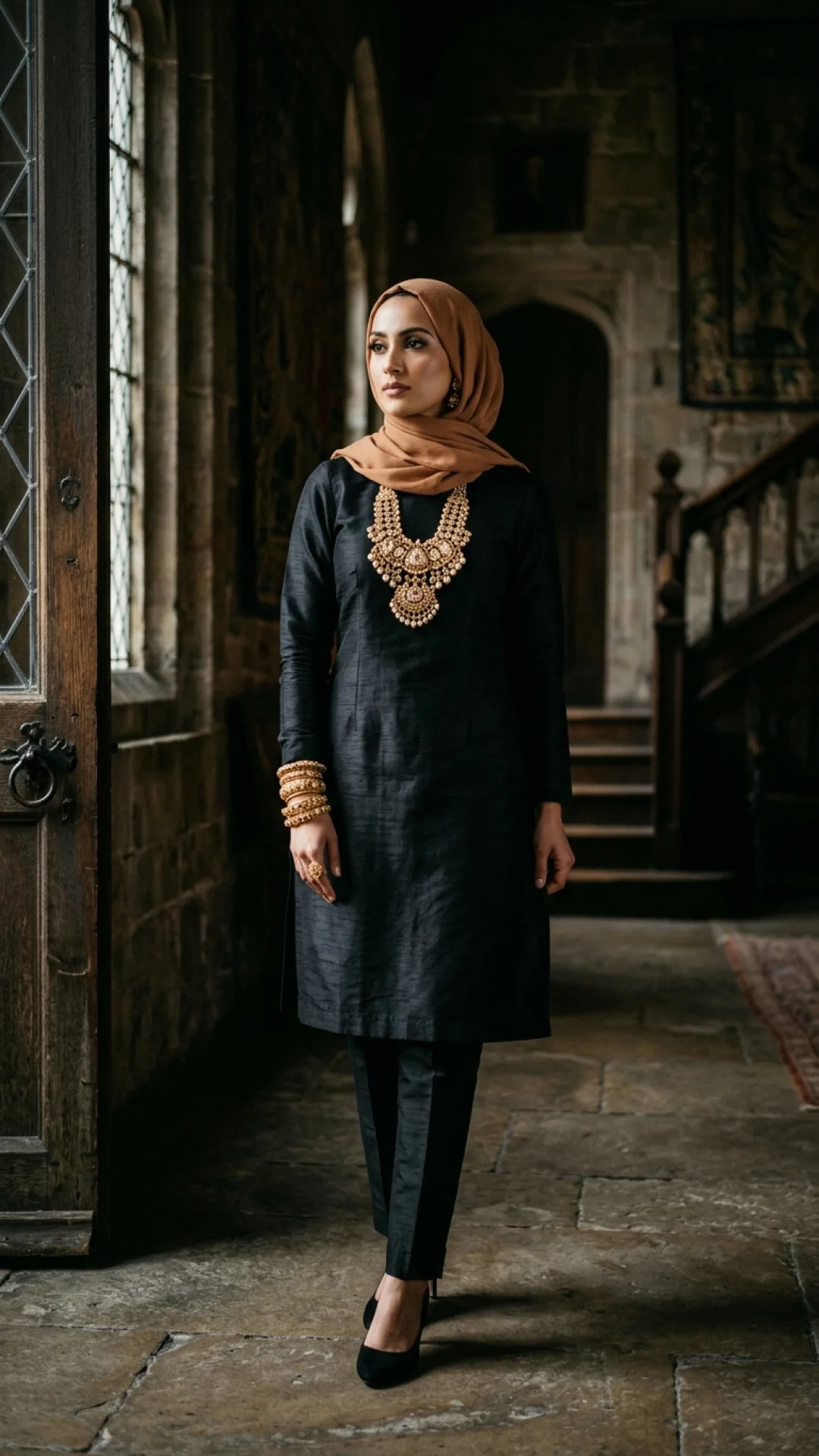
Underestimated entirely. Black is not boring. Black abaya or black kurta-pants set with one absolutely incredible piece of jewellery — a large gold statement necklace, or heavy chandelier earrings, or a stack of gold bangles — and a hijab in something warm.
Camel, burnt sienna, deep copper.
This works especially well for Eid in Europe because black is part of the wardrobe language here in a way it isn't always in South Asia.
You look dressed up without looking like you are in costume. The gold does all the festive work.
10) Vintage Saree Worn as a Skirt and Draped Over One Shoulder
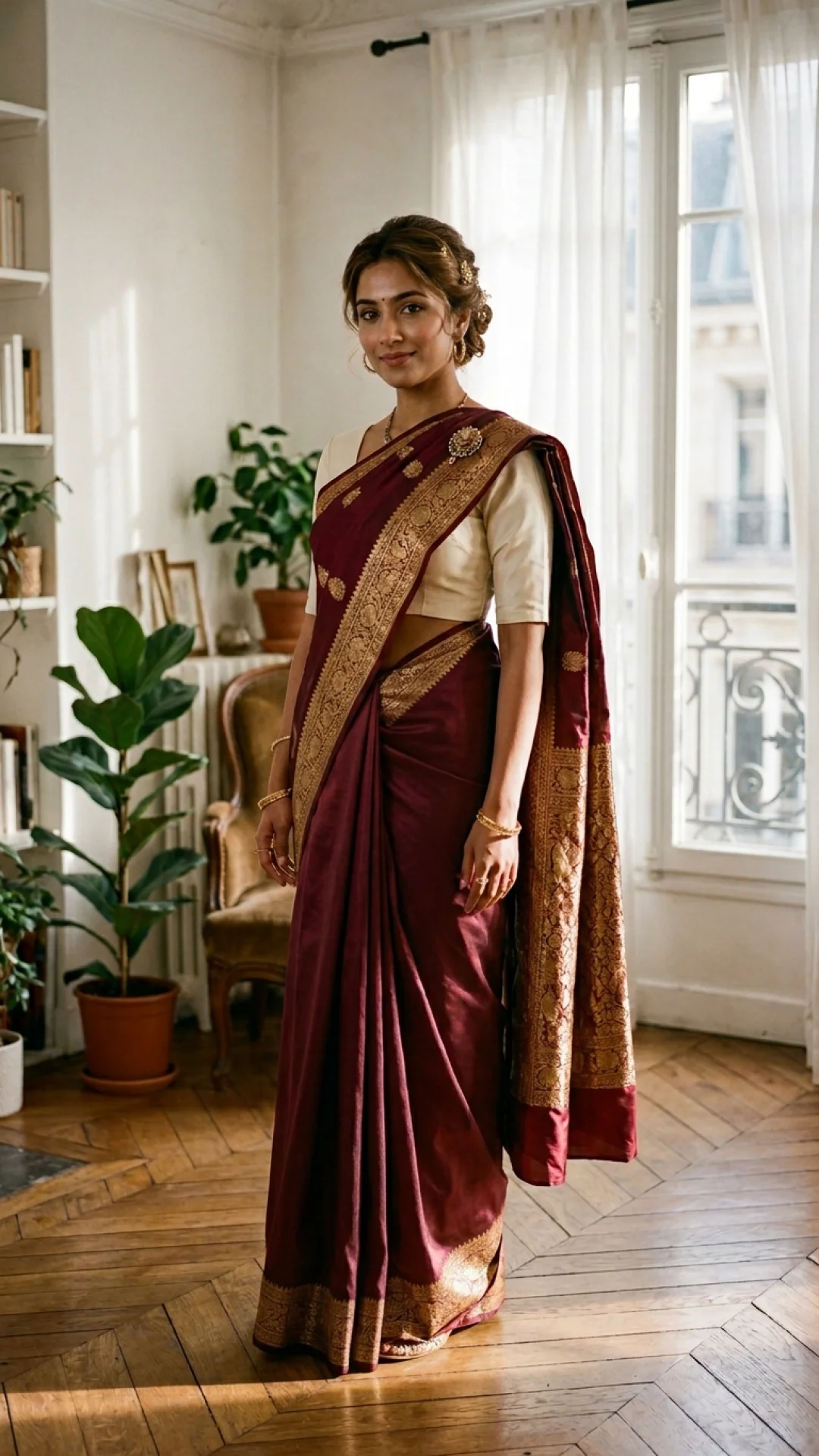
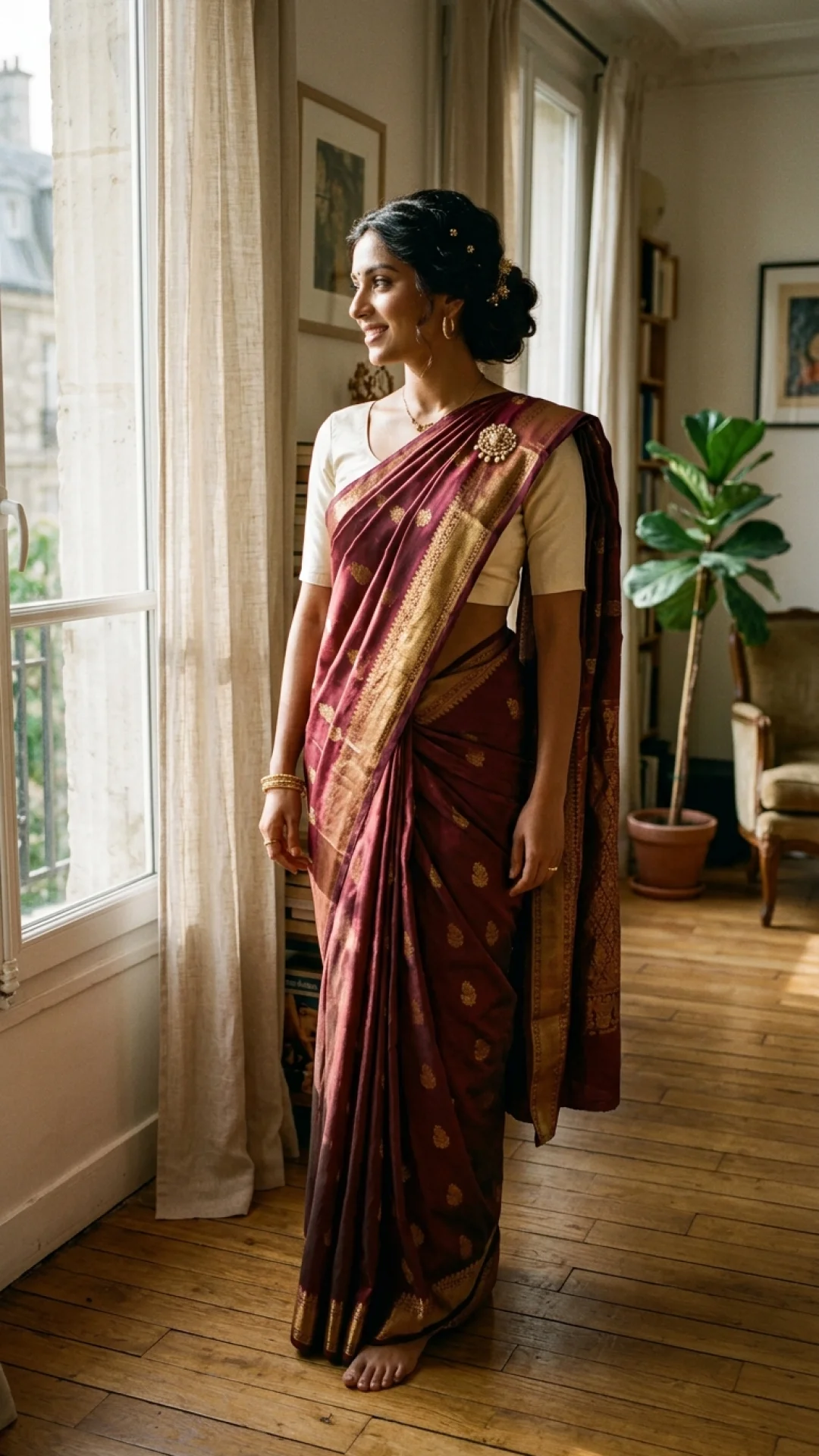
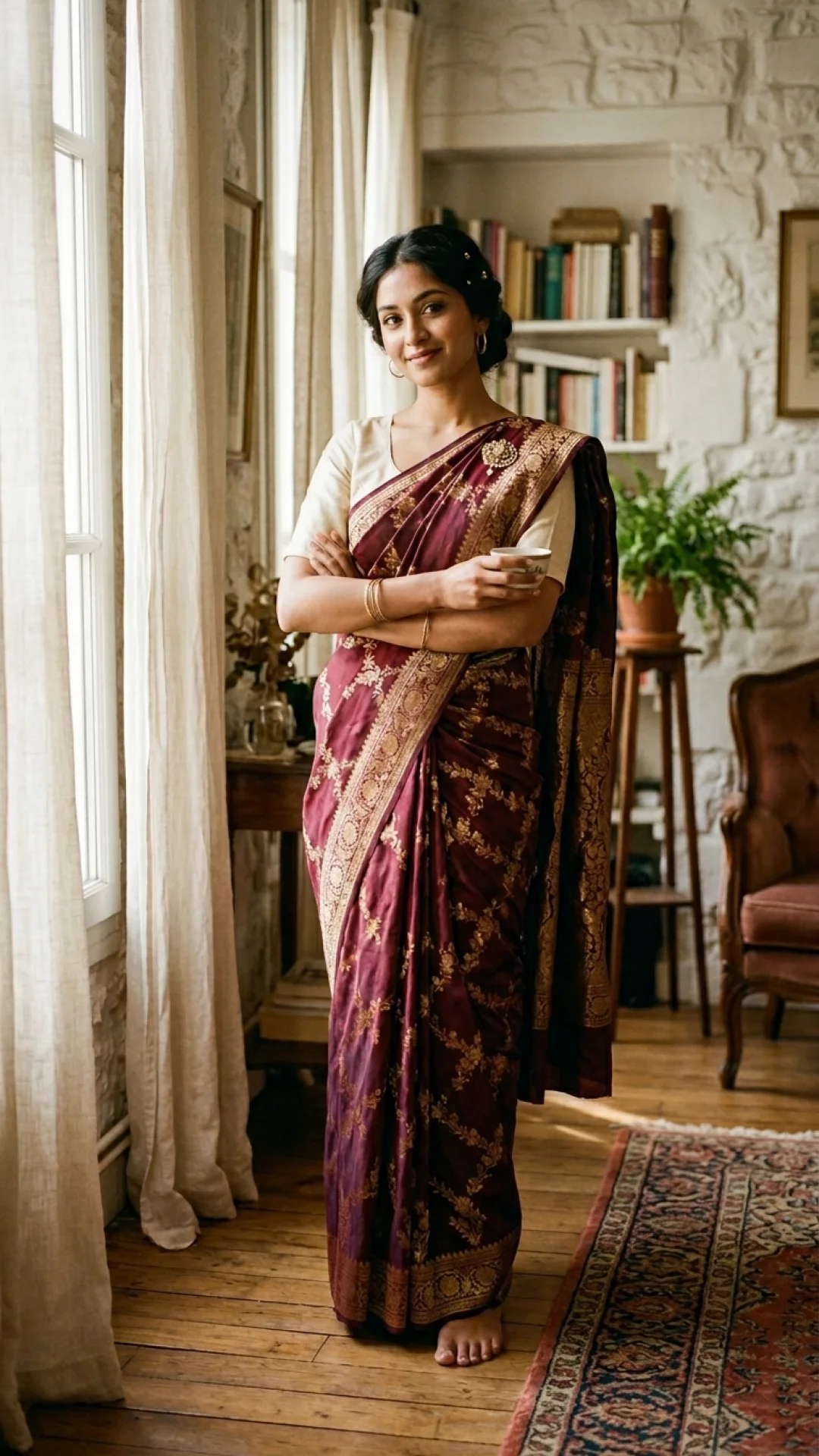
This is the most adventurous one and I kept it for last because if you got this far you are ready for it.
A vintage silk saree — the kind you inherited, the kind that is too precious to fully saree-drape but too beautiful to leave in a box — worn as a wrapped maxi skirt with the loose end draped over one shoulder and pinned. Underneath: a plain fitted blouse or even a simple fine-knit top.
This is not technically a saree anymore. It is also not technically not a saree. It is something in between, which is sometimes exactly where the most interesting things live.
My grandmother has three sarees she brought from India in 1987. I have worn two of them in this way for Eid and she has not stopped telling the story of it since.
My personal Eid outfit rule, after all these years: pick one thing to be the statement and let everything else be quiet. One embroidered piece, one bold colour, one piece of jewellery that means something. The rest should just hold space for it.
This is also, I think, good general life advice.
But that is a different post.
